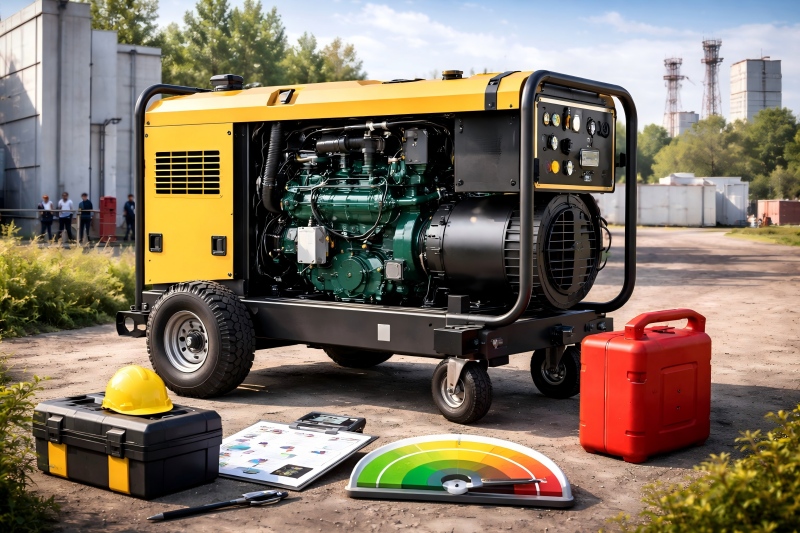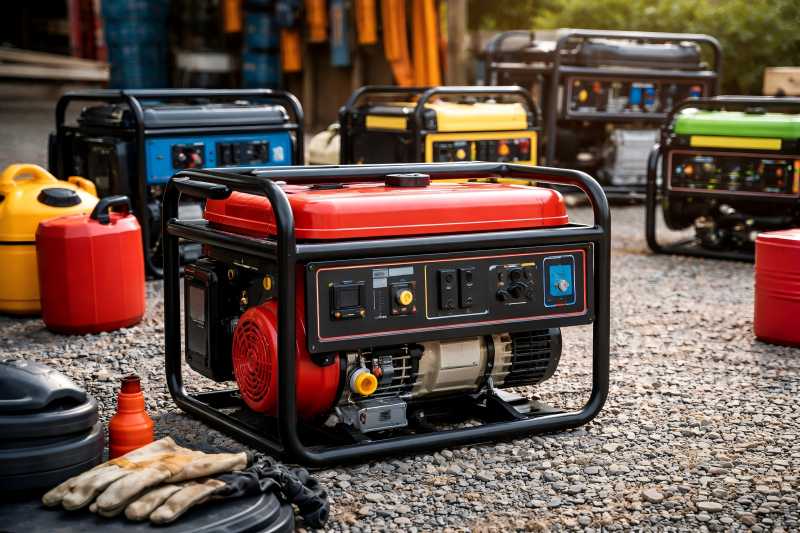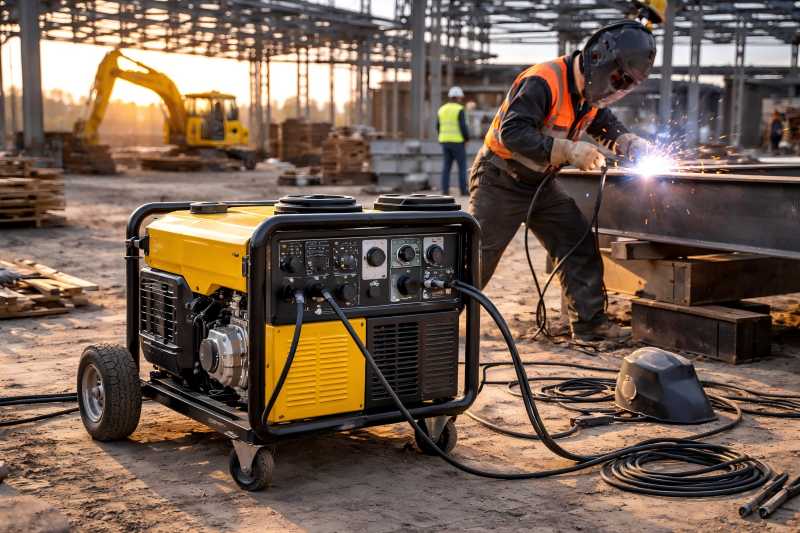
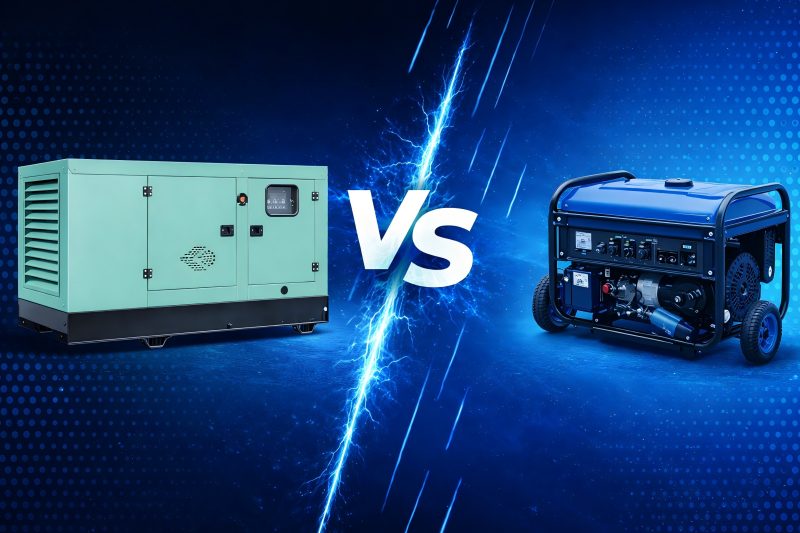
Across the power generation sector, “generator” and “genset” are commonly used interchangeably, despite their technical differences. However, while they are closely related, they are not always the same thing, especially in technical, industrial, and commercial contexts.
Basic Definitions: Generator vs Genset
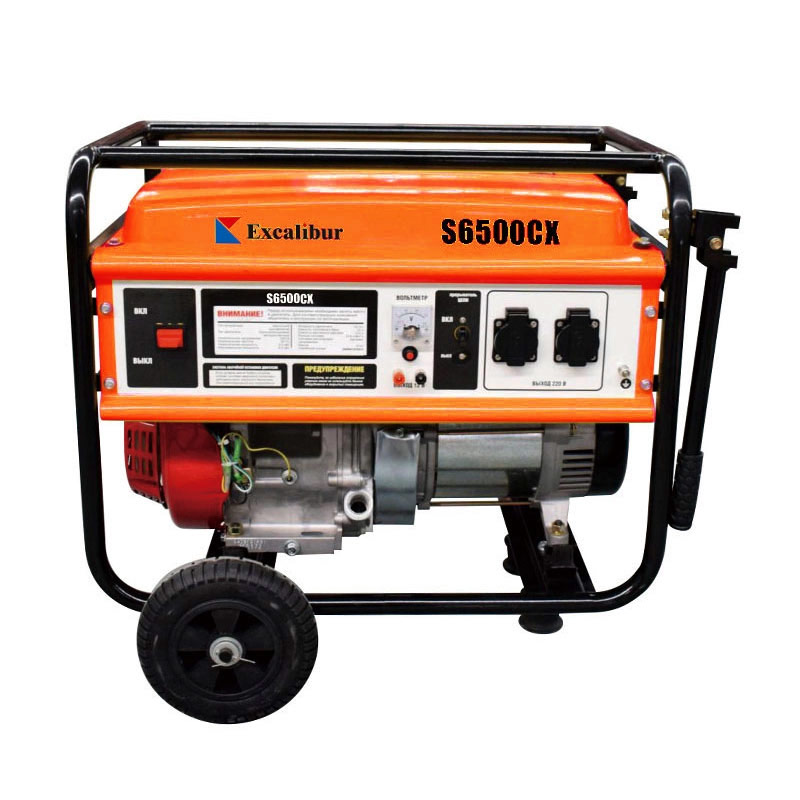
What Is a Generator?
In other words, a generator produces electricity by turning mechanical motion into electrical power through electromagnetic principles. At its core, a generator consists of:
- An alternator (stator + rotor)
- A rotating magnetic field
- Electrical output terminals
Strictly speaking, a generator does not create energy, but converts motion into electricity. In technical terms, the generator is the electrical component only.
In many casual or consumer contexts, the word generator is used to describe an entire power unit—but from an engineering standpoint, this is an oversimplification.
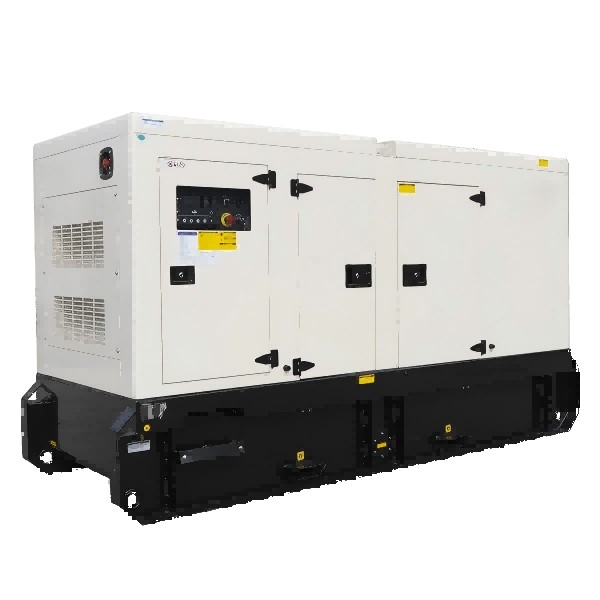
What Is a Genset?
Simply put, a genset brings together all the necessary parts to generate electricity as a single, self-contained system:
- An engine (diesel, gasoline, gas, or alternative fuel)
- An alternator (the generator itself)
- A base frame or skid
- A control panel
- A cooling system
- A fuel system
Exhaust and noise control components
In short:
A genset = engine + generator + supporting systems
The genset is what actually delivers usable electricity in real-world applications.
Why the Distinction Matters
In small consumer markets, calling a genset a “generator” usually causes no confusion. However, in industrial, commercial, and engineering environments, the distinction matters because:
- Specifications are different
- Procurement contracts reference exact system scope
- Maintenance responsibilities vary
- Performance and reliability depend on the full system, not just the alternator
Misunderstanding the difference can lead to:
- Incorrect equipment selection
- Under-designed power systems
- Higher lifecycle costs
- Compliance or safety issues
Components Compared in Detail
Generator (Alternator) Components
A generator typically includes:
- Rotor
- Stator
- Bearings
- Voltage regulator (AVR)
- Cooling fan
Its performance depends on:
- Copper winding quality
- Lamination material
- Insulation class
- Cooling efficiency
- Voltage regulation accuracy
The generator cannot function alone without a prime mover.
Genset Components
A genset integrates multiple subsystems:
- Engine – provides mechanical power
- Generator (alternator) – converts mechanical power to electricity
- Control system – manages voltage, frequency, load, and protection
- Fuel system – tank, pump, filters
- Cooling system – radiator, fans, coolant
- Exhaust system – silencer, piping
- Base frame/enclosure – structural and acoustic protection
Because of this integration, genset performance depends on system-level engineering, not just individual parts.
Functional Differences Between Gensets and Generators
| Aspect | Generator (Alternator) | Genset |
| Scope | Electrical component only | Complete power system |
| Power Source | External mechanical input required | Self-contained |
| Can Operate Alone | No | Yes |
| Includes Engine | No | Yes |
| Typical Buyer | OEMs, manufacturers | End users, EPCs |
| Maintenance Scope | Electrical only | Mechanical + electrical |
Power Output and Ratings
Generator Ratings
Generators are rated by:
- kVA or kW capacity
- Voltage
- Frequency (50 Hz / 60 Hz)
- Power factor
- Insulation class
- Efficiency
These ratings assume ideal mechanical input from a properly sized engine.
Genset Ratings
Gensets are rated based on real-world operating conditions, including:
- Prime power
- Standby power
- Continuous power
- Load acceptance
- Ambient temperature
- Altitude derating
Because of these factors, genset ratings are more application-specific.
Applications: Where Each Term Is Used
Generator (Alternator) Applications
The term generator is commonly used when:
- Referring to the alternator as a component
- Designing custom power systems
- Manufacturing gensets
- Replacing alternators in existing systems
Typical users:
- Genset manufacturers
- OEMs
- Power equipment engineers
Genset Applications
The term genset is used when:
- Supplying complete power solutions
- Designing backup or prime power systems
- Specifying equipment for construction, hospitals, or data centers
Typical users:
- Industrial plants
- Commercial buildings
- Utilities
- EPC contractors
Fuel Types and System Integration
A key difference lies in fuel and engine integration, which only applies to gensets.
Common Genset Fuel Types
- Diesel
- Gasoline
- Natural gas
- LPG
- Biogas
- Hybrid (battery + engine)
The generator alone is fuel-agnostic—it simply converts mechanical rotation into electricity.
Performance, Efficiency, and Reliability
Generator Performance Factors
- Copper fill factor
- Magnetic design
- Cooling airflow
- Voltage regulation accuracy
A high-quality generator improves:
- Electrical efficiency
- Voltage stability
- Harmonic control
Genset Performance Factors
In a genset, reliability depends on:
- Engine quality
- Generator quality
- Control logic
- Cooling design
- Load matching
A weak engine paired with a good generator (or vice versa) results in system inefficiency.
Cost Comparison: Generator vs Genset
Initial Cost
- A generator (alternator) is much cheaper than a full genset
- A genset includes many additional components and engineering costs
Lifecycle Cost
- Generator lifecycle cost = electrical maintenance only
- Genset lifecycle cost = fuel + engine service + electrical maintenance
Cost Scope Comparison
| Cost Element | Generator Only | Genset |
| Initial Purchase | Low | High |
| Fuel Cost | N/A | High |
| Maintenance | Low | Medium–High |
| Installation | OEM dependent | Site dependent |
| Operating Cost | N/A | Significant |
Data Insight: Market Usage Trends
Industry data shows:
Over 90% of end users purchase complete gensets rather than standalone generators
Standalone generators are primarily purchased by:
- OEMs
- Genset assemblers
- Retrofit or repair operations
Diesel gensets dominate the industrial backup power market, accounting for approximately 70–75% of installed backup capacity globally
This highlights that gensets—not generators alone—are the dominant real-world solution.
Maintenance and Service Responsibility
Generator Maintenance
- Bearing inspection
- Insulation resistance testing
- AVR checks
- Cooling fan inspection
Usually performed during:
- Scheduled shutdowns
- Engine maintenance windows
Genset Maintenance
Includes:
- Engine oil and filter changes
- Fuel system service
- Cooling system checks
- Electrical testing
- Load bank testing
This broader maintenance scope is why genset ownership requires planned service strategies.
Control Systems and Automation
Generators have minimal intelligence.
Gensets, however, often include:
- Digital controllers
- Automatic voltage regulation
- Automatic start/stop
- Load sharing
- Remote monitoring
In critical infrastructure (hospitals, data centers), gensets are integrated into automatic transfer switch (ATS) systems—something a standalone generator cannot do.
Safety and Compliance
A generator alone does not address:
- Exhaust emissions
- Noise control
- Fire protection
- Fuel safety
A genset is designed to meet:
- Emission regulations
- Noise limits
- Electrical safety standards
- Environmental compliance
This makes gensets suitable for public, commercial, and regulated environments.
Choosing Between Genset and Generator
Choose a Generator (Alternator) If:
- You are building or assembling gensets
- You need a replacement alternator
- You have an existing prime mover
- You are an OEM or system integrator
Choose a Genset If:
- You need ready-to-use power
- You want backup or prime power
- You require compliance and reliability
- You are an end user or facility operator
Future Trends: Smarter Gensets
Modern gensets are evolving with:
- Digital twins
- IoT monitoring
- Hybrid integration
- Emission-optimized engines
Generators (alternators) are also advancing, but system-level innovation happens at the genset level.
Conclusion
In essence, a generator and a genset differ in terms of system scope, operational role, and practical application.
Another way to describe it is that the generator is the power-producing core, while the genset is the engineered system that drives, controls, and delivers that power.
For most users, the genset is the correct choice. For manufacturers and engineers, understanding the generator as a component is essential.
Knowing the difference ensures:
- Correct equipment selection
- Better system performance
- Lower lifecycle costs
- Higher reliability and safety
In power generation, precision in terminology leads to precision in design—and better results in the field.