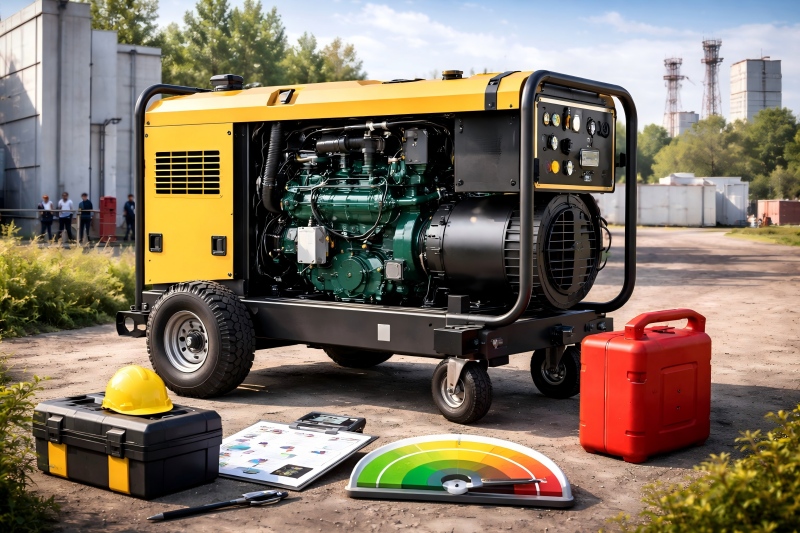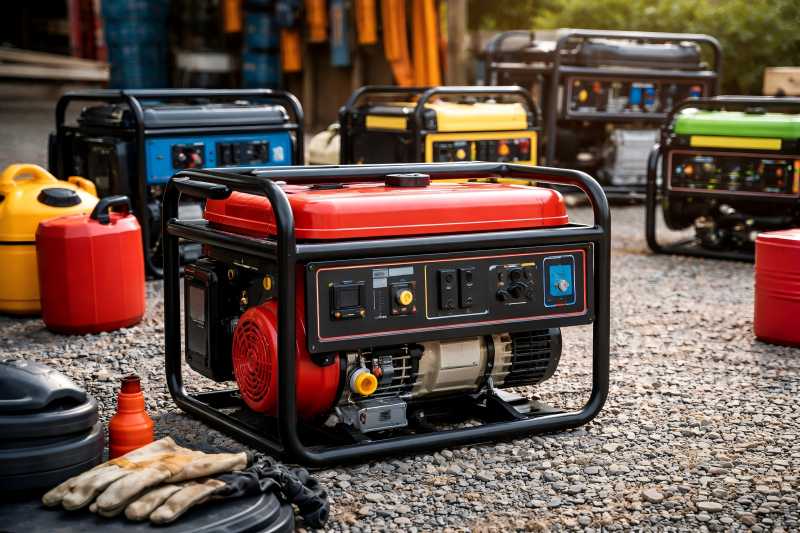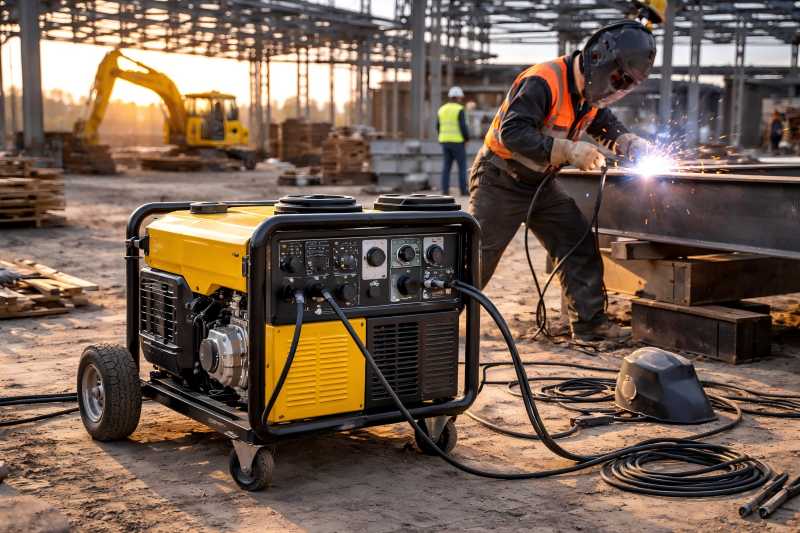
Choosing the right generator size is critical: undersized units overload and fail, while oversized generators waste fuel, cost more, and run inefficiently. Whether you need a generator for home backup, construction sites, outdoor events, RV use, or industrial applications, proper sizing ensures reliability, efficiency, safety, and long-term cost control.
Why Generator Sizing Matters
Generator size directly affects:
- Equipment safety – Undersized generators can damage motors and electronics
- Fuel efficiency – Oversized generators waste fuel at low loads
- Operational reliability – Proper sizing prevents overload shutdowns
- Total cost of ownership – Correct sizing balances upfront and long-term costs
- Many generator failures in the field are not due to poor quality—but incorrect sizing.
Understanding Generator Power Ratings
Before calculating generator size, it’s critical to understand how generator power is measured.
Watts, Kilowatts, and VA
- Watt (W) – Actual power used
- Kilowatt (kW) – 1,000 watts
- Volt-ampere (VA) – Apparent power (used for some industrial equipment)
Most portable and standby generators are rated in watts or kilowatts.
Running Watts vs Starting Watts
This distinction is essential.
- Running watts – Continuous power required to operate equipment
- Starting watts (surge watts) – Temporary startup power surge
- Motor-driven equipment often needs 2–7 times its running watts at startup.
Examples:
- Refrigerator: 700 running watts, up to 2,200 starting watts
- Air compressor: 1,500 running watts, up to 4,500 starting watts
A generator must handle both.
Step-by-Step Process to Choose Generator Size
Step 1: Identify Required Equipment
Start by listing everything that will run at the same time. Be realistic.
Typical categories include:
- Lighting
- Appliances
- HVAC equipment
- Power tools
- Electronics
- Pumps and motors
Do not size based on “everything in the house” unless you truly need whole-house backup.
Step 2: Determine Running and Starting Watts
Use manufacturer labels or manuals whenever possible. If unavailable, use typical estimates.
Common Household Equipment Power Requirements
| Equipment | Running Watts | Starting Watts |
| LED Light (10 bulbs) | 100 | 100 |
| Refrigerator | 700 | 2,200 |
| Microwave | 1,000 | 1,000 |
| Sump Pump (1/2 HP) | 1,050 | 2,150 |
| Window AC (10,000 BTU) | 1,200 | 2,500 |
| Electric Heater | 1,500 | 1,500 |
| TV + Router | 300 | 300 |
Step 3: Add Total Running Watts
Add up all running watts of equipment that will operate simultaneously.
Example:
- Refrigerator: 700 W
- Lights: 100 W
- TV + Router: 300 W
- Microwave: 1,000 W
- Total running watts = 2,100 W
Step 4: Add the Largest Starting Load
Only the largest starting surge needs to be added—not all surges at once.
Example:
- Largest starting load: Refrigerator (2,200 W)
Calculation:
- 2,100 W (running) + 1,500 W additional surge
- Required generator size ≈ 3,600–4,000 W
Step 5: Add Safety Margin (20–30%)
A safety margin prevents overload and allows future expansion.
Recommended:
- Residential use: +20–25%
- Industrial or motor-heavy use: +30%
Final example:
4,000 W × 1.25 = 5,000 W generator
Generator Sizing by Application Type
Home Backup Generator Sizing
Home backup needs vary widely.
Essential-Load Backup (Most Common)
Covers:
- Refrigerator
- Lights
- Internet
- Small appliances
Typical size:
- 3,000–6,000 watts
Partial Home Backup
Covers:
- Refrigerator
- Microwave
- Sump pump
- Window AC
Typical size:
- 6,000–9,000 watts
Whole-House Backup
Covers:
- Central AC
- Electric water heater
- Multiple appliances
Typical size:
- 12,000–22,000+ watts
Construction and Job Site Generators
Construction tools often have high starting loads.
Common equipment:
- Circular saws
- Air compressors
- Welders
- Concrete mixers
Typical size:
- Small tools: 4,000–6,500 W
- Heavy tools: 7,500–12,000 W
RV and Camping Generator Sizing
Noise and efficiency are major concerns.
Typical loads:
- RV air conditioner
- Microwave
- Battery chargers
- Lights
Typical size:
- Without AC: 2,000–3,000 W
- With AC: 3,000–4,500 W
Inverter generators are strongly recommended for this use.
Industrial and Commercial Applications
These require careful load studies and often three-phase power.
Factors include:
- Motor horsepower
- Duty cycle
- Power factor
- Redundancy requirements
Typical size:
- 10 kW to 500 kW+, depending on operation
- Professional load analysis is recommended.
Understanding Motor Loads and Horsepower Conversion
Many machines list power in horsepower (HP).
Conversion rule:
- 1 HP ≈ 746 watts (running)
- However, starting watts can be 3–6× higher.
Motor Power Conversion Guide
| Motor Size | Running Watts | Typical Starting Watts |
| 1/4 HP | ~500 W | 1,200–1,500 W |
| 1/2 HP | ~1,000 W | 2,000–2,500 W |
| 1 HP | ~2,000 W | 4,000–6,000 W |
| 2 HP | ~4,000 W | 8,000–12,000 W |
Choosing Generator Size by Generator Type
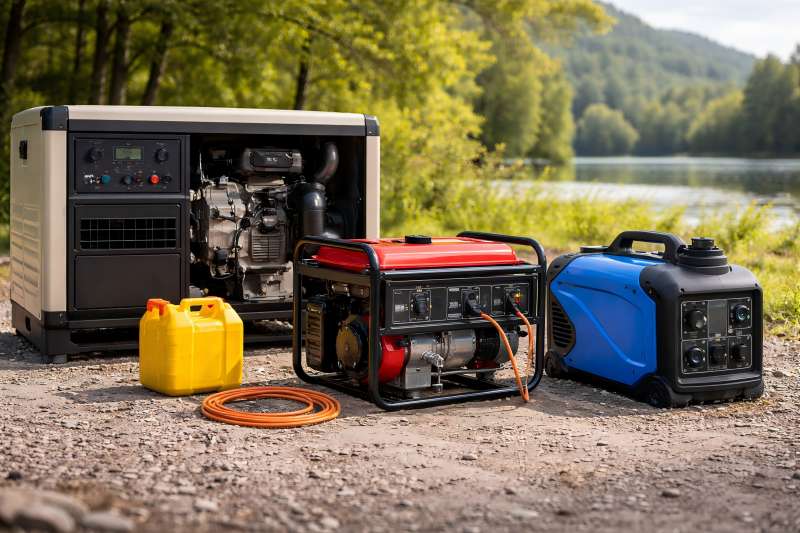
Conventional Generators
- Higher surge capacity
- Lower cost per watt
- Louder and less fuel-efficient
Best for:
- Construction
- Emergency backup
- Motor-heavy loads
Inverter Generators
- Lower surge capacity
- Clean, stable power
- Excellent fuel efficiency
Best for:
- Electronics
- RVs
- Residential backup
- Parallel operation setups
Many inverter generators can be paired to increase capacity.
Diesel Generators
- Ideal for continuous heavy-duty operation
- Higher efficiency at scale
- Longer lifespan
Best for:
- Industrial sites
- Long runtime applications
Single-Phase vs Three-Phase Power
Most residential generators are single-phase.
Three-phase generators are required when:
- Powering industrial motors
- Running large HVAC systems
- Supporting factory equipment
Using a single-phase generator to power three-phase loads causes inefficiency and serious operational risks.
Common Generator Sizing Mistakes
Mistake 1: Ignoring Starting Watts
Result: Generator stalls or trips
Mistake 2: Oversizing “Just in Case”
Result: Fuel waste, higher costs, poor efficiency
Mistake 3: Forgetting Future Expansion
Result: No capacity for added equipment
Mistake 4: Not Accounting for Power Quality
Result: Electronics damage (especially with inverter vs conventional mismatch)
Generator Size vs Fuel Consumption
Larger generators consume more fuel even at low load.
Approximate Fuel Consumption at 50% Load
| Generator Size | Gasoline (L/hr) | Diesel (L/hr) |
| 3 kW | ~1.2 | ~0.8 |
| 5 kW | ~2.0 | ~1.4 |
| 10 kW | ~4.0 | ~2.8 |
| 20 kW | ~7.5 | ~5.5 |
Right-sizing saves fuel and extends engine life.
Final Checklist Before Choosing Generator Size
Ask yourself:
- What must run simultaneously?
- What has motor startup surges?
- How often will the generator run?
- Will loads increase in the future?
- Is noise or fuel efficiency a priority?
- Do I need clean power for electronics?
If in doubt, choose slightly above calculated needs—but avoid excessive oversizing.
Choosing the right generator means accurately matching power needs, not overspending on oversized equipment that wastes fuel and reduces efficiency. By understanding running watts, starting watts, application requirements, and generator types, you can avoid common mistakes and ensure long-term performance.
A properly sized generator:
- Runs efficiently
- Starts reliably
- Protects connected equipment
- Saves fuel and money
- Lasts longer
Whether for home backup, outdoor use, or industrial power, careful generator sizing is the foundation of a dependable power solution.