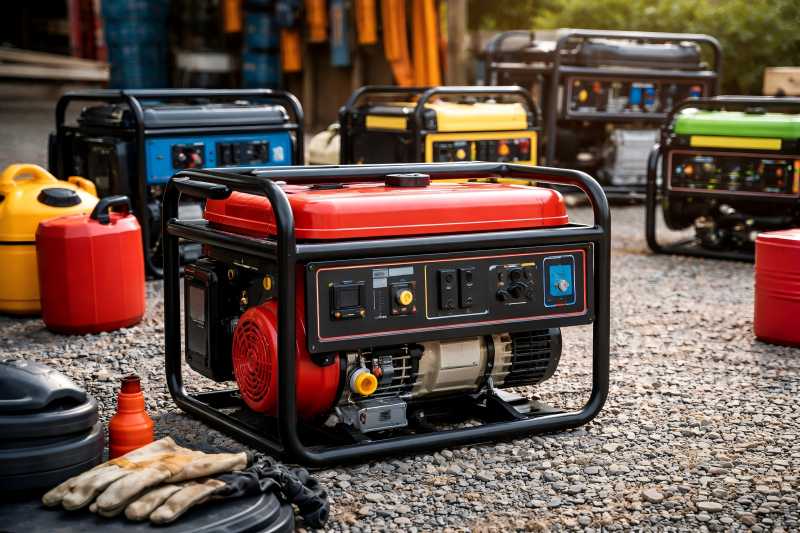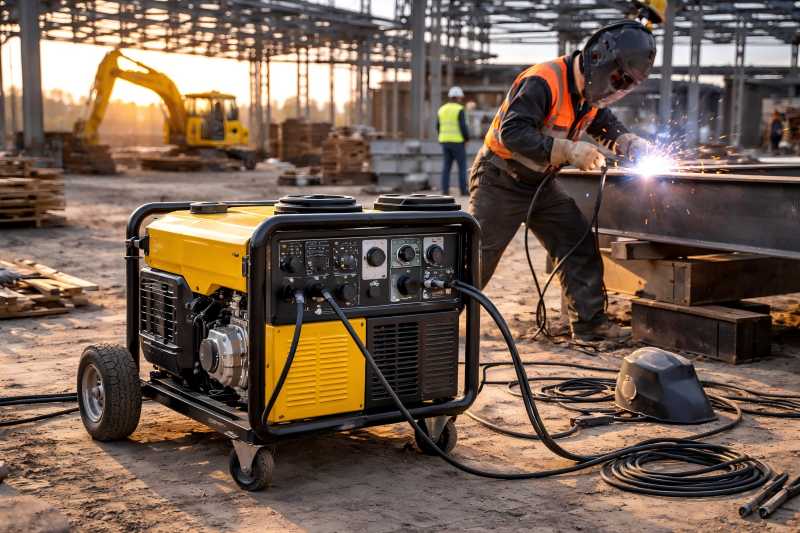
With fuel costs rising and environmental pressure increasing, improving generator fuel efficiency helps cut operating costs, extend equipment life, and reduce carbon emissions.
Understanding Fuel Consumption in Diesel Generators
Fuel consumption in diesel generators depends on several key factors, including load levels, engine efficiency, maintenance condition, and environmental conditions. Generators are most efficient at 70%–80% load. Running a generator at very low or very high loads leads to inefficient fuel usage.
Key Factors Affecting Fuel Consumption
| Factor | Impact on Fuel Consumption | Optimization Strategy |
| Load Level | Low loads increase fuel waste | Maintain optimal load range (70–80%) |
| Engine Condition | Poor maintenance reduces efficiency | Regular servicing and inspections |
| Fuel Quality | Low-quality fuel causes incomplete combustion | Use high-grade diesel |
| Ambient Temperature | Extreme temperatures reduce efficiency | Ensure proper ventilation and cooling |
| Generator Sizing | Oversized units consume more fuel at low loads | Match generator size to application |
Optimize Generator Load Management
Run the generator at its optimal load range, because operating below 30% can cause wet stacking, fuel waste, exhaust buildup, and long-term efficiency loss.
Load Optimization Strategies
- Avoid underloading: Combine loads or use smaller generators when demand is low.
- Use load banks: Artificially increase load to maintain efficient operation.
- Parallel generators: Use multiple generators and adjust operation based on demand.
- Monitor load patterns: Analyze usage data to optimize generator deployment.
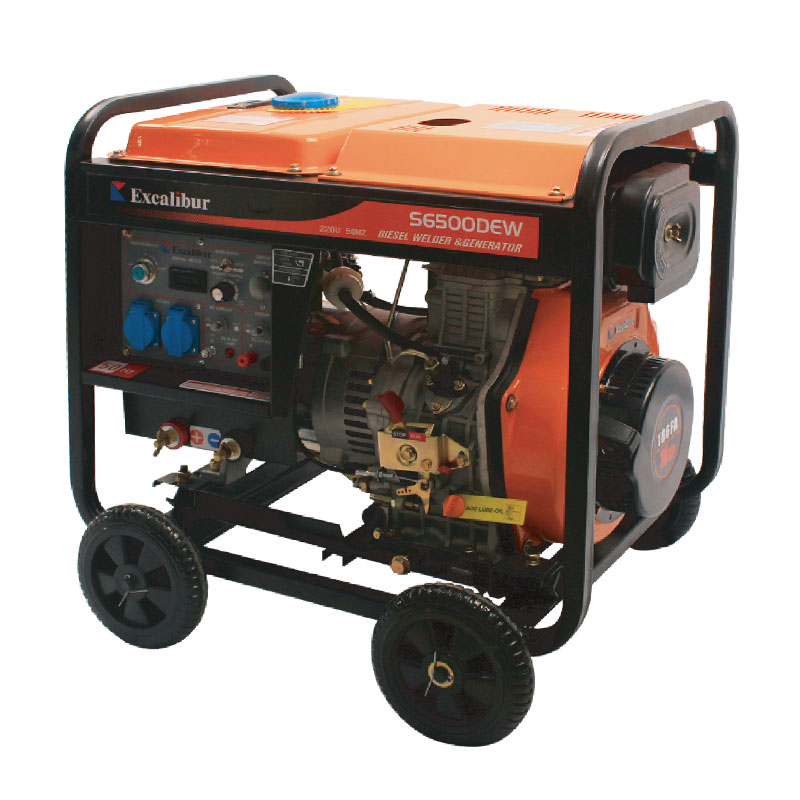
Select the Correct Generator Size
Selecting the correct generator capacity is crucial. Oversized generators operate inefficiently under low loads, while undersized units may be overworked, leading to excessive fuel consumption and wear.
Generator Sizing Comparison
| Scenario | Result | Fuel Efficiency Impact |
| Oversized Generator | Runs at low load | High fuel consumption |
| Undersized Generator | Overloaded frequently | Increased wear and fuel usage |
| Properly Sized Generator | Balanced load operation | Optimal fuel efficiency |
Proper load analysis before purchasing ensures long-term savings and performance.
Regular Maintenance and Servicing
Proper generator maintenance improves fuel efficiency, combustion quality, and overall operational reliability.
Essential Maintenance Practices
- Replace air, fuel, and oil filters regularly
- Check and clean fuel injectors
- Maintain proper lubrication levels
- Inspect cooling systems and radiators
- Ensure proper engine tuning
Maintenance Impact Table
| Maintenance Activity | Frequency | Benefit |
| Air Filter Replacement | Every 250–500 hrs | Improves air intake efficiency |
| Fuel Filter Change | Every 500 hrs | Ensures clean fuel flow |
| Oil Change | Every 250–300 hrs | Reduces engine friction |
| Injector Cleaning | Periodically | Enhances combustion efficiency |
Improve Fuel Quality and Storage
Fuel quality strongly affects generator efficiency. Contaminated or degraded diesel leads to incomplete combustion, increasing fuel consumption and emissions.
Best Practices for Fuel Management
- Use high-quality diesel from reliable suppliers
- Store fuel in clean, sealed containers
- Prevent water contamination
- Add fuel stabilizers if stored long-term
- Regularly test fuel quality
Optimize Engine Performance
Modern diesel generators come with advanced engine control systems that can significantly improve fuel efficiency. Proper tuning and calibration ensure optimal combustion.
Engine Optimization Techniques
- Adjust fuel injection timing
- Use electronic control units (ECUs)
- Upgrade to high-efficiency engines
- Monitor exhaust emissions for performance indicators
Use Advanced Control Systems
Smart controls and automation monitor and optimize generator performance in real time.
Benefits of Smart Controllers
- Real-time fuel consumption tracking
- Automatic load balancing for stable performance
- Predictive alerts for preventive maintenance
- Remote monitoring with diagnostic support
Control System Comparison
| Feature | Basic System | Advanced Smart System |
| Fuel Monitoring | No | Yes |
| Load Optimization | Manual | Automatic |
| Remote Access | No | Yes |
| Predictive Maintenance | No | Yes |
Improve Cooling and Ventilation
Diesel engines require proper cooling to maintain efficiency. Overheating reduces performance and increases fuel consumption.
Cooling Optimization Tips
- Ensure proper airflow around the generator
- Clean radiators and cooling fins
- Use high-quality coolant
- Install ventilation systems in enclosed spaces
Reduce Idle Time
Generators consume fuel even when running without load. Minimizing idle time can significantly reduce overall fuel consumption.
Idle Reduction Strategies
- Turn off generators when not needed
- Use automatic start/stop systems
- Schedule operations efficiently
- Implement energy storage systems for intermittent loads
Adopt Hybrid Power Solutions
Combining diesel generators with solar or battery storage greatly reduces fuel consumption.
Hybrid System Benefits
- Lower fuel usage
- Reduced emissions
- Extended generator lifespan
- Improved energy reliability
Hybrid vs Traditional System
| System Type | Fuel Consumption | Initial Cost | Long-Term Savings |
| Diesel Only | High | Low | Moderate |
| Hybrid System | Low | High | High |
Train Operators for Efficiency
Human factors play a crucial role in generator performance. Properly trained operators can significantly reduce fuel waste.
Operator Training Focus Areas
- Understanding load management
- Identifying inefficiencies
- Performing routine inspections
- Using control systems effectively
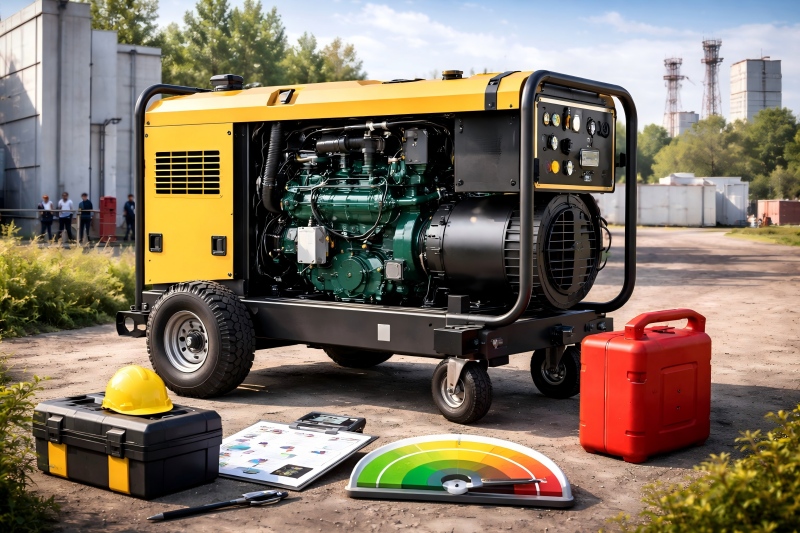
Monitor and Analyze Fuel Consumption
Data-driven decisions improve fuel efficiency. Monitoring systems provide valuable insights into performance trends.
Key Metrics to Track
- Fuel consumption per hour
- Load percentage
- Operating hours
- Maintenance intervals
Adopt fuel-saving technologies
Older generators tend to be less efficient compared to modern models equipped with advanced combustion and control technologies.
Technology Upgrades
- High-pressure common rail (HPCR) fuel systems
- Variable speed generators
- Energy-efficient alternators
- Low-emission engines
Environmental and Economic Benefits
Lower fuel consumption cuts costs and advances sustainability goals.
Key Benefits
- Lower operating expenses
- Reduced carbon footprint
- Compliance with environmental regulations
- Improved corporate sustainability image
Common Mistakes to Avoid
Avoiding common operational mistakes can significantly improve fuel efficiency.
Mistakes and Solutions
| Mistake | Consequence | Solution |
| Running at low load | Fuel waste, engine damage | Maintain optimal load |
| Poor maintenance | Reduced efficiency | Follow maintenance schedule |
| Using low-quality fuel | Incomplete combustion | Use high-grade diesel |
| Oversized generator selection | Inefficient operation | Proper sizing |
Reducing fuel consumption in diesel generators requires a combination of proper equipment selection, regular maintenance, smart operation, and advanced technologies. By optimizing load management, improving fuel quality, upgrading control systems, and adopting hybrid solutions, businesses can significantly reduce operational costs while enhancing efficiency and sustainability.
In today’s competitive and environmentally conscious landscape, investing in fuel-efficient generator practices is not just a cost-saving measure—it is a strategic decision that ensures long-term reliability, performance, and environmental responsibility.