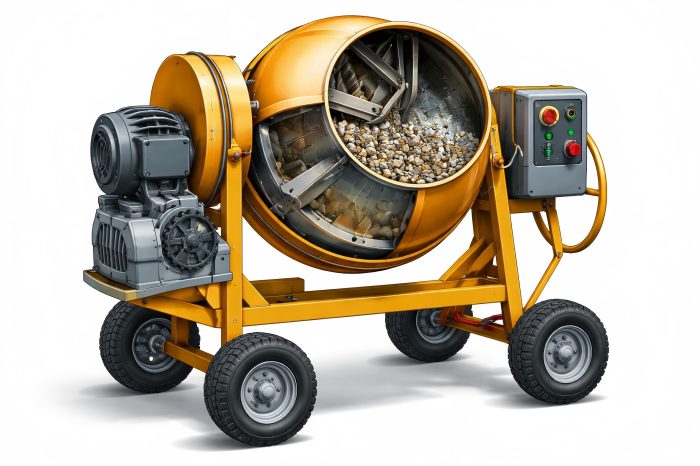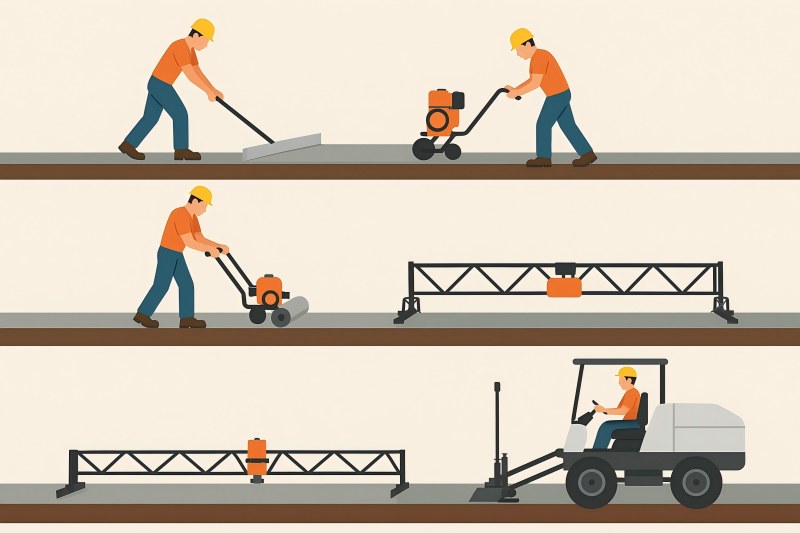
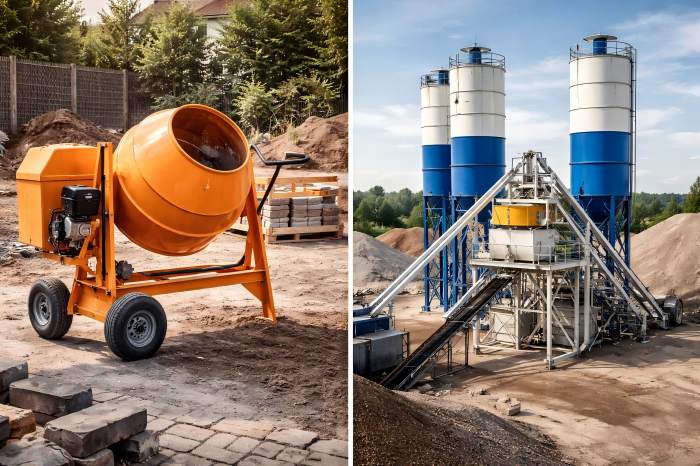
Concrete mixers are indispensable on construction sites, whether for small home projects or large infrastructure jobs. Selecting the right type of concrete mixer can influence productivity, quality, labor costs, and project timelines.
Portable and stationary concrete mixers both mix cement, aggregates, and water, but their designs, capabilities, and ideal applications vary significantly.
Understanding Concrete Mixers
Before comparing the two types, it’s important to understand what concrete mixers do and why they matter.
Concrete is not simply cement and water. It’s a carefully balanced mixture of cement, aggregates (like sand and gravel), and water that must be uniformly mixed to ensure strength and durability. A concrete mixer performs this critical task by rotating blades inside a drum to blend ingredients efficiently and consistently.
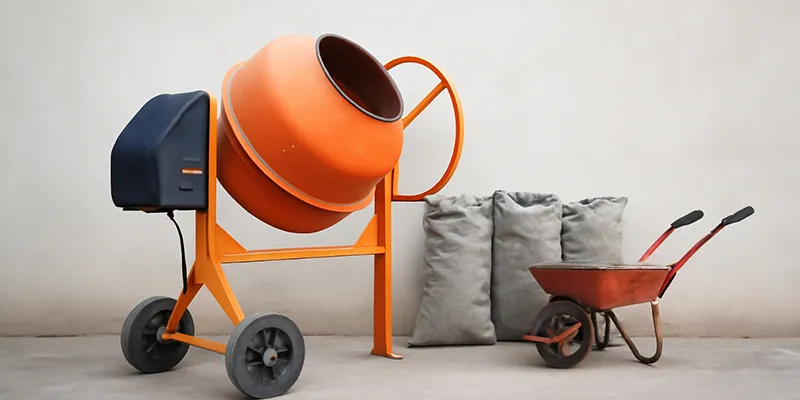
What Is a Portable Concrete Mixer?
Portable concrete mixers—also referred to as mobile mixers—are compact, movable machines designed to mix smaller batches of concrete near or at the job site.
Key Features
- Mobility: Wheels or towable frames allow relocation around the site.
- Smaller Capacity: Typically between 1 to 6 cubic feet per batch.
- Versatile Power Options: Electric motors or small gas engines.
- Best For: Small to medium-sized projects, patch work, residential landscaping.
Advantages
- Easy to Move: Can be positioned exactly where concrete is needed.
- Lower Cost: Generally more affordable than stationary units.
- Less Setup Time: Simple installation and quick operation.
- Ideal for Tight Spaces: Works well in areas inaccessible to larger equipment.
Limitations
- Limited Batch Size: Not suitable for high-volume demands.
- Labor Intensive: Needs more manual loading and oversight during operation.
- Less Efficient for Large Projects: Repeated small batches increase time and labor.
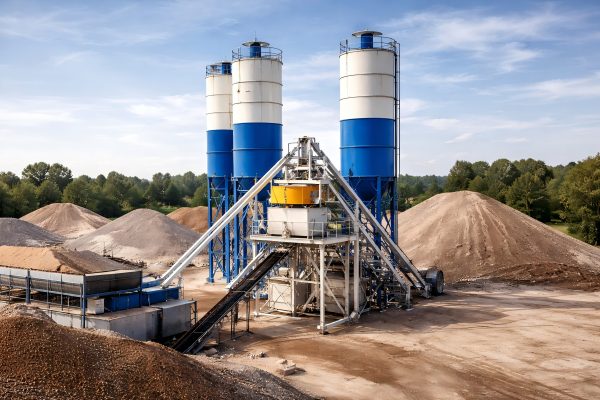
What Is a Stationary Concrete Mixer?
Stationary concrete mixers are larger, fixed-position machines designed for higher-volume production. Commonly used in commercial and industrial environments.
Key Features
- Large Capacity: Can handle hundreds to thousands of cubic feet per hour.
- Heavy-Duty Construction: Designed for continuous operation.
- Often Integrated: Part of larger batching plants or concrete production facilities.
- Best For: Commercial construction, precast operations, infrastructure projects.
Advantages
- High Output: Produces large volumes of concrete consistently and efficiently.
- Greater Efficiency: Reduced labor and faster mixing times.
- Consistent Quality: Uniform performance ideal for large projects.
- Integrated Controls: Advanced monitoring and automation features.
Limitations
- Higher Initial Cost: Significant investment compared to portable models.
- Immobility: Permanently placed or restricted movement onsite.
- Requires Expertise: Professional operators and maintenance staff are often necessary.
Head-to-Head Comparison
Here’s a side-by-side look at key attributes to help you compare portable and stationary mixers:
Feature Comparison
| Feature | Portable Mixer | Stationary Mixer |
| Mobility | High | Low |
| Batch Capacity | Small (1–6 ft³) | Large (100+ ft³ or more) |
| Ideal Projects | Residential, small jobs | Commercial/industrial |
| Setup & Installation | Minimal | Complex |
| Cost | Lower | Higher |
| Production Speed | Slower | Fast |
| Operator Skill Requirement | Low | Medium–High |
| Maintenance Complexity | Simple | Advanced |
Use Case Scenarios
Portable Mixers — Best For:
- Homeowners & DIY Projects: Pouring driveways, patios, footings, and small slabs.
- Remote Locations: Sites without access to power grid or batching plants.
- Intermittent Use: Projects requiring concrete sporadically.
- Tight Access Zones: Urban or indoor jobs with limited space.
Stationary Mixers — Best For:
- Large-Scale Construction: Roads, bridges, multi-story buildings.
- Batching Plants: Facilities producing concrete for sale or distribution.
- Repeat High-Volume/High-Frequency Use: Projects that demand continuous mixing.
- High-Quality Requirements: Where mix consistency is crucial (e.g., precast elements).
Cost Considerations
Cost is a key consideration when deciding between portable and stationary mixers. Below are typical cost categories to consider.
Cost Breakdown
| Cost Type | Portable Mixer | Stationary Mixer |
| Upfront Purchase | $500 – $5,000+ | $20,000 – $100,000+ |
| Transportation | Low | Medium–High |
| Installation | Minimal | Required |
| Maintenance | Basic | Advanced |
| Operator Training | Basic | Specialized |
| Operating Cost per Cubic Yard | Higher (due to small batches) | Lower |
Power Source and Fuel Considerations
Portable Mixers
Electric Portable Mixers
- Pros: Quiet operation, low emissions, suitable for indoor use.
- Cons: Requires access to electricity.
Gas-Powered Portable Mixers
- Pros: Great for remote sites without power.
- Cons: Higher fuel cost and emissions.
Stationary Mixers
- Typically powered by diesel engines or industrial electricity.
- Often integrated with batching systems that automate feeding, mixing, and discharging.
Productivity and Efficiency
Portable Mixers
Portable mixers are great for flexible location use, but their batch size limits throughput. For example, mixing 6 cubic feet at a time requires many cycles to reach volumes that stationary units can achieve in minutes.
Stationary Mixers
Stationary mixers excel in continuous production. With automation and larger drums, they reduce idle time and produce consistent mixes at scale. They often interface with conveyors, silos, and computerized batching systems to streamline operations.
Quality and Consistency
Concrete quality is dependent on:
- Accurate material proportions
- Uniform mixing
- Control of water content
Stationary mixers typically provide superior consistency due to controlled automation and larger, more sophisticated mixing mechanisms. Portable mixers can still yield high-quality concrete, but they require:
- Careful measurement of ingredients
- Skilled operators
- Frequent manual oversight
Maintenance and Lifespan
Portable Mixers
- Easier to maintain with basic tools.
- Cleaning after each use prevents concrete buildup.
- Generally have a shorter lifespan if used heavily.
Stationary Mixers
- Require scheduled maintenance by trained technicians.
- Better built for continuous use and longevity.
- Drum wear and hydraulic systems need professional care.
Safety Considerations
Both types pose safety risks if improperly used:
- Moving parts: Avoid loose clothing near drums and blades.
- Concrete burns: Cement can irritate skin; use gloves and PPE.
- Noise exposure: Especially on gas-powered models.
Stationary mixers often incorporate more safety features (emergency stops, guarded mechanisms) and may be subject to stricter on-site safety compliance.
Choosing the Right Mixer for Your Project
Ask yourself these questions:
What is the scale of your project?
- Small residential? Portable likely sufficient.
- Large commercial? Stationary almost always better.
How much concrete will you mix daily?
- Under a few cubic yards? Portable might suffice.
- Over tens or hundreds? Stationary is more efficient.
Do you need mobility or fixed placement?
What is your budget for equipment and operations?
Conclusion
Choosing between a portable concrete mixer and a stationary concrete mixer ultimately depends on your specific needs. For smaller, flexible, or budget-conscious jobs, portable mixers offer convenience and affordability. For larger-scale projects with high volume and a need for consistent output, stationary mixers are a more efficient and reliable solution.
Understanding your project’s scale, timeline, and quality requirements—along with cost implications—will help you select the right concrete mixing equipment. Whether you opt for portable versatility or stationary power, the proper mixer will ensure your concrete work is efficient, economical, and high quality.