Portable diesel generators typically operate between 70–85 dB, making noise management a critical concern. By understanding noise sources and applying targeted solutions—such as enclosures, silencers, strategic placement, and maintenance—users can significantly reduce sound levels.
In modern applications, noise reduction is no longer optional. It is essential for regulatory compliance, environmental responsibility, and improved user experience.
Understanding Generator Noise Levels
What Is Measured: Decibels (dB)
Noise is expressed in decibels (dB), which uses a logarithmic scale instead of a linear one. This means that:
- A 10 dB increase is perceived as roughly twice as loud
- A 20 dB increase is perceived as four times louder
- Even small increases in dB can significantly impact comfort levels
Manufacturers typically measure generator noise at a standard distance (usually 7 meters) under controlled load conditions. However, real-world noise levels may vary depending on environment, load, and installation conditions.
Typical Noise Levels of Portable Diesel Generators
| Generator Type | Noise Level (dB at ~7m) | Real-World Comparison |
| Silent diesel generator | 50–65 dB | Normal conversation |
| Inverter generator | 50–70 dB | Quiet office |
| Portable diesel generator | 70–85 dB | Vacuum cleaner / traffic |
| Large diesel generator | 85–100+ dB | Heavy machinery |
Most portable diesel generators fall within the 70–85 dB range, which is loud enough to cause discomfort over extended periods.
Why Diesel Generators Are Noisy
Diesel generators produce noise from several interacting sources, each contributing differently to the overall sound profile.
Combustion Process
The diesel combustion process involves high-pressure fuel ignition without spark plugs, resulting in stronger and more abrupt pressure waves compared to gasoline engines. These rapid pressure changes create sharp, impulsive sounds that are inherently louder.
Diesel engines use higher compression ratios, boosting efficiency but also increasing noise levels. The combustion noise is often described as a “knocking” or “clattering” sound.
Mechanical Vibration
Inside the generator, multiple moving parts—including pistons, crankshafts, camshafts, and valves—operate at high speeds.
- These components generate mechanical vibration
- Vibration transfers to the generator frame
- The frame acts as a sound amplifier
If components become worn or misaligned, vibration increases, leading to even higher noise levels.
Exhaust System
The exhaust system is one of the primary noise sources in a diesel generator.
- High-pressure gases exit the engine rapidly
- Sudden expansion creates strong sound waves
- Without proper silencing, exhaust noise can dominate total output
This is why upgrading the exhaust system often yields significant noise reduction.
Cooling Systems
Diesel generators require robust cooling systems, typically involving:
- High-speed cooling fans
- Airflow ducts
- Radiators
These systems generate continuous airflow noise, especially under heavy load when cooling demand increases.
Structural Resonance
The generator’s outer frame and panels can resonate with internal vibrations, amplifying noise.
- Thin metal panels may vibrate easily
- Poorly designed housings can act like speakers
- Loose panels increase rattling sounds
This is why enclosure design plays a critical role in noise control.
Factors Affecting Noise Levels
Noise output is not constant—it varies depending on several operational and environmental factors.
Generator Size and Power Output
Larger generators produce more power, which requires:
- Bigger engines
- Stronger combustion forces
- Larger cooling systems
All of these contribute to higher noise levels. For example, a 5 kW portable unit is significantly quieter than a 50 kW industrial unit.
Load Level
The load placed on a generator directly affects noise:
- Low load: Engine runs smoothly with lower combustion intensity
- High load: Increased fuel injection and pressure → louder operation
Generators operating near full capacity are typically at their loudest.
Distance from the Source
Sound levels drop as distance increases because energy spreads out over a larger area.
- Doubling distance can reduce perceived noise noticeably
- For example, moving from 3m to 6m can significantly lower exposure
This makes placement a simple but powerful noise control method.
Environment and Surface
The surrounding environment influences how sound behaves:
- Hard surfaces (concrete, metal): Reflect sound → louder perception
- Soft surfaces (grass, soil): Absorb sound → quieter perception
Enclosed or narrow spaces can trap and amplify noise.
Enclosure Design
Open-frame generators allow noise to radiate freely, while enclosed designs:
- Contain and absorb sound
- Reduce direct noise transmission
- Provide more consistent acoustic performance
Maintenance Condition
Poor maintenance increases noise through:
- Loose bolts and panels are causing rattling
- Worn bearings are increasing the friction noise
- Damaged exhaust systems amplify sound
Regular servicing ensures smoother and quieter operation.
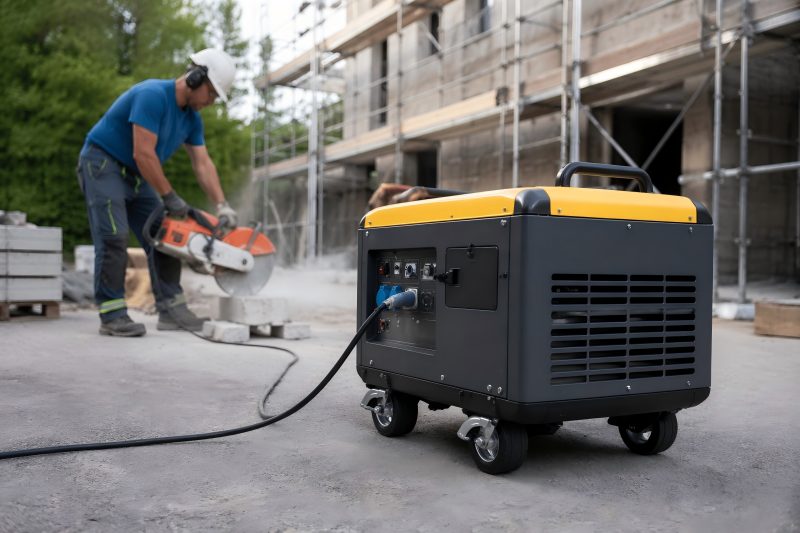
Health and Environmental Impact of Generator Noise
Human Health Effects
Continuous exposure to excessive noise can cause:
- Hearing damage: Especially above 85 dB
- Mental fatigue: Constant noise increases stress
- Sleep disruption: Even moderate noise affects rest
- Reduced productivity: Workers struggle to concentrate
In occupational settings, hearing protection may be required.
Environmental and Regulatory Concerns
Noise regulations vary by region but often include limits for:
- Residential zones
- Hospitals and schools
- Nighttime operations
Failure to comply can result in:
- Fines
- Project delays
- Operational shutdowns
How to Reduce Noise in Portable Diesel Generators
Effective noise reduction usually involves combining multiple strategies.
Use Soundproof or Silent Generators
Modern silent generators are engineered with noise reduction in mind.
- They feature integrated acoustic enclosures that trap and absorb sound
- Internal components are mounted on vibration isolation systems
- Airflow paths are designed to reduce turbulence noise
These generators are ideal for environments where noise must be minimized, such as residential areas or events.
Install Acoustic Enclosures
Acoustic enclosures are among the most effective noise control solutions.
Key Features:
- Multi-layer insulation: Combines dense materials with soft absorbers
- Sound-absorbing linings: Foam or fiberglass reduces internal reflections
- Ventilation channels: Designed to allow airflow while limiting noise escape
A properly designed enclosure can significantly reduce overall sound levels.
However, it is critical to ensure:
- Adequate ventilation to prevent overheating
- Safe exhaust routing to avoid gas buildup
Use High-Quality Mufflers and Silencers
The exhaust system is a major noise contributor, making silencers highly effective.
- Mufflers reduce noise by dissipating pressure waves
- Advanced designs use multi-chamber structures
- Some include absorption material to further dampen sound
Upgrading to a high-performance silencer is often one of the quickest improvements.
Optimize Generator Placement
Proper placement can reduce perceived noise without additional equipment.
Best Practices:
- Increase distance from people: Even a few meters can make a difference
- Avoid reflective surfaces: Do not place near walls or corners
- Direct exhaust away from buildings: Prevent sound reflection
Thoughtful placement is a low-cost but highly effective strategy.
Use Sound Barriers
Sound barriers physically block and absorb noise.
Options:
- Concrete walls: Highly effective for permanent installations
- Wooden panels: Affordable and easy to install
- Portable acoustic screens: Flexible for temporary setups
Barriers work best when placed between the generator and the noise-sensitive area.
Install Anti-Vibration Mounts
Vibration is a major source of structural noise.
Solutions:
- Rubber pads: Simple and cost-effective
- Spring isolators: Better for heavier equipment
- Composite mounts: Combine flexibility and strength
These reduce vibration transfer to the ground and surrounding structures.
Improve Ground Surface Conditions
Surface material affects how sound reflects.
- Hard surfaces reflect noise upward and outward
- Soft surfaces absorb and dampen sound energy
Using rubber mats or placing generators on soil can reduce noise propagation.
Perform Regular Maintenance
Routine maintenance ensures optimal performance and lower noise.
Maintenance Checklist:
- Tighten fasteners: Prevent rattling
- Inspect exhaust system: Fix leaks or damage
- Lubricate moving parts: Reduce friction noise
- Replace worn components: Maintain smooth operation
A neglected generator can become significantly louder over time.
Reduce Load When Possible
Operating conditions directly impact noise.
Tips:
- Avoid running at maximum capacity unnecessarily
- Distribute load across multiple units if possible
- Use energy-efficient equipment to reduce demand
Lower load levels generally result in quieter operation.
Consider Hybrid or Alternative Solutions
For noise-sensitive applications, alternative systems can help.
- Battery storage systems: Silent operation for low loads
- Solar + diesel hybrids: Reduce generator runtime
- Inverter generators: Much quieter for small applications
These solutions are increasingly popular in urban and residential settings.
Practical Noise Reduction Comparison
| Method | Noise Reduction Potential | Cost Level | Complexity |
| Acoustic enclosure | High (20–40 dB) | Medium–High | Medium |
| Muffler/silencer | Medium (5–15 dB) | Low–Medium | Low |
| Sound barriers | Medium (10–20 dB) | Medium | Medium |
| Placement optimization | Low–Medium | Low | Low |
| Maintenance | Low–Medium | Low | Low |
| Silent generator upgrade | Very High | High | Low |
Choosing the Right Noise Reduction Strategy
For Residential Use
Focus on quiet operation and compliance:
- Silent generators
- Acoustic enclosures
- Proper placement
For Construction Sites
Balance cost and practicality:
- Temporary sound barriers
- Durable mufflers
- Regular maintenance
For Industrial Applications
Require long-term, high-performance solutions:
- Full acoustic enclosures
- Advanced vibration isolation
- Optimized facility layout