A portable inverter generator for home is a compact backup power solution designed to provide cleaner, quieter, and more stable electricity during outages. Compared with traditional open-frame generators, inverter generators are often easier to move, more fuel-efficient at partial load, and better suited for sensitive electronics such as phones, laptops, routers, TVs, and smart home devices.
For homeowners, the main value is flexibility. A portable inverter generator can power essential appliances during a blackout, support emergency lighting, keep communication devices running, and provide backup electricity for refrigerators, freezers, fans, medical devices, or small heating equipment. However, safe placement and proper connection are critical because portable generators produce carbon monoxide, a colorless and odorless poison gas. The CDC states that portable backup generators produce carbon monoxide, which can kill without warning.
What Is a Portable Inverter Generator for Home?
A portable inverter generator is a fuel-powered generator that uses inverter technology to convert engine-produced electricity into stable AC power. This helps reduce voltage fluctuation and makes the generator more suitable for electronics and household appliances that need cleaner power.
For home use, these generators are commonly used for:
| Home Application | Typical Power Need | Notes |
| Mobile phones, laptops, router | 100W–500W | Good for communication and work-from-home needs |
| LED lights and fans | 200W–800W | Useful for short outages |
| Refrigerator or freezer | 600W–2,000W starting load | Starting watts may be much higher than running watts |
| Microwave or coffee maker | 800W–1,500W | Usually used one appliance at a time |
| Sump pump | 800W–2,500W starting load | Check surge wattage carefully |
| Small window AC | 1,000W–3,000W+ | Depends on BTU rating |
| Multiple home essentials | 3,000W–7,000W | Larger inverter generator recommended |
Why Choose an Inverter Generator for Home Backup?
A portable inverter generator is not always the cheapest option, but it offers several advantages for home users.
First, it usually provides cleaner power output than a conventional portable generator. This makes it a better choice for households that need to power sensitive devices such as computers, modems, battery chargers, smart TVs, and security systems.
Second, many inverter generators operate more quietly than traditional open-frame models. This is important for residential neighborhoods, nighttime use, and emergency situations where lower noise can improve comfort.
Third, inverter generators are often designed with fuel-saving engine speed control. Instead of running at full speed all the time, the engine can adjust output based on load demand, helping reduce fuel consumption during light use.
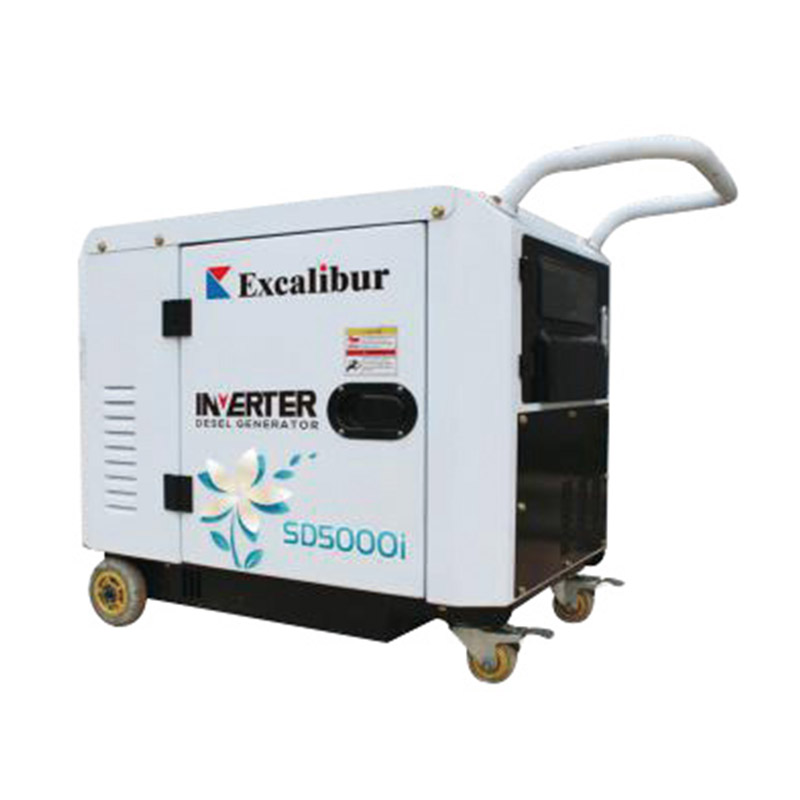
Portable Inverter Generator vs Traditional Generator
| Factor | Portable Inverter Generator | Traditional Portable Generator |
| Power Quality | Cleaner and more stable | More voltage fluctuation |
| Noise Level | Usually quieter | Usually louder |
| Fuel Efficiency | Better at partial load | Often less efficient |
| Portability | Compact models available | Heavier in many cases |
| Price | Usually higher | Often lower |
| Best For | Electronics, home essentials, RV, camping | Tools, heavy loads, budget backup |
For homeowners who mainly want to run essential appliances and electronics, an inverter generator is usually a better long-term option. For users who only need raw power for tools or non-sensitive equipment, a conventional generator may still be acceptable.
How Much Power Do You Need?
Before buying a portable inverter generator for home, calculate your essential load. Do not only look at running watts. Many appliances, especially refrigerators, freezers, sump pumps, and air conditioners, require higher starting watts.
| Generator Size | Suitable Home Use |
| 1,000W–2,000W | Phones, laptops, router, lights, small fan |
| 2,000W–3,500W | Refrigerator, lights, TV, router, small appliances |
| 3,500W–5,000W | Refrigerator, freezer, microwave, sump pump, basic home backup |
| 5,000W–7,500W | Larger home essentials, RV-style loads, multiple appliances |
| 7,500W+ | Heavier backup demand, but may require careful setup and fuel planning |
For most households, a 3,000W to 5,000W portable inverter generator is a practical range. It can support core appliances without becoming too large or difficult to move. For homes that need to run air conditioning, well pumps, or multiple large appliances, a higher-output model may be required.
Key Features to Consider
Running Watts and Starting Watts
Running watts show how much continuous power the generator can provide. Starting watts show the temporary surge power available when appliances start. For home backup, starting watts are especially important for motors and compressors.
Fuel Type
Portable inverter generators can operate on gasoline, propane, or dual-fuel systems.
| Fuel Type | Advantages | Limitations |
| Gasoline | Easy to find, strong output | Shorter storage life, needs safe storage |
| Propane | Cleaner storage, longer shelf life | Lower output on some models |
| Dual Fuel | Flexible during emergencies | Usually costs more |
| Diesel | Better for heavier-duty use | Less common in compact inverter models |
For home emergency use, a dual-fuel inverter generator is often attractive because propane stores longer and gasoline is widely available.
Noise Level
For residential use, noise matters. A quieter generator is better for neighborhoods, nighttime outages, and long operating periods. However, larger generators usually produce more noise than compact suitcase-style units.
Runtime
Runtime depends on fuel tank size, load level, and engine efficiency. A generator that runs 8–12 hours at partial load can be very convenient overnight. For longer outages, fuel planning becomes just as important as generator size.
CO Shutoff Sensor
Many modern portable generators include a carbon monoxide shutoff system. This feature can help reduce risk, but it does not make indoor or garage operation safe. CPSC warns that portable generators should never be used indoors, in garages, basements, sheds, or near windows and vents.
Transfer Switch Compatibility
If you want to power home circuits directly, do not plug the generator into a wall outlet. OSHA warns that connecting a generator without a proper transfer switch can backfeed electricity, creating serious electrocution risks for utility workers and others.
Safe Use of a Portable Inverter Generator at Home
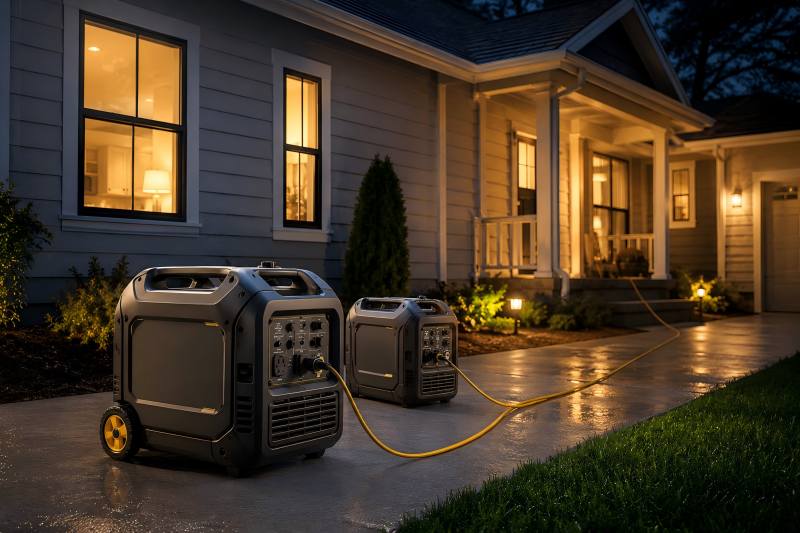
Safety is the most important part of using any generator. A portable inverter generator should always be operated outdoors, far from windows, doors, vents, garages, and enclosed spaces. CPSC states that generator exhaust contains carbon monoxide and that using a generator indoors can kill within minutes.
Basic safety rules include:
| Safety Area | What to Do |
| Placement | Use outside only, far from windows, doors, and vents |
| Ventilation | Keep open space around the generator |
| Electrical Connection | Use rated extension cords or a transfer switch |
| Refueling | Turn off and cool the generator before refueling |
| Weather Protection | Keep dry and use proper generator covers if needed |
| CO Protection | Install working carbon monoxide alarms at home |
Keep generators dry, use rated grounded cords, avoid overload, and let the unit cool before refueling.
Best Uses for a Portable Inverter Generator at Home
A portable inverter generator is best for essential backup, not unlimited whole-house power. It is especially useful for:
- Refrigerator and freezer backup
- Internet router and work-from-home devices
- Emergency lighting
- Phone and laptop charging
- Small kitchen appliances
- Fans or small AC units
- Medical equipment with proper power requirements
- Sump pump or drainage support
- Home security and communication systems
For heavy central air conditioning, electric water heaters, electric ovens, and full-house backup, homeowners may need a larger generator system or professionally installed standby generator.
Pros and Cons of Portable Inverter Generators for Home
| Pros | Cons |
| Cleaner power for electronics | Higher price than traditional generators |
| Quieter operation | Limited output on small models |
| Portable and flexible | Requires fuel storage |
| Good for emergency essentials | Must be used outdoors only |
| Fuel-efficient at partial load | Manual setup during outages |
| Useful for home, camping, and RV use | Larger models can be heavy |
Maintenance Tips
To keep a portable inverter generator ready for home emergencies, maintenance should be planned before an outage happens.
| Maintenance Task | Why It Matters |
| Check oil level | Prevents engine damage |
| Run the generator periodically | Keeps the engine ready |
| Use fresh fuel or stabilizer | Reduces starting problems |
| Clean or replace air filter | Supports stable operation |
| Inspect cords and outlets | Improves electrical safety |
| Store in a dry place | Reduces corrosion and damage |
| Review the manual | Ensures correct operation |
A generator that sits unused for years may fail when needed most. Regular testing and proper fuel management are important for emergency readiness.
How to Choose the Right Model
When selecting a portable inverter generator for home, start with your emergency priority list. List essential outage appliances, then estimate continuous power and maximum startup wattage needed.
A good home backup model should offer:
- Enough running and starting watts for essential appliances
- Low total harmonic distortion for sensitive electronics
- Safe outlet layout for your devices
- Long enough runtime for overnight or emergency use
- CO shutoff protection
- Reliable after-sales support
- Easy maintenance and accessible spare parts
- Manageable weight and transport design
For small homes or apartments, a 2,000W–3,500W unit may be enough for basic electronics and limited appliances. For larger homes, a 4,000W–7,000W inverter generator is more practical.
A portable inverter generator for home is a smart backup power choice for homeowners who want clean, quiet, and flexible electricity during outages. It can help keep essential appliances, communication devices, lighting, and electronics running when the grid fails.
The best choice depends on your power demand, fuel preference, runtime needs, portability requirements, and safety setup. For basic emergency use, a compact inverter generator may be enough. For refrigerators, freezers, sump pumps, and multiple appliances, a larger dual-fuel inverter generator is usually more suitable.
Most importantly, use the generator safely. Operate it outdoors only, keep it far from openings, install CO alarms, avoid overload, and use a transfer switch if connecting to home circuits. A well-chosen and properly used portable inverter generator can make home power outages safer, easier, and more manageable.