A vibrating screed machine is an efficient tool for concrete leveling. It helps spread, compact, and level fresh concrete more evenly than manual methods. By using vibration and a straight screed blade, it can reduce labor, improve flatness, and create a better foundation for finishing work.
However, good leveling depends not only on the machine itself. Proper base preparation, accurate height control, correct concrete slump, steady operation, and timely surface checking are all important. When the vibrating screed is used correctly, it can greatly improve concrete surface quality and reduce later repair costs.
What Is a Vibrating Screed Machine?
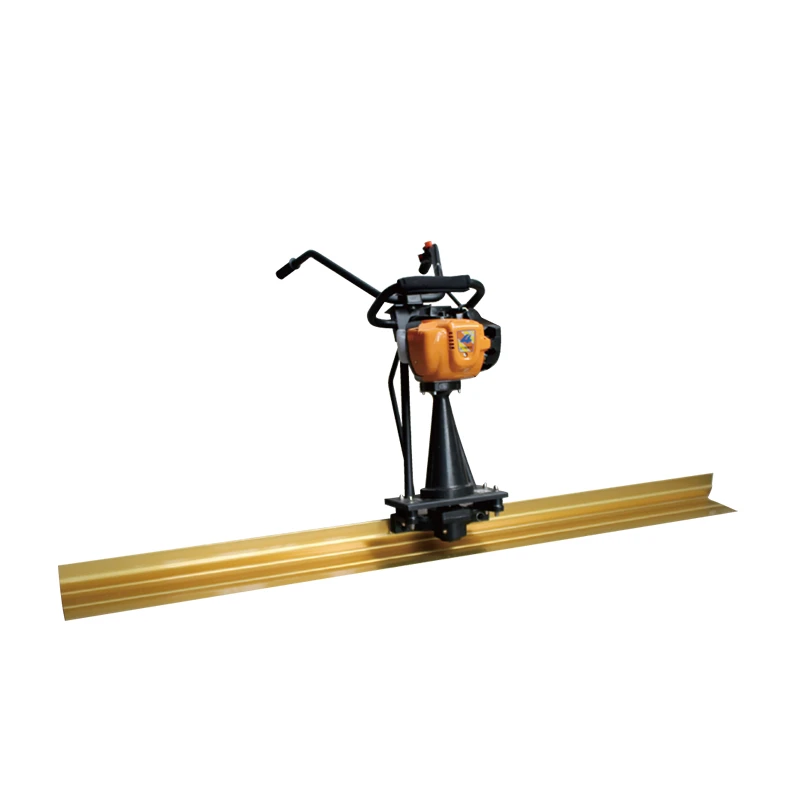
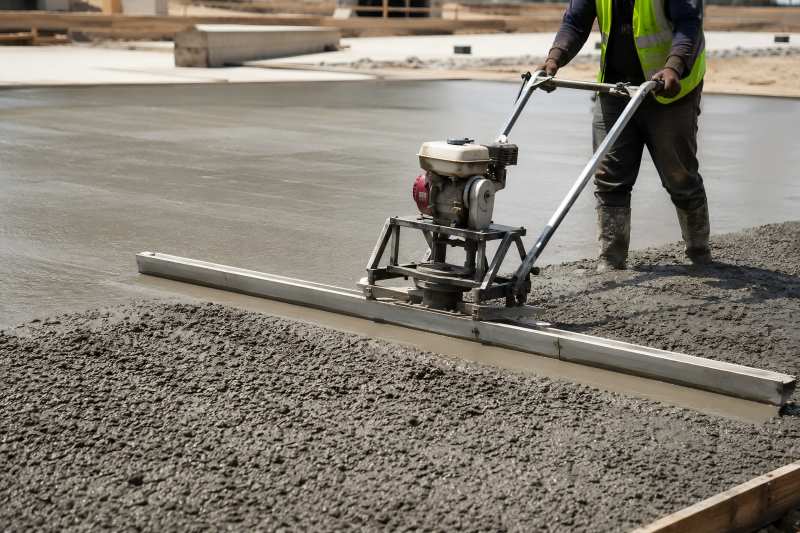
A vibrating screed machine is a concrete leveling machine used to strike off and smooth freshly poured concrete. It usually consists of a vibrating motor or engine, a screed bar or blade, handles, and a control system. During operation, the screed blade moves across the concrete surface while vibration helps settle the concrete and remove trapped air.
The main purpose of a vibrating screed is not only to make the surface flat, but also to improve the uniformity of the concrete layer. The vibration helps concrete flow into low areas, while the straight blade removes excess material from high areas.
Why Concrete Leveling Matters
Concrete leveling directly affects the quality of the final surface. Poor leveling can cause many problems after the concrete hardens.
Common problems caused by poor leveling include:
- Uneven surface height
- Water ponding
- Cracks caused by uneven thickness
- Poor floor flatness
- Difficulty installing tiles, epoxy, or floor coatings
- Increased grinding and repair cost
- Shorter service life of the slab
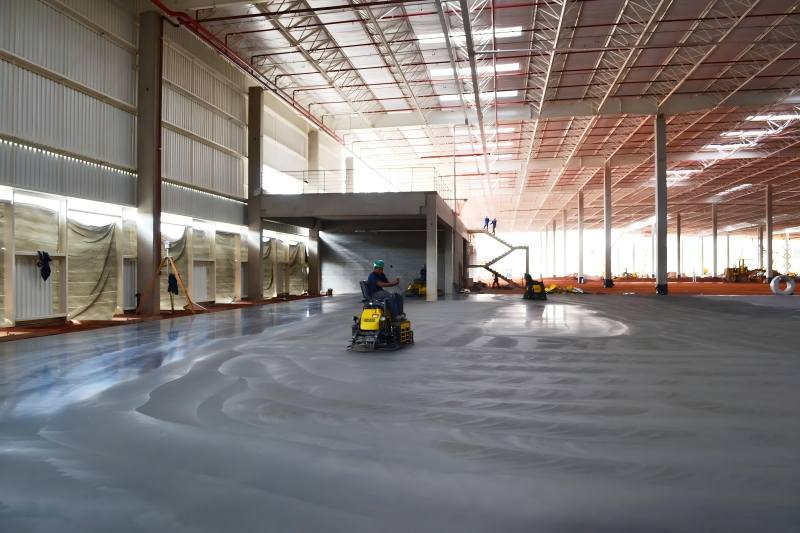
For industrial floors, leveling is even more important. Forklifts, shelves, machinery, and production lines all require a stable and flat concrete base. A small surface error can affect safety, equipment movement, and daily operation.
How a Vibrating Screed Helps with Concrete Leveling
A vibrating screed improves concrete leveling in three main ways.
First, the screed blade cuts off excess concrete and brings the surface to the required height. This creates a more even plane.
Second, vibration makes the concrete more workable. It helps concrete spread naturally, fill low spots, and reduce voids.
Third, the machine reduces human error. Manual leveling depends heavily on worker experience, physical strength, and consistency. A vibrating screed provides more stable movement and vibration, making the leveling result more uniform.
Basic Concrete Leveling Process
The vibrating screed is usually used after concrete is poured and roughly distributed. The general leveling process includes site preparation, height control, concrete placing, vibrating screeding, surface checking, and finishing.
| Step | Main Purpose | Key Point |
| Site preparation | Prepare the base before pouring | Ensure the base is compacted and clean |
| Height control | Set correct concrete level | Use forms, rails, laser level, or benchmarks |
| Concrete placing | Pour concrete evenly | Avoid too much concrete in one area |
| Rough spreading | Distribute concrete before screeding | Use rakes or shovels |
| Vibrating screeding | Level and compact the surface | Move steadily and keep blade balanced |
| Surface checking | Confirm flatness | Check high and low spots immediately |
| Finishing | Improve surface texture | Use float, trowel, or finishing machine |
Preparing for Accurate Concrete Leveling
Good leveling starts before the vibrating screed touches the concrete. If the base, formwork, or height control is not accurate, the final surface will be difficult to correct.
Before pouring concrete, make sure the subgrade is stable and compacted. Soft or uneven ground may cause slab settlement later. The base should also be cleaned of loose soil, stones, oil, and standing water.
The formwork must be fixed firmly. Since the vibrating screed often uses side forms or guide rails as height references, any movement in the forms can affect the final level. Check the form height carefully before pouring.
For higher-precision projects, use a laser level or leveling instrument to mark reference points. These reference points help workers control concrete thickness and surface elevation during the whole process.
How to Use a Vibrating Screed for Leveling
The correct use of a vibrating screed is essential for achieving a flat concrete surface.
Before starting, pour the concrete slightly higher than the final surface level. This gives the screed enough material to cut and move. If there is too little concrete, low spots may appear after screeding.
Place the screed blade on the forms, rails, or fresh concrete surface depending on the machine type. Start the engine or motor and allow the vibration to become stable. Then pull or push the screed slowly across the concrete surface.
The operator should keep the screed blade level. Do not lift one side too much, because this can create an uneven slope. Move at a steady speed. Moving too fast may leave low areas or an unfinished surface. Moving too slowly may cause too much vibration in one place, resulting in segregation or surface bleeding.
During leveling, workers should observe the concrete in front of the blade. There should be a small roll of concrete in front of the screed blade. This roll helps fill low areas as the screed moves forward. If the roll is too large, remove excess concrete. If there is no roll, add more concrete immediately.
Important Leveling Techniques
To achieve better concrete leveling results, operators should follow several practical techniques.
Maintain a Consistent Screeding Speed
A steady speed helps create a uniform surface. Sudden stops, fast pulling, or uneven movement can leave marks or waves. Move steadily and slowly to achieve a flatter, more consistent concrete surface.
Keep the Screed Blade Clean
Concrete buildup on the blade can affect leveling accuracy. Clean the screed blade regularly during work, especially when the concrete mix is sticky.
Control the Concrete Slump
Concrete that is too dry is hard to level, while concrete that is too wet may cause bleeding, shrinkage, or weak surface strength. The correct slump depends on the project type, but the mix should be workable enough for vibrating screeding.
Fill Low Spots Immediately
After the first pass, check the surface. If low areas appear, add fresh concrete and screed again. Do not wait until the concrete starts to set, because late repair may reduce bonding quality.
Avoid Over-Vibration
Vibration is useful, but excessive vibration may separate cement paste, water, and aggregates. This can weaken the surface. Use enough vibration to level and consolidate the concrete, but do not keep the screed in one place too long.
Common Concrete Leveling Problems and Solutions
| Problem | Possible Cause | Solution |
| Low spots after screeding | Not enough concrete in front of blade | Add concrete and re-screed |
| Wavy surface | Uneven pulling speed or unstable blade | Move steadily and keep blade balanced |
| Surface bleeding | Concrete too wet or over-vibrated | Control water content and reduce vibration time |
| Rough surface | Concrete too dry or blade not clean | Adjust mix workability and clean blade |
| Uneven slab thickness | Poor height control | Use accurate forms, rails, or laser level |
| Screed marks | Wrong blade angle or sudden stopping | Keep consistent angle and motion |
Different Types of Vibrating Screeds for Leveling
Different projects require different types of vibrating screeds.
A hand-held vibrating screed is suitable for small and medium concrete slabs, sidewalks, patios, and residential floors. Easy to transport and user-friendly.
A truss screed is used for wider concrete surfaces such as roads, bridges, factory floors, and large slabs. It has a longer structure and can cover a wider leveling area.
A laser screed is used for high-precision industrial floors. It uses laser control to maintain accurate elevation and flatness, making it suitable for warehouses, logistics centers, and large production workshops.
| Type | Suitable Application | Main Advantage |
| Hand-held vibrating screed | Small slabs, sidewalks, house floors | Flexible and easy to operate |
| Truss screed | Roads, bridges, wide slabs | Wide leveling width |
| Laser screed | Industrial floors, warehouses | High leveling accuracy |
| Roller screed | Slopes, pervious concrete, special surfaces | Good for certain surface textures |
Vibrating Screed Selection for Flat Concrete
When choosing a vibrating screed machine, the first thing to consider is the project size. For small slabs, a lightweight hand-held screed may be enough. For large surfaces, a wider screed can improve efficiency.
The second factor is leveling accuracy. General construction floors may only require standard flatness, while industrial floors need higher precision. For high-flatness floors, laser screeds or guide-rail systems are better choices.
The third factor is concrete thickness and mix type. Thicker slabs or stiffer concrete may require stronger vibration. However, too much vibration is not always better. The machine should match the concrete mix and job conditions.
The blade length is also important. A longer blade can cover more area, but it is harder to control. A shorter blade is easier for small spaces but may require more passes.
Best Practices for Better Concrete Leveling
For better leveling results, plan the pouring sequence before work starts. Concrete should be poured in a logical direction, allowing the vibrating screed to move smoothly without interruption.
Keep enough workers on site. One operator may control the screed, while others add concrete, remove excess material, check the level, and finish the surface. Good teamwork can greatly improve leveling quality.
Check the surface immediately after screeding. Check surface flatness with a straightedge, level, or laser measuring tool. Early correction is easier and more reliable than later repair.
After vibrating screeding, finishing should be done at the right time. If finishing starts too early, water may rise to the surface and weaken the top layer. If finishing starts too late, the surface may become difficult to smooth.
Maintenance Tips for Vibrating Screed Machines
A well-maintained vibrating screed gives more stable leveling performance. After each use, clean the screed blade, motor housing, and handle area. Hardened concrete on the blade may affect the next leveling job.
Check bolts, vibration parts, bearings, and engine components regularly. Loose parts can cause unstable vibration and poor leveling results. For engine-powered machines, inspect oil, fuel, air filter, and spark plug according to the manufacturer’s instructions.
Keep the machine in a dry area to protect it from rust. Before the next use, test the machine briefly to make sure vibration is normal.