Concrete vibrating screeds and concrete vibrators are not the same. They both use vibration, but they are designed for different jobs.
A concrete vibrating screed is mainly used to level and finish the concrete surface. It is ideal for slabs, floors, pavements, driveways, and other flatwork projects.
A concrete vibrator is mainly used to compact concrete internally. It compacts concrete, removes air voids, reduces honeycombing, and improves reinforcement bonding.
In simple terms, a vibrating screed makes the surface flat, while a concrete vibrator makes the inside of the concrete dense and strong.
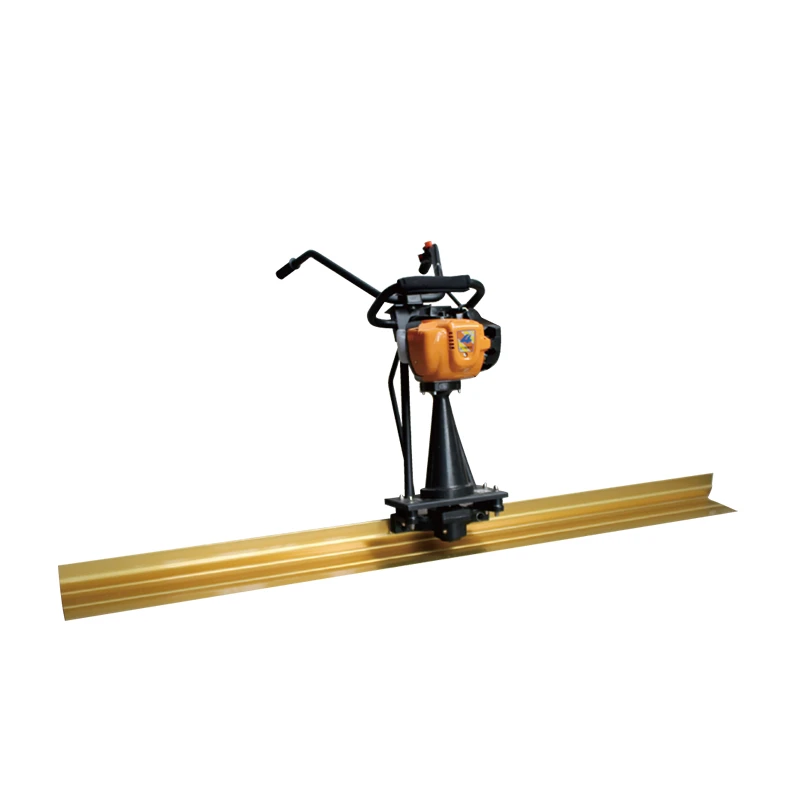
What Is a Concrete Vibrating Screed?
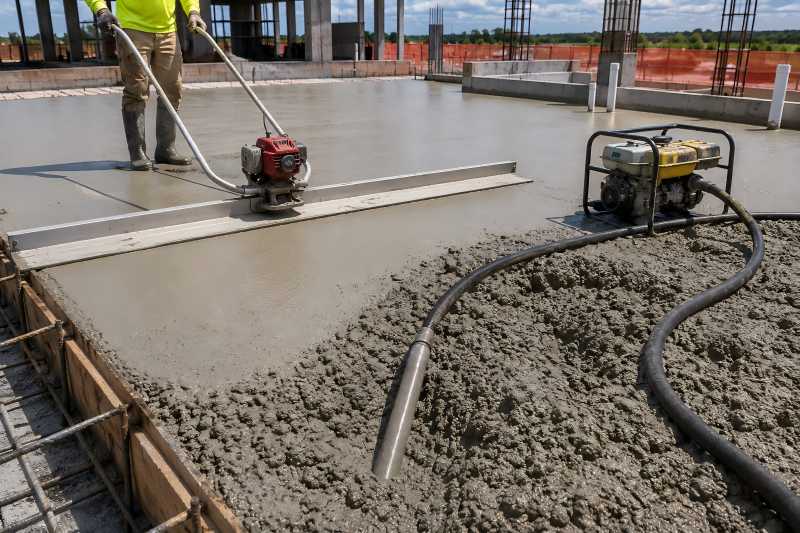
A concrete vibrating screed levels and smooths newly poured concrete surfaces. It usually consists of a screed board, vibrating motor, handle, and frame. During operation, the screed board moves across the concrete surface while vibration helps settle the material and remove minor air pockets near the surface.
The main purpose of a vibrating screed is to create a flat and even concrete surface.
Concrete vibrating screeds are commonly used for:
- Concrete floors
- Driveways
- Sidewalks
- Warehouses
- Parking lots
- Residential slabs
- Industrial floor slabs
- Road and pavement construction
Compared with manual screeding, a vibrating screed improves efficiency and reduces labor intensity. The vibration helps the screed board move more smoothly over the concrete, making it easier to strike off excess material and achieve a more uniform surface.
| Pros | Cons of |
| Faster concrete leveling for slab and flatwork projects | Limited deep compaction ability |
| Helps create a smoother surface finish | Not suitable as the only tool for thick concrete sections |
| Reduces labor intensity compared with manual screeding | May not remove deep air pockets |
| Improves surface consistency across large areas | Requires proper concrete spreading before use |
| Easy to operate and control | Final surface quality depends on operator skill |
| Suitable for large flat concrete areas | Not ideal for heavily reinforced structures |
| Improves working efficiency | Cannot fully replace an internal concrete vibrator |
| Works well with aluminum or steel screed boards | Mainly effective for surface leveling and light consolidation |
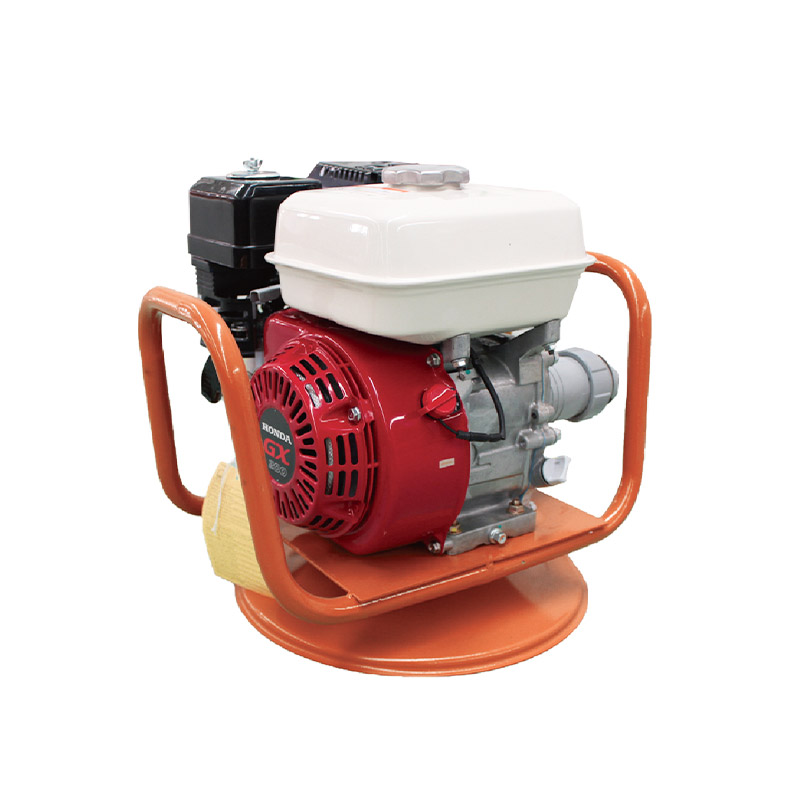
What Is a Concrete Vibrator?
A concrete vibrator compacts fresh concrete internally by removing trapped air. It is designed to remove trapped air bubbles and help concrete flow around reinforcement, corners, and formwork.
Concrete vibrators are especially important for thick concrete sections, reinforced concrete structures, columns, beams, walls, foundations, and deep pours.
Common types of concrete vibrators include:
- Internal concrete vibrator
- Needle vibrator
- Immersion vibrator
- External form vibrator
- Surface vibrator
The most common type is the internal vibrator, also called a needle vibrator. It has a vibrating head that is inserted directly into fresh concrete. Vibration helps concrete settle, so trapped air can rise and escape. This improves density, strength, and durability.
| Pros of Concrete Vibrator | Cons of Concrete Vibrator |
| Removes trapped air from concrete | Does not level the concrete surface |
| Improves internal compaction | Requires correct insertion method |
| Reduces honeycombing | Over-vibration may cause segregation |
| Helps concrete flow around rebar | Under-vibration may leave air voids |
| Improves structural strength | More labor is needed for large areas |
| Suitable for thick and reinforced concrete | Not designed for final surface finishing |
| Improves durability | Requires skilled operation |
| Reduces internal voids | May need to be used with a screed for best results |
Are Concrete Vibrating Screeds and Concrete Vibrators the Same?
No, they are not the same.
Both rely on vibration, but each serves a different purpose. A concrete vibrating screed works mainly on the surface of the concrete to level and finish it. A concrete vibrator works mainly inside the concrete to compact it and remove air voids.
In simple terms:
| Equipment | Main Function |
| Concrete vibrating screed | Levels and finishes the concrete surface |
| Concrete vibrator | Compacts concrete internally and removes air bubbles |
A vibrating screed can provide light surface vibration, but it cannot replace a concrete vibrator in deep or reinforced concrete work. Similarly, a concrete vibrator can compact concrete, but it cannot create a flat and level surface like a vibrating screed.
Key Difference Between Concrete Vibrating Screed and Concrete Vibrator
The biggest difference is their working purpose.
A vibrating screed is used after concrete has been poured and roughly spread. It moves across the top surface and helps create the required level. It is mainly a leveling and finishing tool.
A concrete vibrator is used while fresh concrete is being poured. It is inserted into the concrete or attached to formwork to compact the material. It is mainly a consolidation tool.
Comparison Table
| Item | Concrete Vibrating Screed | Concrete Vibrator |
| Main purpose | Leveling and surface finishing | Internal compaction |
| Working position | On concrete surface | Inside concrete or on formwork |
| Main effect | Creates flat surface | Removes trapped air |
| Suitable concrete depth | Shallow to medium slab surface | Medium to deep concrete sections |
| Common applications | Floors, slabs, pavements | Columns, beams, walls, foundations |
| Surface finish | Yes | No |
| Internal compaction | Limited | Strong |
| Operator method | Pull or push across surface | Insert vibrating head into concrete |
| Replacement relationship | Cannot fully replace vibrator | Cannot replace screed |
How Does a Concrete Vibrating Screed Work?
A concrete vibrating screed works by combining a straight screed board with a vibration source. The motor generates vibration, which is transferred to the screed board. As the operator pulls or pushes the machine across the wet concrete, the board levels the surface.
The vibration helps in several ways:
- Reduces friction between the board and concrete
- Helps settle the concrete surface
- Improves surface smoothness
- Allows easier movement of the screed
- Reduces manual effort
- Helps distribute concrete more evenly
However, the vibration of a screed mainly affects the upper layer of the concrete. For thin slabs, this may be enough in many cases. But for thick concrete or reinforced concrete, deeper compaction is still needed.
How Does a Concrete Vibrator Work?
A concrete vibrator works by producing high-frequency vibration inside the concrete. When inserted into fresh concrete, the vibrating head loosens the mix and helps trapped air escape. This allows the concrete particles to move closer together and trapped air bubbles to escape.
Proper vibration can help prevent common concrete problems such as:
- Honeycombing
- Voids
- Weak spots
- Poor bonding around rebar
- Uneven density
- Surface defects
- Reduced compressive strength
The vibrator should be inserted vertically into the concrete at proper intervals. It should not be left in one place too long, because over-vibration may cause segregation, where coarse aggregates sink and cement paste rises.
When Should You Use a Concrete Vibrating Screed?
You should use a concrete vibrating screed when the main goal is to level and smooth a concrete surface.
It is suitable for:
- Flat concrete slabs
- Floor construction
- Pavement work
- Driveway construction
- Sidewalk projects
- Warehouse floors
- Parking areas
- Light to medium concrete flatwork
A vibrating screed is especially useful when you need high efficiency over a wide surface area. It reduces labor effort and speeds up concrete leveling.
When Should You Use a Concrete Vibrator?
You should use a concrete vibrator when the concrete needs internal compaction.
It is suitable for:
- Columns
- Beams
- Walls
- Foundations
- Deep slabs
- Reinforced concrete
- Concrete with dense rebar
- Formwork structures
- Thick pours
A concrete vibrator is important when air pockets inside the concrete could affect strength and durability.
Can a Vibrating Screed Replace a Concrete Vibrator?
In some thin slab applications, a vibrating screed may provide enough surface vibration for basic leveling and light consolidation. However, in most structural or thick concrete applications, a vibrating screed cannot replace a concrete vibrator.
A vibrating screed only vibrates from the surface. Its vibration depth is limited. If the concrete layer is thick, air bubbles may remain inside the lower part of the slab. This can cause weak areas and reduce concrete quality.
For structural concrete, reinforced concrete, or deep pours, a concrete vibrator is still required.
Can a Concrete Vibrator Replace a Vibrating Screed?
No. A concrete vibrator cannot replace a vibrating screed because it does not level the surface. Even if the concrete is well compacted internally, the surface still needs to be struck off and finished.
After using a concrete vibrator, workers usually still need a screed board, vibrating screed, bull float, or other finishing tools to create a smooth and level surface.
Should You Use Both Tools Together?
In many concrete projects, using both tools gives the best result.
For example, in a thick concrete slab, workers may first use a concrete vibrator to compact the concrete internally. Then they use a vibrating screed to level and finish the surface.
This combination can provide:
- Better internal compaction
- Fewer air voids
- Higher concrete density
- Smoother surface
- More accurate leveling
- Better overall concrete quality
For professional concrete construction, these two tools are often complementary rather than competing.
Common Mistakes to Avoid
When using a vibrating screed or concrete vibrator, improper operation can affect the final result.
Common mistakes include:
| Mistake | Possible Problem |
| Using only a vibrating screed for deep concrete | Internal air voids may remain |
| Using only a vibrator without screeding | Surface may be uneven |
| Over-vibrating concrete | Segregation and bleeding |
| Under-vibrating concrete | Honeycombing and weak spots |
| Moving the screed too fast | Poor leveling result |
| Poor concrete spreading before screeding | Uneven slab thickness |
| Wrong vibrator spacing | Inconsistent compaction |
How to Choose the Right Equipment
When choosing between a concrete vibrating screed and a concrete vibrator, consider the project type.
Choose a concrete vibrating screed if your main need is:
- Surface leveling
- Slab finishing
- Faster flatwork
- Reduced manual screeding
- Smooth floor or pavement surface
Choose a concrete vibrator if your main need is:
- Internal compaction
- Air bubble removal
- Stronger structural concrete
- Better consolidation around rebar
- Prevention of honeycombing
Use both if your project requires both strong internal compaction and accurate surface leveling.
For thin slabs and general flatwork, a vibrating screed may be enough in some cases. For thick concrete, structural concrete, or reinforced concrete, a concrete vibrator is usually necessary. For the best concrete quality, both tools can be used together: the vibrator for internal compaction and the vibrating screed for surface leveling.