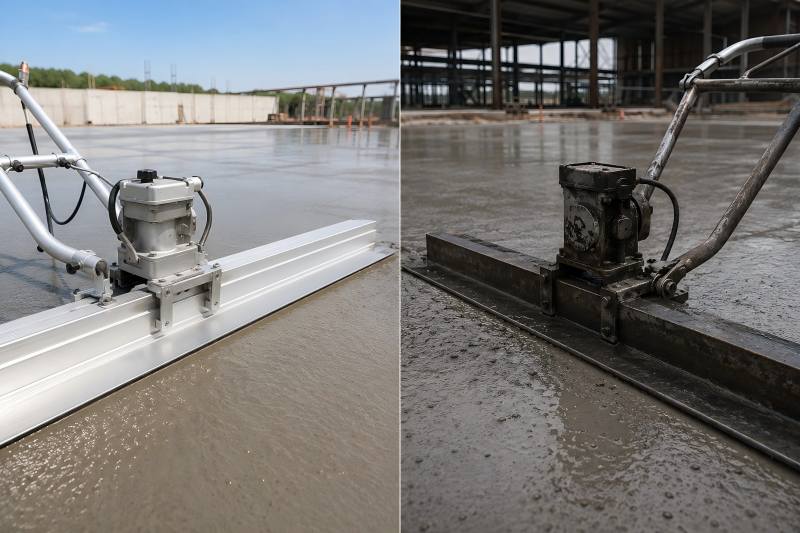
Both aluminum screed boards and steel screed boards can be effective for concrete leveling, but they are designed for different priorities.
An aluminum screed board is better for users who need lightweight operation, easy handling, corrosion resistance, and low maintenance. It suits most residential, commercial, and general concrete leveling projects.
A steel screed board is better for users who need maximum strength, high rigidity, and heavy-duty durability. It is suitable for industrial floors, road construction, infrastructure projects, and rough working environments.
What Is a Screed Board?
A screed board is a straight bar or blade used to level freshly poured concrete. It is moved across the concrete surface to remove high spots, fill low areas, and create a uniform slab thickness.
Screed boards are commonly used in:
- Residential slabs
- Driveways
- Sidewalks
- Warehouses
- Industrial floors
- Road construction
- Concrete foundations
- Large flatwork projects
The board must be straight, stable, and strong enough to maintain accurate leveling during operation. If the board bends, twists, or wears unevenly, the final concrete surface may become uneven.
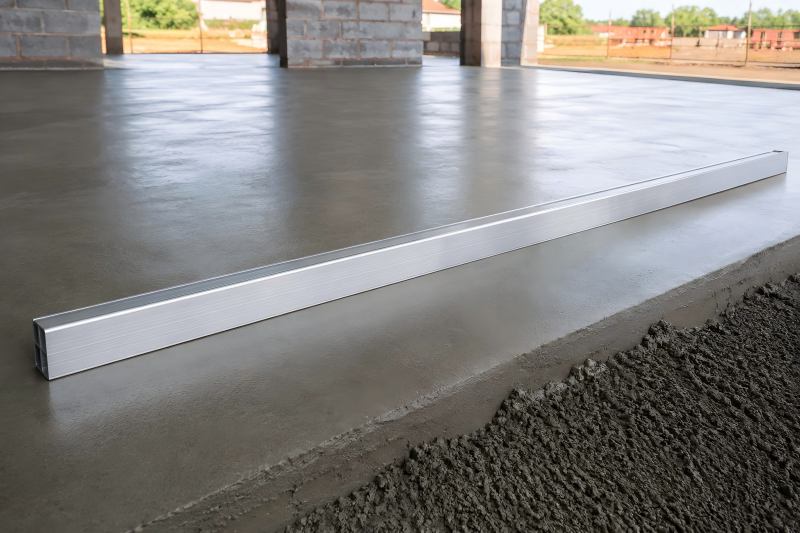
Aluminum Screed Board
An aluminum screed board is made from aluminum alloy. It is valued for its low weight, easy operation, and rust resistance. Aluminum boards are often used with vibrating screeds and manual screeds for both small and medium-sized concrete projects.
Main Features of Aluminum Screed Boards
| Feature | Description |
| Weight | Lightweight and easy to move |
| Corrosion resistance | Does not rust easily |
| Handling | Suitable for long working hours |
| Surface finish | Helps create smooth concrete surfaces |
| Maintenance | Easy to clean and store |
| Common use | Residential, commercial, and general concrete leveling |
Because aluminum is lighter than steel, workers can operate the screed with less physical effort. This is ideal for large-area leveling or frequent jobsite movement.
| Pros | Cons |
| Lightweight structure, easy to lift and operate | Lower impact resistance than steel |
| Easy to transport between jobsites | May bend or deform if mishandled |
| Reduces operator fatigue during long working hours | Not ideal for extremely heavy-duty concrete work |
| Good corrosion resistance in wet environments | Can be more expensive than basic steel boards |
| Moves smoothly across fresh concrete | Requires proper storage to avoid damage |
| Easy to clean and maintain after use | Less suitable for rough jobsite conditions |
| Suitable for most general concrete leveling projects | May not provide the same rigidity as steel |
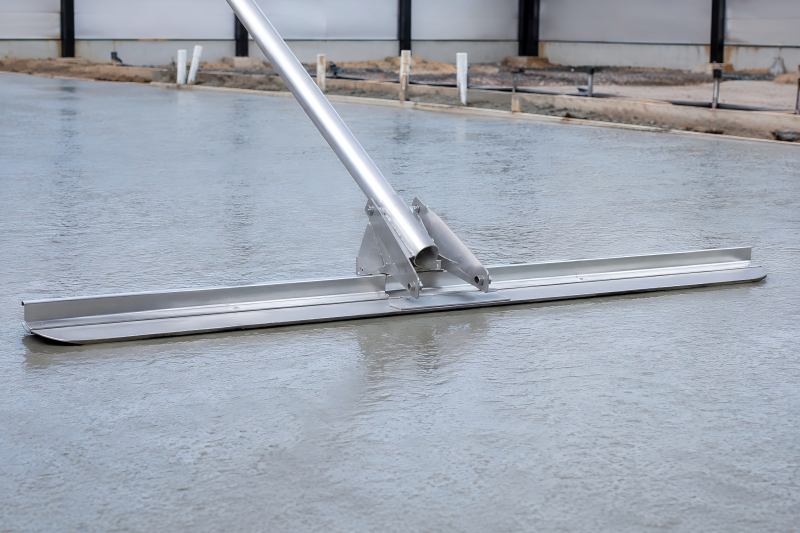
Steel Screed Board
A steel screed board is made from steel or steel alloy. It is usually stronger but heavier than aluminum. Steel boards are often used in heavy-duty construction environments where impact resistance, rigidity, and long service life are important.
Main Features of Steel Screed Boards
| Feature | Description |
| Weight | Heavier than aluminum |
| Strength | High rigidity and impact resistance |
| Durability | Suitable for tough jobsite conditions |
| Stability | Good for heavy-duty leveling |
| Maintenance | Requires rust prevention |
| Common use | Industrial slabs, roads, large construction projects |
Steel screed boards are valued for their strength. They can withstand rough handling and heavy jobsite use. However, their weight can make operation more tiring, especially for manual work.
| Pros | Cons |
| High rigidity for stable concrete leveling | Heavier than aluminum boards |
| Strong impact resistance on tough jobsites | Can cause more operator fatigue |
| Good durability in demanding construction environments | Harder to transport, carry, and install |
| Suitable for heavy concrete work and stiff mixes | Requires rust prevention and proper storage |
| Stable performance under pressure | More difficult to clean and maintain |
| Long service life with proper maintenance | Not ideal for small teams or long manual operation |
Aluminum Screed Board vs Steel Screed Board: Key Differences
Weight and Ease of Operation
The biggest difference between aluminum and steel screed boards is weight.
Aluminum’s lighter weight makes screed boards easier to handle, move, and operate. For workers who use a screed machine for several hours, lighter weight can reduce fatigue and improve productivity.
Steel screed boards are heavier. This can provide better downward pressure on the concrete, but it also makes the screed harder to move. For small teams or manual leveling work, steel may slow down the process.
| Material | Weight Performance |
| Aluminum | Lightweight, easy to operate |
| Steel | Heavy, more labor-intensive |
Better choice for easy handling: Aluminum screed board
Strength and Rigidity
Steel is stronger and more rigid than aluminum. This means a steel screed board is less likely to bend under heavy pressure. For very demanding applications, such as thick concrete slabs, rough aggregates, or large industrial floors, steel can provide excellent stability.
Aluminum is also strong enough for most concrete leveling jobs, especially when made with quality aluminum alloy and proper structural design. However, aluminum may be more likely to deform if it is dropped, hit by heavy equipment, or used in extremely rough environments.
| Material | Strength Performance |
| Aluminum | Good strength for general use |
| Steel | Higher rigidity and impact resistance |
Better choice for heavy-duty strength: Steel screed board
Corrosion Resistance
Aluminum has a natural advantage in corrosion resistance. Aluminum resists rust, making it suitable for wet concrete and outdoor jobsites. After use, an aluminum screed board is easier to clean and maintain.
Steel may rust without proper cleaning, drying, or coating. Concrete moisture, rain, and long-term storage in humid conditions can cause corrosion. Rust may affect the board surface and reduce service life.
| Material | Corrosion Resistance |
| Aluminum | Excellent, rust-resistant |
| Steel | Needs anti-rust maintenance |
Better choice for corrosion resistance: Aluminum screed board
Durability and Service Life
Steel usually has better resistance to impact and wear. In harsh construction environments, a steel screed board can last a long time if it is properly maintained. It is suitable for projects where equipment may face rough use, heavy aggregates, or frequent transportation.
Aluminum screed boards are durable when properly used and maintained. Although they resist rust, they may be more vulnerable to dents or bending compared with steel. For contractors who value lightweight operation and regular maintenance, aluminum is still a reliable option.
| Material | Durability |
| Aluminum | Long-lasting with proper care |
| Steel | Very durable under tough use |
Better choice for rough jobsites: Steel screed board
Surface Finish Quality
Both aluminum and steel screed boards can produce good concrete surface results if the board is straight and the operator uses correct leveling techniques.
Aluminum boards are often preferred for smooth finishing because they are easier to control. A lighter screed can move more smoothly across the concrete surface, especially when paired with a vibrating screed machine.
Steel boards provide more weight and pressure, which can help with dense or stiff concrete mixes. However, if the board is too heavy or difficult to control, it may cause uneven movement or operator fatigue.
| Material | Surface Finish |
| Aluminum | Smooth operation, easy control |
| Steel | Stable pressure, good for tough mixes |
Better choice for general smooth finishing: Aluminum screed board
Maintenance Requirements
Aluminum screed boards are easy to maintain. After use, workers only need to clean off concrete residue and store the board properly. Aluminum performs better in wet conditions because it resists corrosion.
Steel screed boards require more maintenance. Concrete residue should be removed immediately after use. The board should be dried before storage, and anti-rust oil or protective coating may be needed. If rust develops, it may affect the smoothness and accuracy of the board.
Maintenance Comparison
| Item | Aluminum Screed Board | Steel Screed Board |
| Cleaning | Easy | Moderate |
| Rust prevention | Not usually required | Required |
| Storage | Simple | Needs dry storage |
| Long-term care | Low maintenance | Higher maintenance |
Better choice for low maintenance: Aluminum screed board
Cost Comparison
Steel screed boards may sometimes have a lower material cost, depending on design, size, and supplier. However, steel may require more maintenance over time because of rust prevention and cleaning needs.
Aluminum screed boards can be more expensive in some cases, but they may reduce labor fatigue and maintenance time. For contractors who use screeds frequently, the higher initial cost may be balanced by improved efficiency.
| Cost Factor | Aluminum | Steel |
| Initial cost | Medium to higher | Often lower to medium |
| Labor efficiency | Higher | Lower for manual use |
| Maintenance cost | Lower | Higher |
| Long-term value | Good for frequent use | Good for heavy-duty use |
Better choice for overall convenience: Aluminum screed board
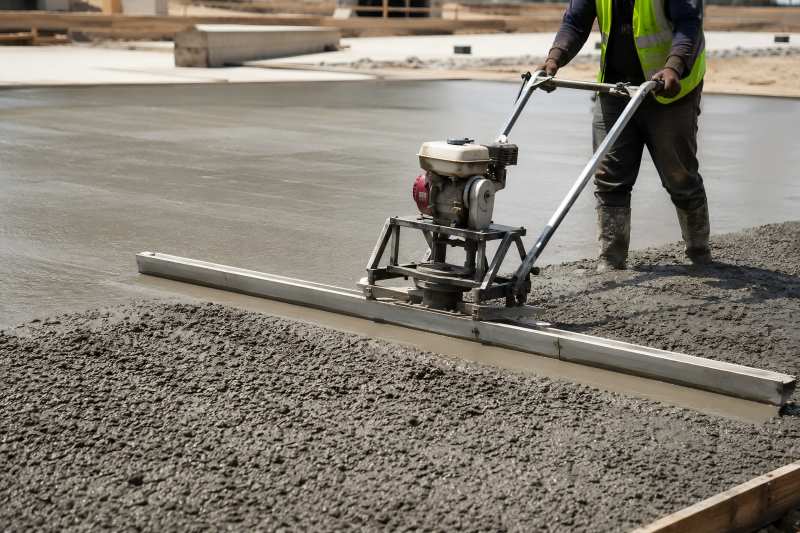
Application Scenarios
Different projects may require different screed board materials.
Aluminum Screed Board Is Better For:
- Residential concrete slabs
- Driveways and sidewalks
- Commercial floors
- Light to medium concrete leveling
- Projects requiring frequent movement
- Long working hours
- Vibrating screed machines
- Jobsites with wet or humid conditions
Steel Screed Board Is Better For:
- Heavy-duty industrial floors
- Road construction
- Large infrastructure projects
- Thick concrete slabs
- Rough jobsite environments
- Projects requiring high rigidity
- Stiff concrete mixes
- Applications with strong impact or wear
Which Is Better: Aluminum or Steel Screed Board?
For most general concrete leveling projects, an aluminum screed board is usually the better choice because it is lightweight, rust-resistant, easy to operate, and simple to maintain. It is especially suitable for vibrating screeds, residential slabs, commercial floors, and medium-sized concrete projects.
For heavy-duty construction, a steel screed board may be better because it offers higher strength, better rigidity, and stronger resistance to impact. It is more suitable for industrial floors, roadwork, infrastructure projects, and rough jobsite conditions.
Quick Selection Guide
| Project Requirement | Recommended Material |
| Easy handling | Aluminum |
| Long working hours | Aluminum |
| Wet or humid environment | Aluminum |
| Low maintenance | Aluminum |
| Heavy-duty strength | Steel |
| High impact resistance | Steel |
| Thick concrete slabs | Steel |
| Rough jobsite use | Steel |
| General concrete leveling | Aluminum |
| Industrial construction | Steel |
Tips for Choosing the Right Screed Board
When choosing between aluminum and steel, consider the following factors:
- Project size
For small and medium projects, aluminum is usually easier to use. For large industrial projects, steel may provide better stability. - Concrete mix condition
For normal concrete mixes, aluminum works well. For stiff or heavy mixes, steel may offer better pressure and rigidity. - Operator strength and team size
If the team is small or the work time is long, aluminum can reduce fatigue. - Jobsite environment
In humid, rainy, or wet conditions, aluminum is easier to maintain because it resists rust. - Required durability
If the board will face heavy impact or rough handling, steel may last longer. - Maintenance ability
If you want low maintenance, aluminum is more convenient. If your team can clean and protect the board carefully, steel can also be a durable choice.
In simple terms, choose aluminum for easier and faster operation, and choose steel for stronger and tougher jobsite performance. For most contractors using vibrating screed machines in regular concrete work, aluminum is often the more practical and efficient choice.