Compaction is one of the most important steps in construction because it directly affects the strength, stability, and service life of a finished structure. Whether building a road, preparing a foundation, installing pavement, or backfilling underground utilities, the quality of compaction determines how well the ground can support future loads.
When choosing compaction equipment, many contractors face a common question:
Should I choose a small compactor machine or invest in a heavy-duty roller?
The answer depends on more than machine size. A small compactor and a heavy-duty roller are designed for different working environments, materials, and production requirements. A compact machine may offer better flexibility and lower operating costs, while a heavy roller provides stronger compaction force and higher efficiency for large construction projects.
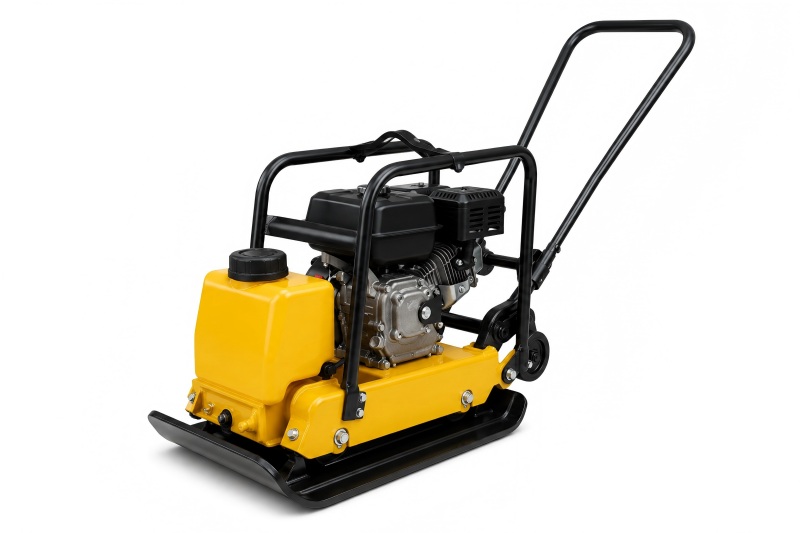
What Is a Small Compactor Machine?
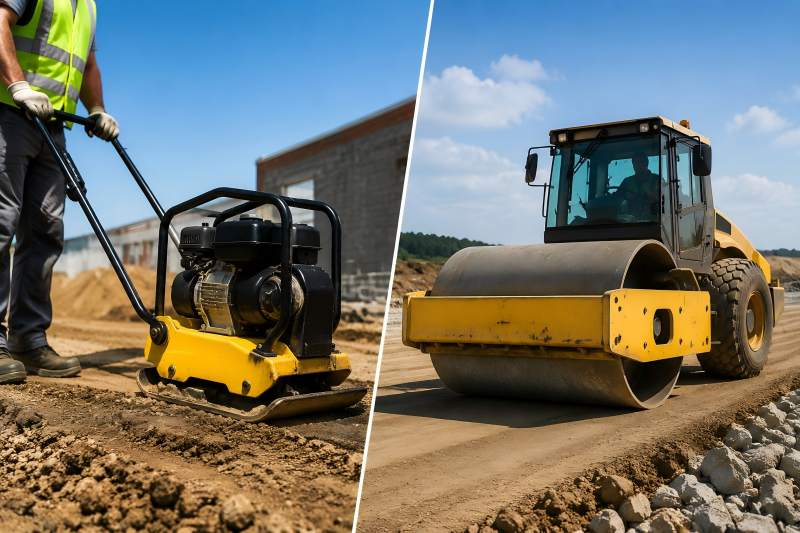
A small compactor machine is compact construction equipment designed for localized soil and material compaction. It is commonly used in areas where large rollers cannot easily operate, such as narrow spaces, residential construction sites, sidewalks, trenches, and repair projects.
Small compactors usually include:
- Plate compactors
- Rammer compactors
- Walk-behind rollers
- Small vibratory compactors
Unlike large rollers that rely heavily on machine weight, small compactors often combine vibration force and impact force to improve soil density. The vibration helps loosen and rearrange soil particles, allowing them to settle into a tighter structure.
Typical small compactor specifications include:
- Operating weight: approximately 50–500 kg
- Working width: around 300–700 mm
- Engine power: about 2–10 kW
- Suitable compaction depth: approximately 10–40 cm depending on soil conditions
Because of their small footprint, these machines can reach areas that are difficult for large equipment.
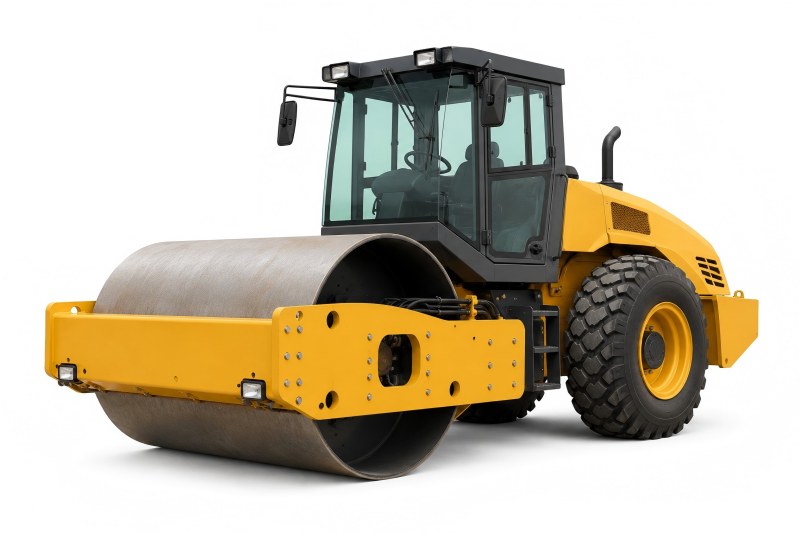
What Is a Heavy-Duty Roller?
A heavy-duty roller is large-scale compaction equipment mainly used for highways, airports, industrial foundations, large roads, and major earthwork projects.
Common types include:
- Single drum rollers
- Double drum rollers
- Vibratory soil rollers
- Pneumatic tire rollers
- Padfoot rollers
Heavy rollers achieve compaction through a combination of:
- Machine weight
- Drum pressure
- Vibration frequency
- Rolling movement
The operating weight of heavy rollers can range from several tons to more than 20 tons, allowing them to compact larger areas with fewer passes. Larger drum widths also improve productivity because each pass covers more surface area.
Typical heavy-duty roller specifications include:
- Operating weight: 3–20+ tons
- Drum width: 1–2 meters or more
- Engine power: 40–150+ hp
- Larger compaction depth and coverage area
These characteristics make rollers ideal for projects requiring high productivity and consistent density over large areas.
Small Compactor Machine vs Heavy-Duty Roller: Main Differences
| Comparison | Small Compactor Machine | Heavy-Duty Roller |
| Size | Compact and portable | Large and heavy |
| Operation | Walk-behind or manually controlled | Ride-on operation |
| Working Area | Small and restricted spaces | Large open areas |
| Productivity | Lower output | High production efficiency |
| Compaction Force | Moderate | Very high |
| Transportation | Easy and low cost | Requires trucks or trailers |
| Investment | Lower purchase cost | Higher equipment investment |
Both machines can achieve effective compaction, but they solve different construction challenges.
1. Compaction Performance
Small Compactor Machine
The biggest advantage of a small compactor is precision rather than maximum force.
It performs well in:
- Sand
- Gravel
- Small foundation areas
- Pavement blocks
- Utility trenches
- Landscaping projects
For example, when compacting a narrow trench after pipe installation, a large roller cannot physically enter the working area. A small rammer or plate compactor can provide controlled compaction without damaging nearby structures.
However, due to its limited weight and smaller working plate, it usually requires more passes to achieve the same density level as a heavy roller.
Heavy-Duty Roller
Heavy rollers are designed for maximum compaction efficiency.
They are especially suitable for:
- Road base layers
- Highway construction
- Large parking areas
- Airport runways
- Industrial foundations
The combination of heavy operating weight and vibration allows rollers to compact deeper layers of material. A large roller can often complete in minutes what would take much longer with smaller equipment.
For large projects, the productivity difference can be significant.
For example:
- Small compactor working width: around 0.5 m
- Heavy roller working width: around 1.5–2.1 m
A roller may cover several times more surface area per pass.
2. Working Space and Flexibility
Small Compactor: Better for Limited Spaces
Construction sites are not always large open areas.
Small compactors have advantages in:
- Residential construction
- Narrow roads
- Sidewalk installation
- Pipeline work
- Building foundations
- Repair projects
Their compact design allows operators to work close to walls, corners, and obstacles.
For contractors handling different small projects, owning a small compactor can provide excellent flexibility.
Heavy Roller: Better for Open Construction Areas
Heavy-duty rollers require sufficient operating space.
They are commonly used in:
- Highway projects
- Large earthmoving operations
- Airport construction
- Large commercial developments
A roller needs enough room for turning, traveling, and maintaining efficient working patterns.
Using a large roller in a small area may reduce efficiency because the machine spends more time repositioning than compacting.
3. Operating Cost and Investment
Small Compactor Machine
One major advantage of small compactors is affordability.
Compared with heavy rollers, they usually have:
- Lower purchase cost
- Lower fuel consumption
- Easier transportation
- Lower maintenance requirements
A small contractor may purchase one machine and use it across multiple job sites.
For example, a gasoline-powered plate compactor may consume only a few liters of fuel during several hours of operation, making it economical for small construction tasks.
Heavy-Duty Roller
Heavy rollers require higher investment.
Additional costs include:
- Transportation trailers
- Higher fuel consumption
- Larger maintenance requirements
- More expensive replacement parts
- Skilled operators
However, for large projects, these costs can be balanced by higher productivity.
A contractor completing thousands of square meters of road foundation will usually save more time and labor by using a roller.
4. Soil Type Considerations
Choosing between a small compactor and a roller also depends on material characteristics.
Suitable Materials for Small Compactors
Small compactors work well with:
- Sand
- Gravel
- Crushed stone
- Small aggregate layers
They are especially effective for shallow compaction.
Suitable Materials for Heavy Rollers
Heavy rollers are better for:
- Large soil areas
- Road base materials
- Asphalt
- Clay soil
- Embankments
Different rollers are also designed for different materials. For example:
- Smooth drum rollers are commonly used for gravel and asphalt.
- Padfoot rollers work well in cohesive clay soils.
5. Productivity Comparison
Productivity is where heavy rollers have a clear advantage.
Assume a construction project requires compacting a 10,000 m² area.
A small compactor may require:
- Multiple working passes
- More operators
- Longer operating time
A heavy-duty roller can complete the same area much faster because of:
- Wider drums
- Higher travel speed
- Greater compaction depth
For large-scale projects, time savings can directly reduce labor costs and project delays.
However, productivity is not the only factor.
If the working area is only 300 m² and includes many corners or obstacles, a small compactor may actually complete the job faster.
Which One Is Better for Different Construction Projects?
Choose a Small Compactor Machine If You Need:
- Equipment for small construction sites
- Compact size and easy transportation
- Operation in narrow spaces
- Lower investment cost
- Flexible usage across different projects
Typical applications:
- House foundations
- Sidewalk construction
- Garden landscaping
- Utility trench backfilling
- Small pavement repairs
Choose a Heavy-Duty Roller If You Need:
- High production capacity
- Deep compaction performance
- Large construction coverage
- Consistent soil density
- Professional road-building capability
Typical applications:
- Highway construction
- Airport projects
- Large commercial foundations
- Industrial parks
- Large-scale earthwork
Can Small Compactors Replace Heavy Rollers?
In most cases, no.
A small compactor cannot completely replace a heavy-duty roller because the two machines serve different purposes.
Using a small compactor for a highway project would result in:
- Lower efficiency
- Increased labor requirements
- More working passes
- Longer construction schedules
Likewise, using a heavy roller for a small residential repair project may create unnecessary costs.
The better approach is selecting equipment according to project scale.
Many professional contractors use both:
- Heavy rollers for large open areas
- Small compactors for edges, corners, and finishing work
This combination provides better overall efficiency.
Small Compactor or Heavy-Duty Roller?
There is no universal winner between a small compactor machine and a heavy-duty roller.
The better choice depends on:
- Project size
- Material type
- Required compaction depth
- Available working space
- Budget
- Construction schedule
A small compactor machine is the better choice for flexibility, mobility, and small-scale construction tasks.
A heavy-duty roller is the better solution for large infrastructure projects requiring high productivity and strong compaction performance.
For contractors working on multiple project types, combining both equipment options can provide the most practical and cost-effective compaction solution. Proper equipment selection not only improves construction efficiency but also helps achieve more stable and durable results.