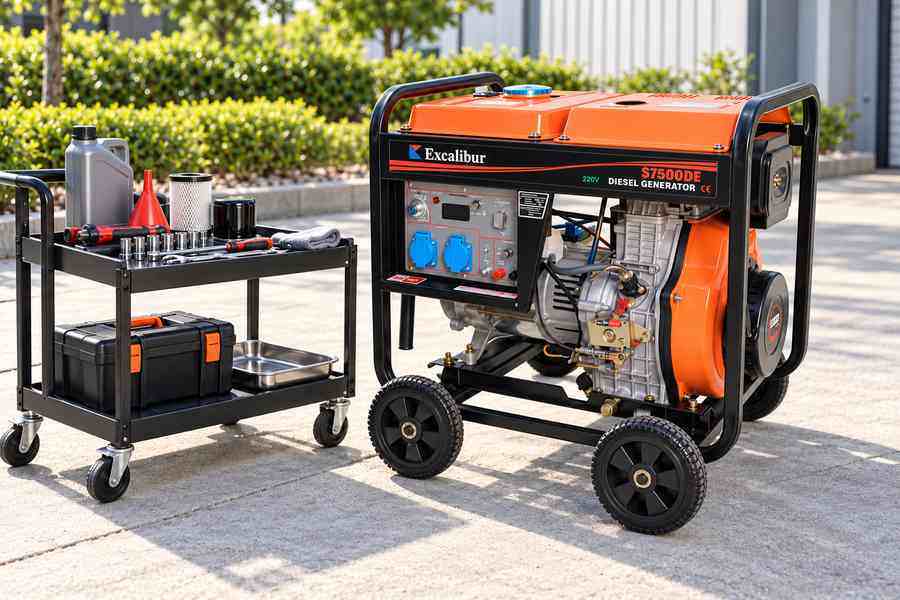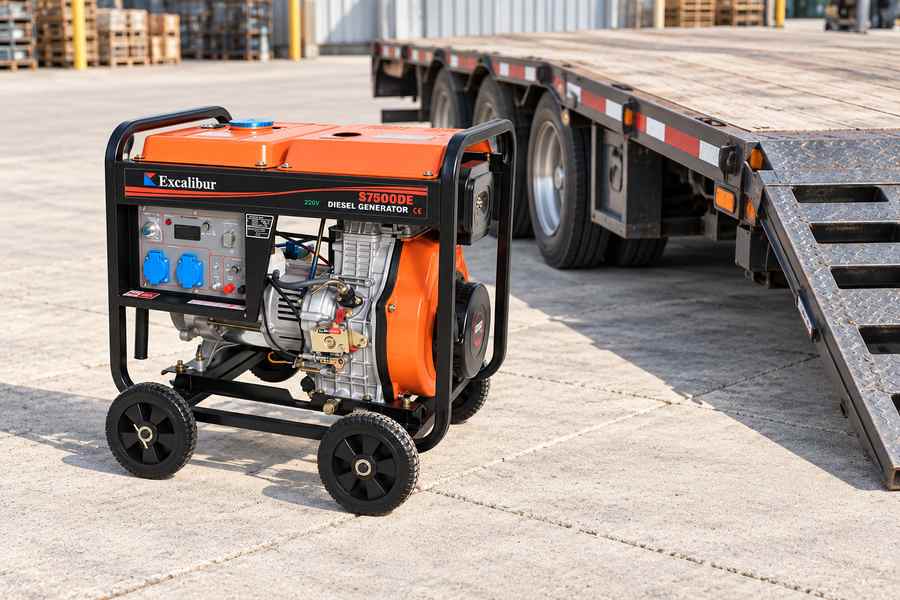
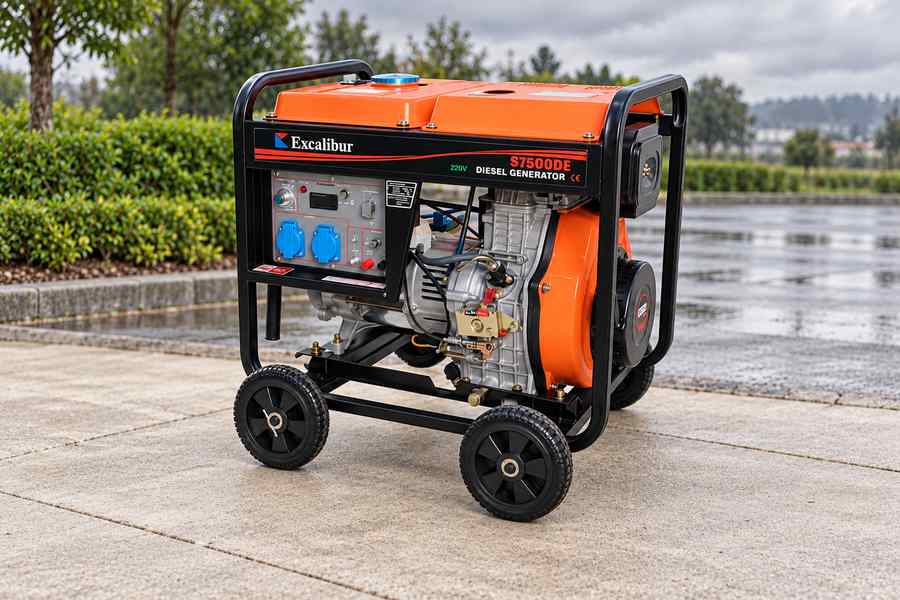
Before using an open-frame diesel generator in wet weather, confirm that the manufacturer permits the proposed arrangement and that the generator, connections, cables, and operating location can remain safe and dry. An open frame is not weather protection. If those conditions cannot be maintained, stop and use another approved power arrangement instead of improvising a cover around a running machine.
Rain creates several connected problems: electric shock exposure, water entering equipment, unstable ground, and pressure to move the generator into an enclosed space. The solution must address all of them together. Keeping rain off the control panel is not sufficient if the arrangement traps exhaust or blocks cooling air.
Read The Weather Limitations For The Exact Model
Start with the generator’s manual and any manufacturer-approved weather-protection instructions. Confirm the intended outdoor conditions, required clearances, and restrictions on operating in rain, snow, standing water, or excessive moisture. Do not infer permission from photographs of generators used outdoors.
Ask which components have stated ingress-protection ratings and what those ratings cover. A socket cover, control box, or alternator rating does not automatically describe the entire assembled generator. Connected plugs, open covers, damaged seals, and the operating configuration can affect the protection actually available.
Keep storage protection separate from operating protection. A fitted storage cover may be suitable for a stopped, cooled machine yet unsafe during operation because it obstructs airflow or contacts hot parts. Only use an operating shelter or cover in the configuration approved for the generator.
When reviewing Excalibur’s open-frame diesel generators, request the weather limitations for the selected model and control-panel arrangement. The words open frame or outdoor application do not establish a rain-exposure rating. Obtain a clear answer before planning wet-weather use.
Keep Exhaust Safety Central To The Plan
Never move a portable generator into a home, garage, shed, vehicle, basement, or other enclosed area to escape the rain. Ventilating a garage by opening its doors or windows does not turn it into an acceptable generator operating location. Diesel engines also produce hazardous exhaust, so the fuel type does not remove the need for an appropriate outdoor position.
For portable equipment, the U.S. CPSC specifies a minimum building separation of 20 feet and an outdoor position; orient the exhaust so it points away from building openings, including doors, windows, and ventilation inlets. Check that this siting plan also meets the equipment manual and the requirements governing the particular site. A distance measurement is not permission to direct exhaust toward an occupied area.
Consider neighboring buildings and air intakes, not only the building receiving power. Wind direction can change during a storm. Keep people away from the exhaust discharge and do not rely on smell as a warning of carbon monoxide.
Working carbon monoxide alarms provide an additional warning in occupied buildings, but they do not make an unsafe generator location acceptable. If an alarm sounds or someone develops symptoms consistent with exposure, move to fresh air and seek emergency assistance. Do not remain near the source to troubleshoot it.
Choose Ground That Will Stay Suitable
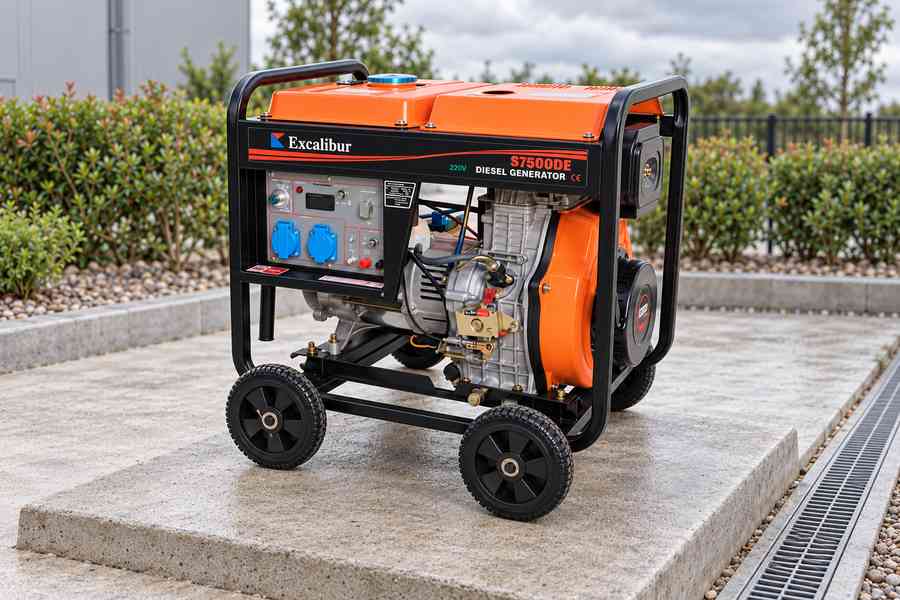
Inspect drainage before placing the generator. A location that is dry at setup may collect runoff once rainfall increases. Avoid depressions, drainage routes, unstable edges, and areas where water can reach the machine or electrical connections.
The supporting surface must remain firm, level, and suitable for the generator. Do not balance the frame on loose blocks to lift it above a puddle. If an elevated support is needed, it must be stable and appropriate to the complete load and operating conditions.
Think about access for shutdown, refueling, and inspection. Operators should not need to stand in water or cross a hazardous area to reach the controls. Cable routes should not create trip hazards or force connectors into low points where water collects.
Review the weather forecast and changing site conditions during operation. Establish a stopping threshold before conditions become difficult to manage. A generator location that was acceptable earlier in the day may cease to be suitable as water levels, wind, or ground conditions change.
Evaluate Any Operating Shelter As A Complete Arrangement
Ask the manufacturer whether the proposed shelter is compatible with the exact generator. It must preserve the required cooling airflow, exhaust discharge, component clearances, and access. A shelter that keeps the tank dry but concentrates heat around the alternator is not a successful solution.
Do not wrap the generator in a tarpaulin or place an improvised tight box over it while it runs. Materials may contact hot surfaces, restrict air, or redirect exhaust. A storage cover should be removed before operation unless it is specifically designed and approved for that operating use.
Wind-driven rain deserves separate attention. A roof alone may not keep the control panel or connections dry, while adding side panels can create new ventilation problems. The approved arrangement needs to address the expected weather without turning the space into an enclosure that traps exhaust.
Check how the shelter is secured and how runoff is directed. A loose cover can fall onto the generator, and water draining from a roof edge can land on connectors or controls. The generator’s frame should not become an improvised anchor unless the manufacturer approves that arrangement.
Inspect Cables, Plugs, And Distribution Equipment
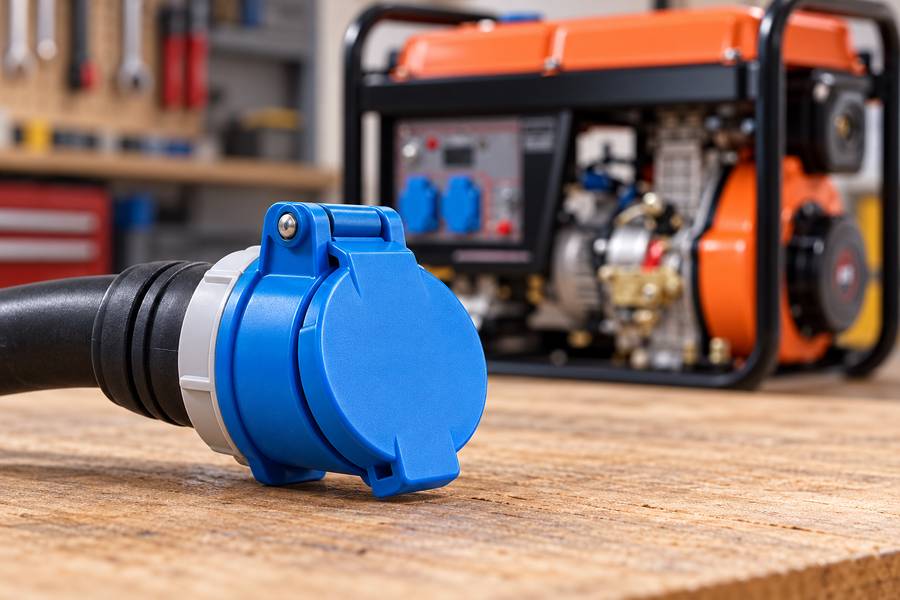
Use cables and connectors suitable for the application and environment, with the required current capacity and condition. Inspect for cuts, crushed insulation, damaged plugs, missing protective parts, and signs of overheating. Replace defective equipment rather than wrapping damage and continuing the job.
Keep connections out of standing water and protect them using equipment designed for the purpose. A plastic bag around a connector is not a reliable weatherproof connection system. It may collect water or conceal damage while giving a misleading impression of protection.
Consider the whole power path from generator to load. Distribution boards, adapters, extension leads, and the connected tools may have different environmental limitations. The least suitable component can determine whether the arrangement is acceptable.
Use the specified protective devices, including residual-current or ground-fault protection where required by the equipment and applicable installation rules. Have a qualified electrician assess the arrangement when necessary. Such protection reduces particular risks but does not make wet, damaged, or unsuitable equipment safe to use.
Confirm Grounding And Building Connections Correctly
Grounding, bonding, and neutral arrangements depend on the generator design and how it is connected. Do not assume that driving a ground rod is always required or that it resolves every shock hazard. Follow the generator instructions and have a qualified electrician determine the appropriate arrangement for the installation.
Never connect a generator to building wiring by plugging it into an ordinary wall outlet. A properly designed transfer arrangement is needed to prevent dangerous backfeeding and to manage the required electrical connections. Wet weather is not a reason to bypass that equipment.
If the site uses a transfer switch or distribution system, confirm compatibility before the storm. Include voltage, frequency, phase, neutral switching where relevant, protective devices, and connection ratings. Last-minute adapter combinations can introduce problems that are difficult to diagnose safely in rain.
Keep the electrical design separate from the weather shelter decision. A suitable transfer system does not make an exposed generator weatherproof, and a dry generator does not validate an incorrect electrical connection. Both parts must be correct.
Set Rules For Handling And Refueling
Operate controls with dry hands and avoid handling plugs or connectors in wet conditions. If equipment or connections become wet, do not touch them to investigate while they may be energized. Isolate the supply safely using the established procedure and obtain qualified assistance when the safe method is uncertain.
Schedule refueling as a stopped-engine task, after the cooling period required by the operating instructions. Keep the filler opening protected from rain splash and contamination during that task. Keep fuel containers and the refueling area suitable for the conditions and away from ignition sources.
Do not shift the running generator to chase a dry patch of ground. Plan any relocation as a shutdown and handling operation. Disconnect loads and prepare the machine according to its instructions before moving it.
Give the operator a clear way to report deteriorating conditions and stop work. A reliable backup plan is better than pressure to continue using equipment that has become unsafe. Identify which loads can be shut down and which need an alternative approved supply.
Know When To Stop And Inspect
Stop using the arrangement if water reaches electrical components, protective equipment trips repeatedly, connections overheat, or the site can no longer remain safe. Do not repeatedly reset a protective device without finding the cause. A trip may indicate a fault that requires inspection.
After significant water exposure or flooding, do not start the generator simply because its exterior has dried. Moisture and contamination may remain inside electrical or mechanical components. Release the generator for reuse only after a qualified technician documents the water-exposure assessment and the checks required for that model.
Record what happened: the water source, approximate exposure, whether the generator was operating, and any alarms or protective trips. This information helps the service team decide what checks are needed. Avoid dismantling energized or unfamiliar equipment to collect evidence.
| Check | Acceptable basis for proceeding | Unresolved condition |
| Weather suitability | Manufacturer-approved operating arrangement | Assumption that an open frame is rainproof |
| Exhaust location | Suitable outdoor position and discharge direction | Garage, shed, vehicle, or exhaust near air openings |
| Electrical connections | Suitable, intact equipment kept protected and dry | Wet connectors, damaged insulation, or improvised adapters |
| Ground conditions | Stable support and drainage that remain suitable | Standing water, runoff, or unstable supports |
| Post-exposure condition | Required inspection and clearance for reuse | Water ingress followed only by surface drying |
Prepare The Weather Plan Before Power Is Needed
Before purchasing, describe the intended weather exposure and site arrangement to the supplier. Request the operating restrictions, suitable protection options, and required inspection procedures. If the proposed use exceeds the equipment’s capabilities, select a different approved arrangement rather than relying on accessories that have not been assessed.
Excalibur’s diesel generator selection information can help identify the available configurations, but the final weather decision must be made for the exact machine. An enclosure on another model should not be assumed to give unlimited weather protection either. Ask for the relevant documentation.
Keep a short site checklist covering the operating location, shelter approval, drainage, cables, protection, shutdown method, and responsible operator. Recheck it when the site or forecast changes. The useful test is whether the complete setup can remain safe throughout operation, including shutdown and servicing, rather than whether it can merely be started while rain is falling.