Clean a portable concrete mixer before residue hardens, using the machine manufacturer’s approved method and a prepared washout container. Stop and isolate the machine before any hands-on work near the drum, paddles or drive, and keep cement washwater out of soil and drains. If concrete has already set, treat removal as a separate maintenance task rather than trying to force the mixer through another batch.
A useful cleaning routine begins before the final load leaves the drum. Water, containment, suitable tools and a clear division of responsibility make it much easier to finish the day without leaving a hardened ring for the next operator. The process below is for portable drum mixers, with model-specific instructions taking priority.
Why Does Cleaning Belong in the Mixing Schedule?
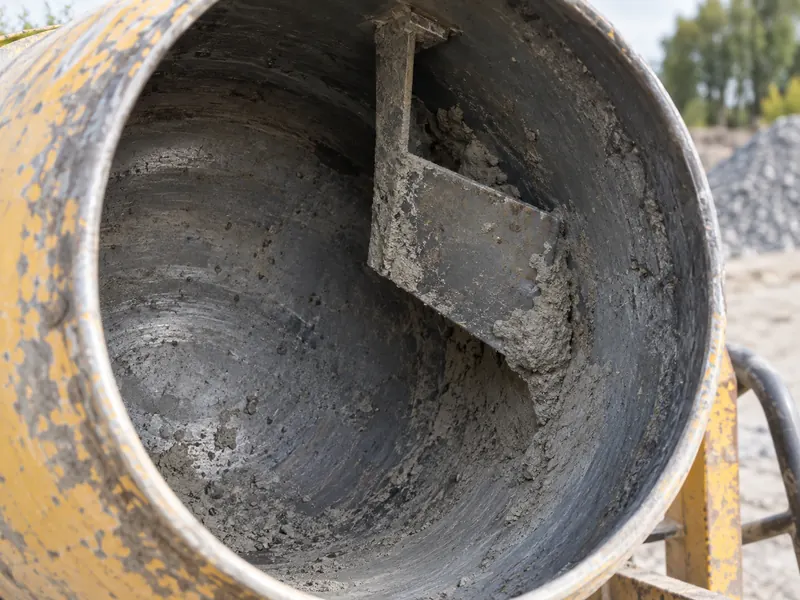
Residue occupies space that should be available for the next batch and changes the surfaces that lift and tumble the mix. Deposits around blades may become difficult to distinguish from the blade profile itself. The result can be more cleaning effort and less predictable mixing behavior over time.
A mixer that still rotates is not necessarily ready for productive work. Build cleaning time into the last batch decision instead of allocating every remaining minute to production. When the crew is too rushed to discharge and clean properly, the day’s final small batch can create tomorrow’s larger interruption.
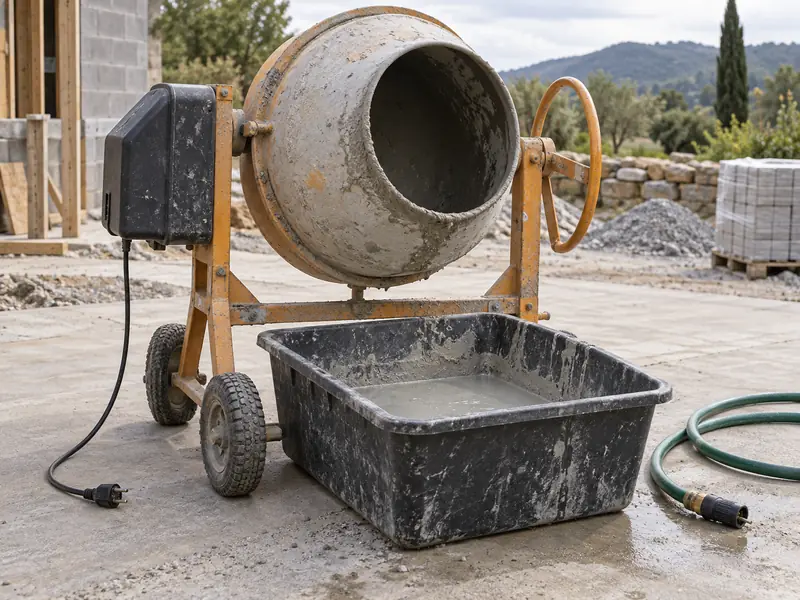
The main components of a portable concrete mixer help explain where residue matters: drum, internal blades, discharge mechanism and drive arrangements have different cleaning needs. Do not treat the whole machine as a single surface that can be pressure-washed indiscriminately.
What Should Be Ready Before the Last Batch?
Prepare the washout route, containment and cleaning equipment while there is still time to use them. The container needs enough usable capacity for the planned liquid and solids, with allowance for splash and the site’s weather arrangements. A nearby storm drain is not a disposal option.
- Identify the designated washout point and confirm that it can receive the mixer discharge without tipping or overflow.
- Have the water supply and manufacturer-approved cleaning tools ready before residue starts to stiffen.
- Keep compatible gloves, eye protection and other required protective equipment available.
- Make one person responsible for confirming isolation before hands-on cleaning begins.
Position the mixer on stable ground with a controlled route for discharging residue. Avoid a cleaning arrangement that requires reaching over a rotating drum or standing beneath an unstable load. For engine-driven equipment, maintain outdoor ventilation and the safe clearances required by the manual.
How Does a Reliable End-of-Shift Routine Work?
Use a defined sequence: finish discharge, carry out any approved operating rinse, isolate, clean accessible areas and leave the equipment ready for inspection. Keep operating steps and hands-on steps clearly separate. No one should interpret a stopped-looking drum as proof that the machine cannot restart.
Stage One: How Do You Clear Fresh Residue?
Discharge usable concrete as planned, then handle the remaining residue through the designated washout arrangement. Follow the model’s instructions for water quantity, drum position and whether a rotating rinse is permitted. Do not add stones, chemicals or abrasive material merely because another mixer operator recommends them.
If the approved method includes drum rotation, keep hands, brushes, scrapers and clothing outside moving parts throughout that stage. Stop before making any adjustment that requires access near the drum opening or drive. A tool held inside a moving drum can be caught unexpectedly.
Stage Two: What Does Isolation Involve?
Shut down, disconnect or isolate the power source, and prevent unintended starting using the manufacturer’s procedure and the site’s applicable controls. Electric and engine-driven mixers require different arrangements, and stored or gravitational movement must also be controlled. Secure the drum position as specified before working near it.
OSHA’s concrete equipment requirements address lockout and tagging where inadvertent operation during maintenance or repair could cause injury. The practical principle is that someone else pressing a switch must not put the cleaner at risk. An emergency stop alone should not be treated as a complete isolation procedure.
Stage Three: Which Areas Need Individual Attention?
With the equipment secured, remove accessible soft deposits using suitable tools without striking or bending the blades. Check the drum lip and discharge area, where thin deposits can be overlooked during a quick rinse. Never climb inside a portable mixer drum.
- Keep water away from electrical housings, switches and connectors unless the manual explicitly permits the cleaning method.
- Avoid forcing slurry into bearings, seals, ventilation openings or drive covers.
- Clean wheels and support surfaces so that accumulated material does not interfere with positioning.
- Remove loose tools and residue before restoring guards and returning the equipment to service.
Excalibur’s portable concrete mixer range includes different power and frame arrangements. Use the instructions for the actual configuration, rather than applying an electric stand-mixer routine to an engine-driven towable machine. Cleaning access and vulnerable components are not identical across models.
What Changes Once Concrete Has Hardened?
Ordinary rinsing cannot reverse cement hydration and restore hardened material to fresh concrete. First assess how much has accumulated and whether access is safe with the machine isolated. Thick deposits, damaged blades or uncertain drum condition justify service advice before removal begins.
| Residue Condition | Reasonable Approach | What to Avoid |
| Fresh, mobile slurry | Prompt approved washout with containment | Leaving it to set while completing unrelated tasks |
| Soft localized buildup | Accessible cleaning after isolation | Reaching into a moving drum |
| Thin cured deposits | Manufacturer-approved removal method | Unverified chemical mixtures or aggressive impact |
| Heavy hardened mass | Qualified maintenance assessment | Overloading the drive to break the mass loose |
Repeated hammering can damage the drum or attachments even when the outside appears robust. Chemical removers also need compatibility checks for metals, coatings, seals and nearby components. Obtain an approved product and procedure rather than assuming that any concrete remover suits the machine.
Follow the remover’s safety data and disposal instructions, and never mix cleaning chemicals. Mechanical removal can create dust and flying fragments, so the maintenance plan must address those exposures before work begins. Where the correct method is uncertain, stop and obtain qualified assistance.
Where Should the Washwater and Solids Go?
Collect them in the site’s designated leak-resistant washout system. Concrete washwater can be strongly alkaline and carry suspended cementitious material. A liquid that looks clearer after settling is not automatically suitable for release.
The EPA’s concrete washout guidance describes containment, separation and managed recycling or treatment options. Choose an approved local route for the collected water and solids instead of letting runoff reach soil, stormwater drains or surface water. Do not assume that permission to collect water also authorizes its discharge.
Keep the washout system accessible and monitor its remaining capacity. An otherwise careful cleaning operation can still fail if a full container overflows or a hose is left running unattended. Arrange collection or processing before the next shift adds more material.
How Can a Small Crew Make the Routine Repeatable?
Consider a hypothetical two-person crew completing a short concrete pour. One person handles the final placement while the mixer operator prepares containment and follows the approved rinse sequence. Before either person touches internal surfaces, they establish isolation and make clear who controls the equipment.
The crew then records any deposit that could not be removed and any unusual noise or damage noticed during the day. The next operator receives that information before loading fresh material. This simple handover avoids treating a known maintenance issue as an unexplained mixing problem.
Keep the routine connected to production quality: consistent concrete mixing depends on more than recipe alone. A repeatable loading process is easier to maintain when the drum and blades remain in their intended condition. Do not compensate for residue by casually changing the water added to the next batch.
When Is the Mixer Ready for the Next Shift?
It is ready when the approved cleaning is complete, guards and parts are correctly restored, and unresolved defects have been addressed. Check that cleaning tools are removed, the machine can be positioned safely and electrical components have not been left wet. Lubricate only the specified points according to the maintenance instructions.
For related operating habits, review common portable mixer mistakes. If hardened buildup or access problems recur, ask Excalibur for model-specific maintenance advice, supplying the model and clear photos taken after isolation. Solving the cause of delayed cleaning is usually more useful than repeating difficult removal work.