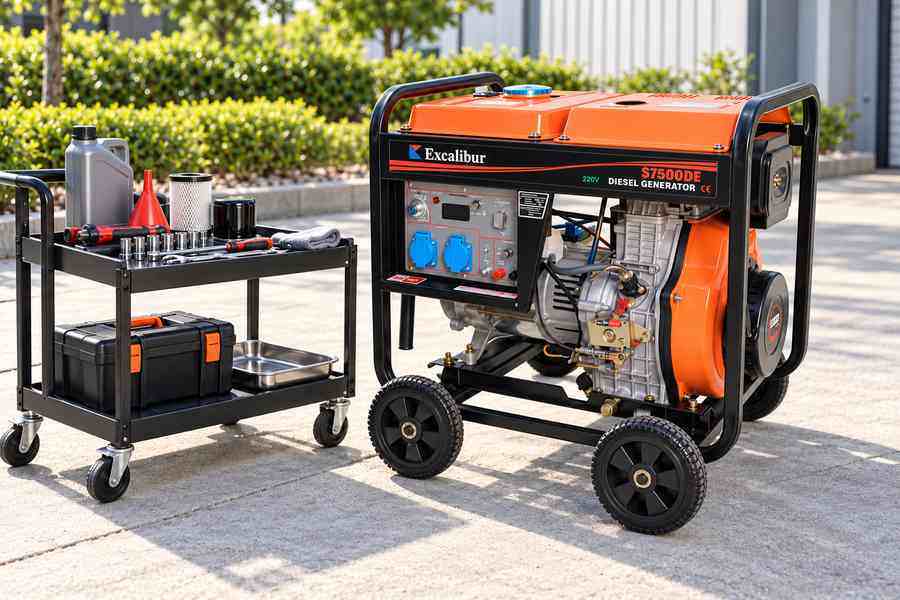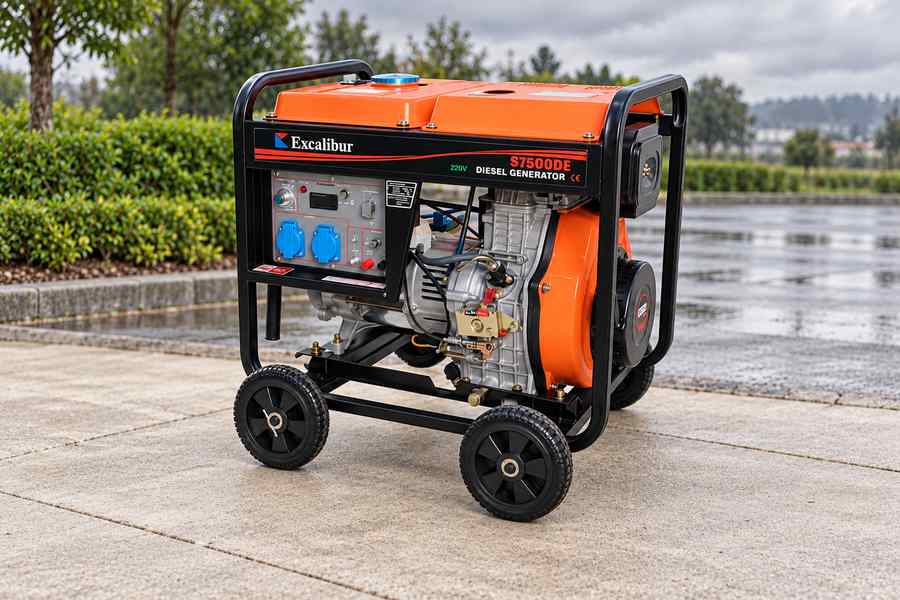
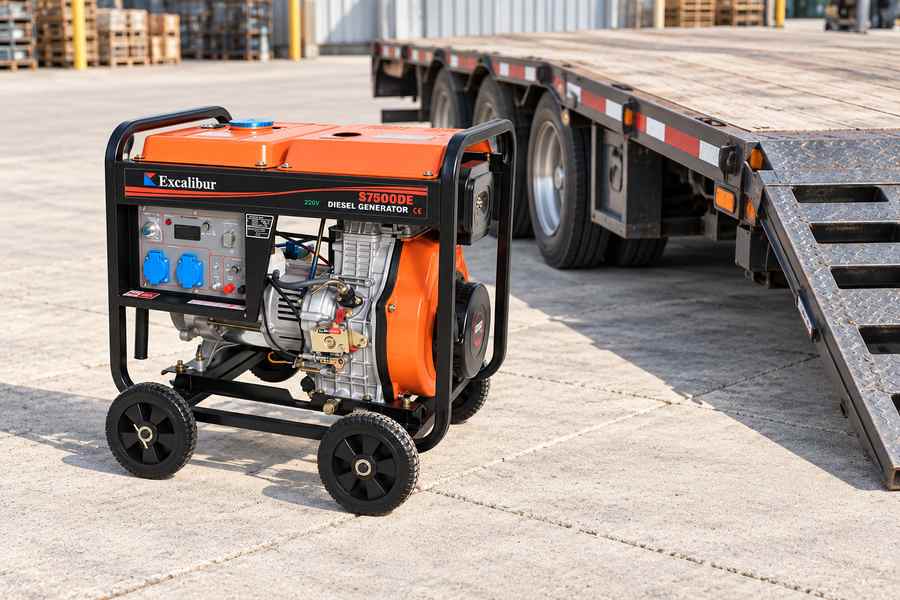
Before loading an open-frame diesel generator, confirm its transport weight, approved lifting and tie-down points, shutdown condition, fluid requirements, and the capacity of the vehicle and handling equipment. Plan the unloading method before the journey begins. Wheels and handles help with certain movements, but they do not by themselves make a generator safe to lift, tow, or roll up a loading ramp.
The most useful transport check follows the whole journey: preparation, movement to the vehicle, loading, restraint, travel, unloading, and inspection at the destination. A weakness in any one stage can damage the generator or expose the handling team to an uncontrolled load. Keep the machine’s own instructions alongside the transport plan.
Identify The Exact Machine And Transport Condition
Match the model and serial number to the relevant manual. Similar-looking open-frame generators can differ in weight, center of gravity, fuel system, frame construction, and approved handling arrangements. Instructions for another model are not a reliable substitute.
Establish whether the quoted weight is dry, net, packaged, or ready for use. Include the battery, installed accessories, remaining fluids, packaging, and any transport cradle that will travel with the machine. A vehicle or lifting device must be selected using the load actually being moved.
For a new order, ask the supplier for dimensions in the shipping configuration and the assembled configuration. Folding handles or removed wheels may change the clearance needed at delivery. Also confirm whether the machine arrives on a pallet, in a crate, or as an assembled unit.
The model tables in Excalibur’s open-frame diesel generator range are useful for identifying the proposed configuration. Verify the final shipment details with the supplier, particularly when optional accessories or customized equipment are included. Do not treat a packaging dimension as an approved lifting instruction.
Plan The Loading And Unloading Locations
Inspect both ends of the trip. Check the ground bearing condition, space for the vehicle, approach route, overhead obstructions, and room for the selected handling equipment. A delivery address alone does not establish that unloading can be performed safely.
Agree who will supply and operate the handling equipment. If a forklift, crane, or vehicle lift is required, confirm that it is suitable for the complete load and the actual geometry of the operation. Its nominal capacity must not be interpreted without considering the manufacturer’s applicable load chart and restrictions.
Keep uninvolved people out of the movement area. The operator and any assisting personnel should understand the route, communication method, and stopping conditions. Never place a person beneath a suspended generator or in a position where an uncontrolled machine could trap them.
Resolve unsuitable access before the truck arrives. A last-minute change from mechanical lifting to improvised manual lifting creates uncertainty precisely when the team is under pressure. If the intended method cannot be used at the destination, revise the plan or delivery arrangement.
Shut Down, Cool, And Isolate As Required
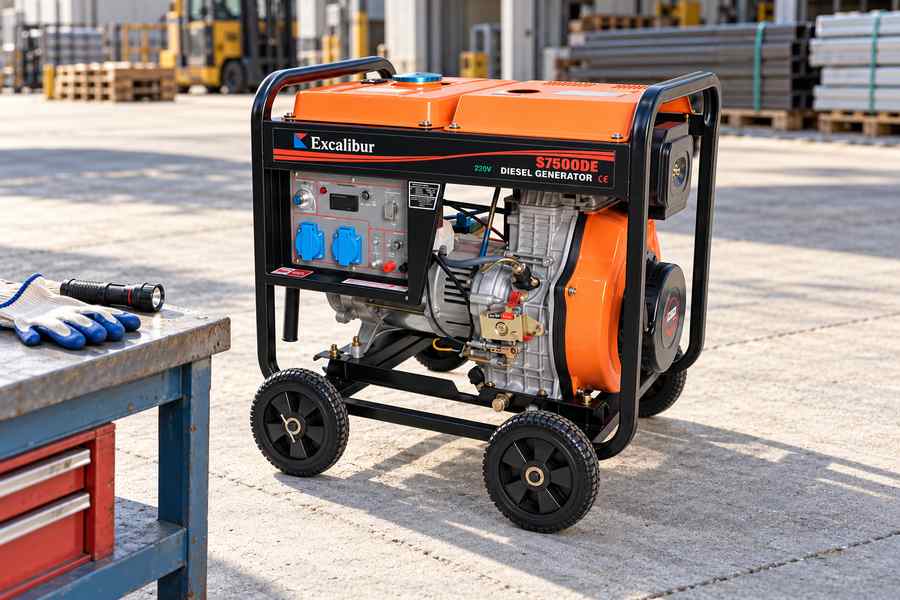
Remove the electrical load and stop the generator using the sequence specified in its manual. Disconnect portable leads and accessories after the appropriate shutdown steps. Cables should not trail behind the machine or remain connected to equipment during movement.
Include a cooling stage in the dispatch schedule before the handling team approaches hot surfaces or fits packaging. Stopping the engine does not immediately remove heat from the exhaust assembly. Confirm that the machine has reached the condition required by its transport instructions before bringing covers or restraints near it.
Prevent an unexpected start. Remove or secure the key as appropriate and address remote-start or automatic-start functions using the specified isolation procedure. Where battery disconnection is required, follow the equipment instructions; do not improvise a sequence around exposed terminals.
Transport is not an operating condition. Never run a portable generator in a vehicle, enclosed cargo compartment, or other confined transport space. Exhaust gases and heat require a properly assessed outdoor operating location after unloading.
Follow The Specified Fuel And Fluid Instructions
Ask the manufacturer how the generator should be prepared for the planned transport method. Requirements may differ for a short local movement, a commercial road shipment, or another mode of transport. The carrier must also confirm any applicable requirements for fuel, batteries, and shipment documentation.
Do not automatically fill the tank before loading or assume that every generator must be drained in the same way. Use the model-specific transport instructions and the carrier’s requirements. If a fuel valve must be closed, identify it positively and check its position.
Inspect the tank, cap, hoses, and visible connections for leaks or damage. A leaking machine should be corrected before transport, rather than wrapped to hide the problem. Keep absorbent materials and spill arrangements appropriate to the work, but do not treat them as a repair.
Maintain the approved orientation. Tilting can move fuel or lubricant into places where it does not belong, and an open frame does not mean the engine can be carried on any side. Obtain written guidance if the route appears to require an orientation that the manual does not permit.
Use Approved Lifting And Support Points
Identify any designated lifting eyes, forklift pockets, or transport base features. Confirm that they belong to the complete generator assembly, rather than to a component that cannot support the whole unit. An engine lifting bracket, for example, should not be assumed suitable for the assembled generator.
Do not attach lifting equipment to the fuel tank, control panel, exhaust, wheel axle, or folding handle unless the manufacturer specifically approves that use. A frame tube that looks strong can still be unsuitable for a sling because of local loading, slippage, or interference. The lifting arrangement must keep the machine balanced and protect its components.
Where lifting accessories are specified, check their condition and compatibility with the planned operation. Sling angles, edge contact, and attachment geometry affect the assembly. Qualified personnel should select and operate the equipment using its instructions and the generator’s approved lifting plan.
If the generator is crated or palletized, confirm how the package is intended to be handled. Forks must support the appropriate structure without entering the engine or wiring space. Damage to a pallet or crate can invalidate assumptions about how the shipment should be lifted.
Evaluate Ramps And Vehicle Lifts Separately
A generator with wheels may still be unsuitable for manual ramp loading. Consider the complete weight, wheel track, ramp width, gradient, transition points, and ability to control the load. Do not judge the method solely by whether the wheels fit between the ramp edges.
Use only a loading system rated and configured for the task. Confirm attachment to the vehicle, support conditions, and any requirements for powered assistance. An unsecured ramp or an unsuitable transition can create a loss of control even when its published capacity appears sufficient.
Never stand where the generator could roll back onto you. Avoid improvised pushing arrangements that leave someone between the machine and the vehicle or another fixed object. If the approved system cannot maintain control throughout the movement, choose another loading method.
A vehicle lift also requires an assessment of load position and platform dimensions. The generator must remain stable during movement and transfer onto the vehicle floor. Wheel brakes alone should not be assumed to provide every restraint needed during that operation.
Secure The Generator For The Journey
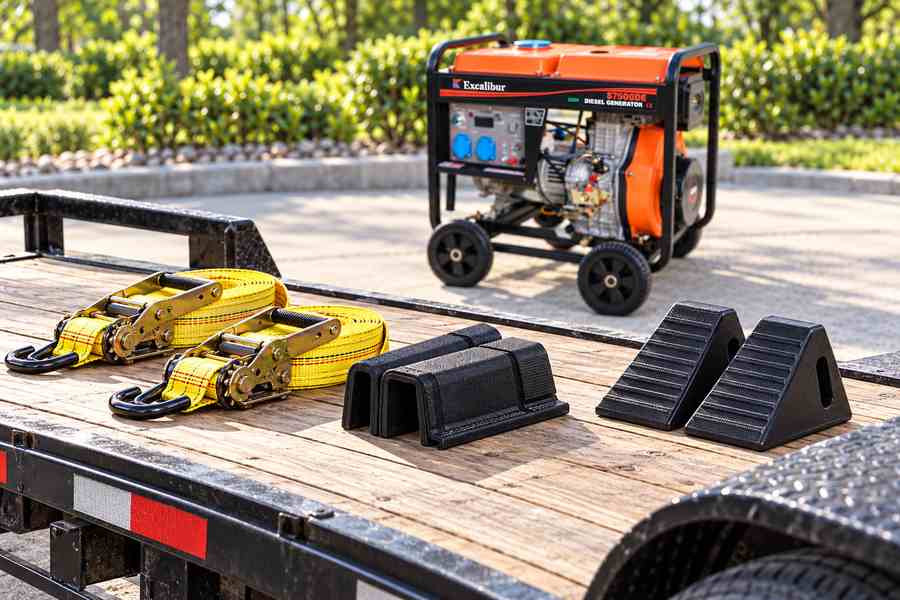
Once loaded, use the approved tie-down locations and a restraint arrangement suitable for the vehicle and journey. Keep the machine in the required orientation and prevent movement in the relevant directions. The restraint system should be designed or selected by a competent person under the applicable transport requirements.
Do not route straps across vulnerable controls, fuel lines, battery terminals, exhaust parts, or sharp edges without appropriate provisions. Excessive tightening can damage a frame or component. The goal is controlled restraint through suitable structure, not simply the greatest possible strap tension.
Fold and lock handles as instructed, and secure removable accessories separately. Loose tools, funnels, cables, and spare parts can strike the machine or interfere with restraints. A generator’s parking brake does not replace cargo securement.
Check that the load distribution is compatible with the vehicle’s requirements. Total payload, axle loading, and the strength of cargo anchors all matter. Leave access for inspecting restraints where practical, and follow the carrier’s procedure for checks during the trip.
| Stage | Evidence to obtain | Reason to stop |
| Preparation | Exact model instructions and transport condition | Unresolved leak, unexpected-start risk, or unclear orientation |
| Loading | Approved lifting points and suitable equipment | Unrated attachment, damaged package, or uncontrolled movement |
| Restraint | Appropriate anchors, restraints, and load distribution | Straps loading vulnerable components or inadequate anchorage |
| Unloading | Prepared destination and agreed handling method | Unsuitable ground, missing equipment, or blocked access |
Protect The Machine Without Creating New Problems
Use transport protection appropriate to the exposure and the manufacturer’s instructions. A cover should not be fitted over hot equipment, and packaging should not damage wiring or trap loose material against the machine. Keep the equipment protected from contamination and impact.
For a longer shipment, ask how moisture and corrosion are controlled. Packaging for transport and a cover for storage serve different purposes from an operating weather shelter. Remove transport packing and any temporary protective closures according to the commissioning instructions before starting the generator.
Record the condition before dispatch with photographs of the complete machine, visible serial identification, packaging, and restraint arrangement. Avoid including private documents or unrelated people in the record. These photographs support a delivery inspection but do not certify that an unsafe arrangement is acceptable.
Inspect Before Returning The Generator To Service
At the destination, unload using the agreed method and inspect the generator before starting it. Look for damaged frame members, loose accessories, fluid leakage, displaced hoses, broken mounts, and damaged electrical connections. Compare the received condition with the dispatch record.
Check that all shipping restraints, packing materials, and temporary protective items have been dealt with as instructed. Restore any fuel, battery, or starting arrangements changed for transport using the manual’s procedure. Verify fluid levels in the prescribed condition and on a suitable surface.
If the generator was dropped, tipped beyond its permitted orientation, or exposed to significant water ingress, do not assume that a normal appearance proves it is ready to run. Record what happened and obtain an inspection or instructions from the supplier. Starting the engine to see whether it still works can make an unresolved problem worse.
Use an appropriate outdoor location for the first post-transport check, with the required clearance and exhaust direction. Carry out the manufacturer’s startup and load-application checks. Address abnormal noise, vibration, leakage, or alarms before placing the generator into service.
Put Transport Requirements Into The Purchase Order
For a new or repeat shipment, include the packing method, required documents, delivery access, unloading responsibilities, and agreed inspection criteria in the order. Ask for lifting and tie-down drawings where applicable. This prevents the logistics team from having to infer safe handling from a sales photograph.
When comparing the wider diesel generator options, review transport arrangements alongside power, starting method, and accessories. A heavier or differently equipped version may need a different handling plan. Give the logistics team the approved final configuration early enough to select suitable equipment for both collection and delivery.
Keep a dispatch record with the model and serial number, actual transport configuration, preparation checks, approved handling method, and destination contact. At receipt, record the inspection outcome and any discrepancy before operation. The generator is ready for service only after the transport preparation has been correctly reversed and the equipment has passed its relevant checks.