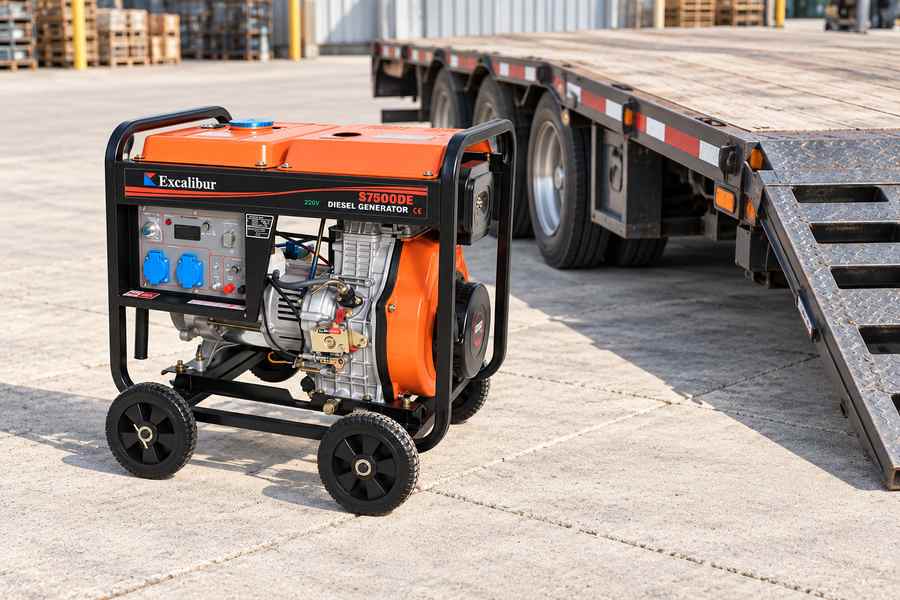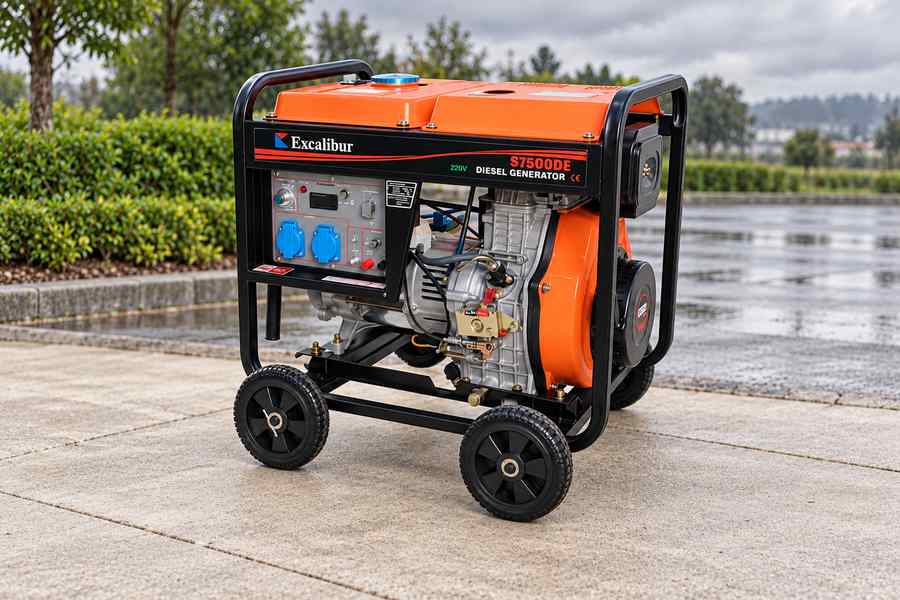
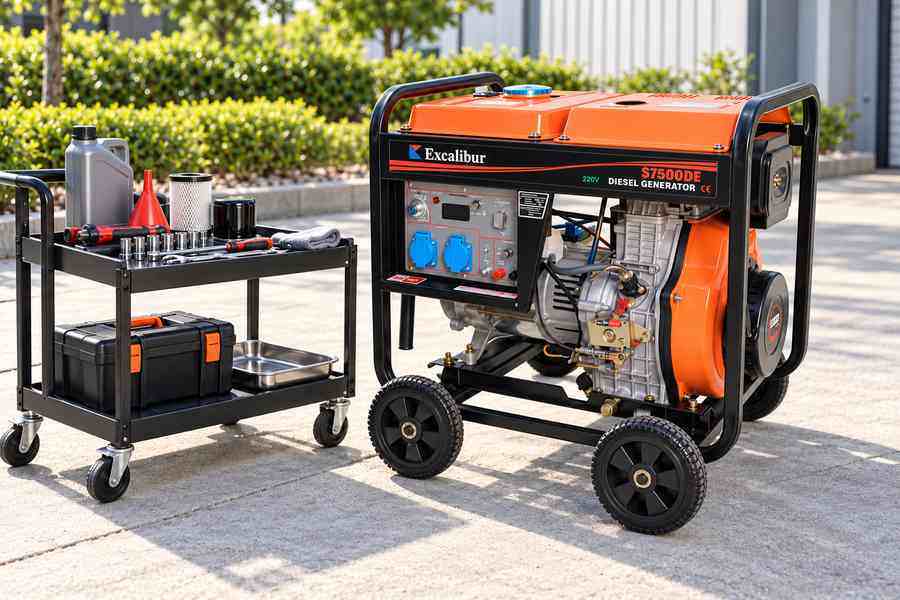
Assess maintenance access on an open-frame diesel generator by asking a technician to demonstrate the routine service tasks on the exact configuration you intend to buy. Check whether fluids can be inspected and drained, filters removed, fasteners reached, and components replaced without unnecessary disassembly. An exposed engine can still be difficult to maintain when frame tubes, wheels, the fuel tank, or the control panel obstruct the working space.
The strongest assessment follows a service task from beginning to end. Seeing an oil cap is not enough if a funnel cannot reach it or a drain container cannot fit beneath the engine. Before ordering, connect the generator’s maintenance schedule to the tools, space, consumables, and skills available at your site.
Start With The Actual Maintenance Schedule
Request the operating and maintenance manuals for the proposed generator and engine. Identify the checks performed before use, the periodic service operations, and any work reserved for trained service personnel. Avoid building the assessment around a generic schedule from another engine.
List the items that will be serviced most frequently in your environment. These may include engine oil, the air cleaner, cooling passages, fuel-system components, and the starting battery where fitted. The exact list and intervals must come from the supplied equipment instructions.
Separate inspection access from replacement access. A component may be visible enough for a leak check but require considerably more clearance for removal. Include the tools and movement needed to withdraw it without damaging surrounding parts.
Use Excalibur’s open-frame diesel generator configurations to identify the model and options under discussion. Then obtain the corresponding service information. A different engine, wheel arrangement, or starting system can change the practical access even within the same product family.
Inspect The Generator In Its Delivered Configuration
Ask for the sample to include the tank, wheels, handles, battery, guards, and control equipment that will be supplied. A partially assembled display machine can make maintenance look easier than it will be in service. Record any difference between the demonstration unit and the order.
Place the stopped, isolated machine in a representative service position. Consider the floor, lighting, available space, and the way technicians will approach it. A generator positioned on a spacious showroom platform may conceal difficulties that appear when it is parked near other equipment.
Do not remove guards merely to improve the appearance of access during normal operation. Protective covers may need removal for specific maintenance tasks, but the procedure should identify when isolation is required and how the covers are restored. Access quality includes safe reassembly, not just fast removal.
Keep the inspection separate from a live operating demonstration. Hot exhaust parts, moving equipment, and energized connections create different hazards. Routine maintenance access should be demonstrated with the generator prepared according to its service instructions.
Check Oil-Level Inspection And Filling
Locate the oil-level checking point and read the prescribed checking method. Confirm the required machine position and whether the dipstick is inserted, threaded, or otherwise handled in a particular way. The method can vary, so do not infer it from the appearance of the cap.
Check whether the operator can reach the cap without passing close to hot exhaust parts or awkwardly threading a hand between frame members. There should be enough space to remove the dipstick, inspect it in good light, and reinstall it correctly. A cap that is visible but difficult to grip can encourage skipped checks.
Demonstrate how the approved lubricant will be added without contamination or spillage. Consider the container and funnel that will actually be used. If a special extension or filling tool is required, include it in the service equipment plan.
Ask how spilled oil would be cleaned from the area. A recess that traps lubricant near the engine or wiring can make an otherwise straightforward task inconvenient. The supplier should explain the intended procedure rather than suggesting that the generator be tipped to improve access.
Follow The Oil Drain Path
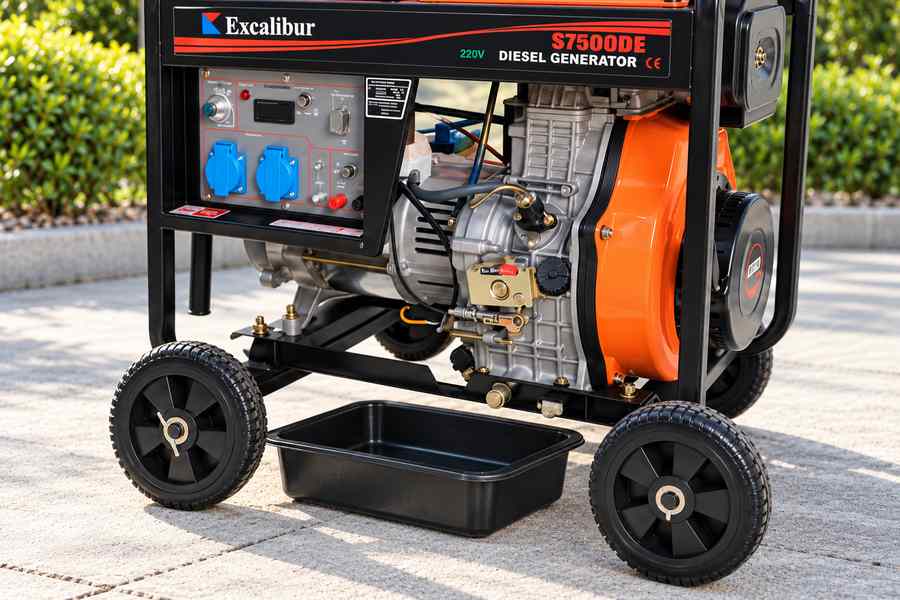
Locate the drain point and the route the oil follows during servicing. Confirm that the drain can be operated with the appropriate tool and that a suitable container fits beneath it. Check the configuration with wheels and support feet installed.
Look for frame rails, brackets, or mounting plates that sit directly in the drain path. Oil running across the frame can increase cleanup work and hide later leaks. If a drain extension is offered, verify that it is an approved part with adequate protection during normal use and transport.
Ask the technician to explain how the drain is closed, checked, and returned to service. The required access includes fitting seals or other specified parts and applying the correct tightening procedure. Do not assume that a fastener can be serviced correctly simply because a spanner can touch it.
Use a dry demonstration if draining a new sample is unnecessary. The technician can show the tools, container position, and clearances without creating waste or disturbing the machine. Record the actual procedure and any required accessories.
Assess Air-Filter Removal And Clean-Side Protection
Find the air-cleaner housing and determine how its cover and filter element are removed. Check whether the element can be withdrawn without bending it or striking the frame. Sufficient clearance is particularly important when an element must move straight out of its housing.
Consider how the surrounding dirt is managed before opening the air cleaner. Dust on the housing can fall into the intake during servicing if the work area is poorly arranged. Access should allow the technician to distinguish the dirty side from the clean side and protect the intake as instructed.
Ask which filter elements are cleaned, which are replaced, and what methods are allowed. Do not assume that every paper, foam, or multi-stage filter can be treated the same way. A service demonstration should follow the actual filter instructions rather than a familiar routine from another machine.
Check the cover fasteners, seals, and retaining components. Small loose parts can be dropped into inaccessible spaces, while damaged seals can allow unfiltered air past the element. Request part numbers and confirm that replacements can be obtained without replacing the entire air-cleaner assembly unnecessarily.
Inspect Cooling-Passage Access
On an air-cooled engine, identify the cooling-air inlet, shrouds, and the surfaces that the manual requires to be kept clean. The exposed appearance of an open frame does not guarantee access to every fin or passage. Some areas may remain behind guards or ducting.
Ask how the specified cleaning method reaches these areas. Tools must fit without damaging fins, forcing debris into electrical equipment, or disturbing hoses and wiring. The technician should explain which covers may be removed and how their correct refitting is verified.
Distinguish engine cooling from alternator ventilation. Both need appropriate airflow, but they are different systems with different maintenance instructions. A clear view of the engine does not prove that the alternator’s cooling openings are easy to inspect.
If the selected generator uses liquid cooling, include radiator surfaces, coolant-level inspection, hoses, and related service points in the assessment. Do not apply an air-cooled inspection checklist to a different cooling arrangement. Establish the exact equipment before comparing service effort.
Review Fuel-System And Battery Access
Ask the supplier to identify the fuel filter, water-separation components if fitted, shutoff controls, and approved drain or servicing points. Verify that a technician can place a collection container where required. Fuel-system maintenance should not require uncontrolled discharge onto the frame or ground.
Keep high-pressure fuel-system work separate from routine owner checks. Not every visible fitting is intended to be loosened by the operator. The manual should identify the procedures and competencies required, including any priming process after permitted maintenance.
For electric-start models, inspect battery mounting and terminal access. A technician should be able to follow the prescribed isolation, inspection, and replacement sequence without placing a tool across the terminals or against nearby conductive structure. Confirm that terminal protection and hold-down components can be restored properly.
Check the route for removing the battery. The opening must accommodate its size and the intended handling method, not merely provide sight of the top surface. Include the replacement battery specification in the service documentation.
Check Access To Fasteners And Wear Components
Ask which periodic inspections require checking mounts, guards, connections, or other fasteners. Identify where the correct tool needs a straight approach and where a torque tool needs room to operate. A fastener hidden behind a frame tube can add substantial time to a routine task.
For repairs beyond routine servicing, discuss access to the starter, alternator, regulator, and other relevant components. Some work will reasonably require additional disassembly. The important point is to know the procedure, likely parts, and service support before downtime occurs.
Examine how wiring and hoses are routed around service areas. A technician should not need to pull on them to gain clearance. Clips, protective sleeves, and connectors should be identifiable so that temporary movement, where permitted, can be reversed correctly.
Do not rank designs simply by the number of removable panels or fasteners. A protective cover with a clear service procedure may be preferable to exposed components in a dirty environment. Evaluate the whole task, including cleanliness, safety, and reassembly.
Record A Repeatable Service Demonstration
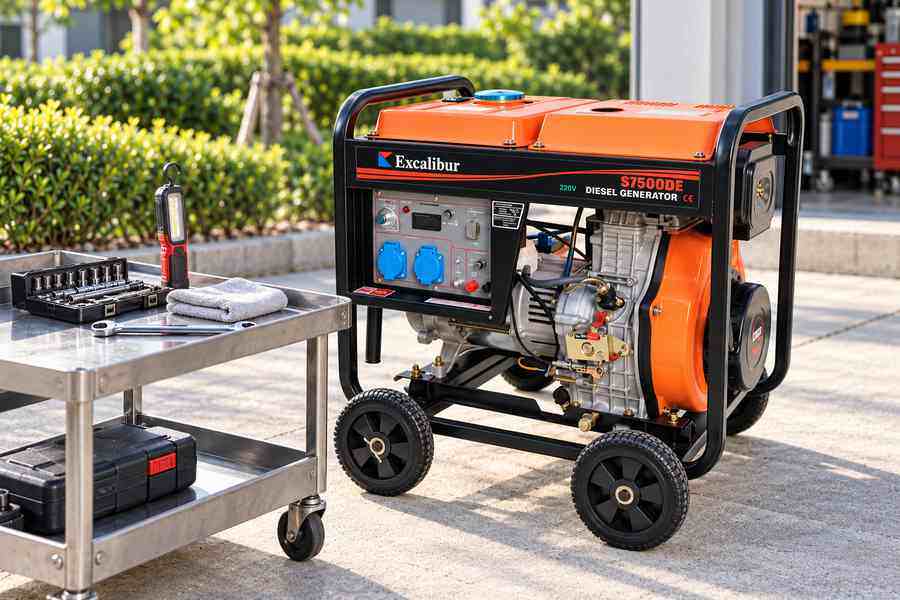
Use a short task sheet for each candidate machine. Record the service item, tools, parts removed, clearance needed, and any special handling or cleaning requirement. Ask the same questions for every quotation so the comparison remains meaningful.
| Service task | What to demonstrate | What to record |
| Oil check and fill | Dipstick removal and practical filling route | Required position, access, and filling tool |
| Oil change | Drain-tool access and container placement | Drain path, approved extension, and closure procedure |
| Air-filter service | Cover and element removal without contamination | Withdrawal clearance and seal inspection |
| Cooling cleaning | Reach to the specified surfaces and passages | Permitted method and cover-refitting steps |
| Battery replacement | Safe access and removal route | Battery specification and isolation procedure |
If you record task time, define what is included and avoid presenting one demonstration as a guaranteed service duration. Cooling, preparation, cleanup, and checks after reassembly can be significant. A rushed demonstration is a poor basis for planning maintenance labor.
Connect Access To The Ownership Plan
Good access is valuable only when the required parts and instructions are available. Ask for the service schedule, consumable part numbers, fluid specifications, and the appropriate illustrated parts information. Confirm who provides support when a task falls outside the operator’s competence.
Consider the intended service location. If the generator must be moved out of a confined storage space for every maintenance operation, include that movement in the plan. Keep the operating clearance and the maintenance clearance distinct; one does not automatically satisfy the other.
Review these requirements alongside the diesel generator’s electrical and equipment options. A larger tank, different panel, or added starting equipment may change access. Request a final check when the ordered configuration differs from the sample.
Before purchase, retain the completed task sheet, relevant photographs, and the supplier’s answers. The receiving inspection can then confirm that the delivered generator matches the assessed arrangement. This makes maintenance access an observable purchase requirement instead of a vague promise that an open-frame machine will be easy to service.