Verify a silent diesel generator’s noise rating by asking what was measured, at what distance, under which load, and on which exact configuration. Leave an offer unranked when its decibel claim lacks the test conditions needed to compare it with another machine. Request the test report or a clearly defined acoustic data sheet before deciding whether the generator suits the intended location.
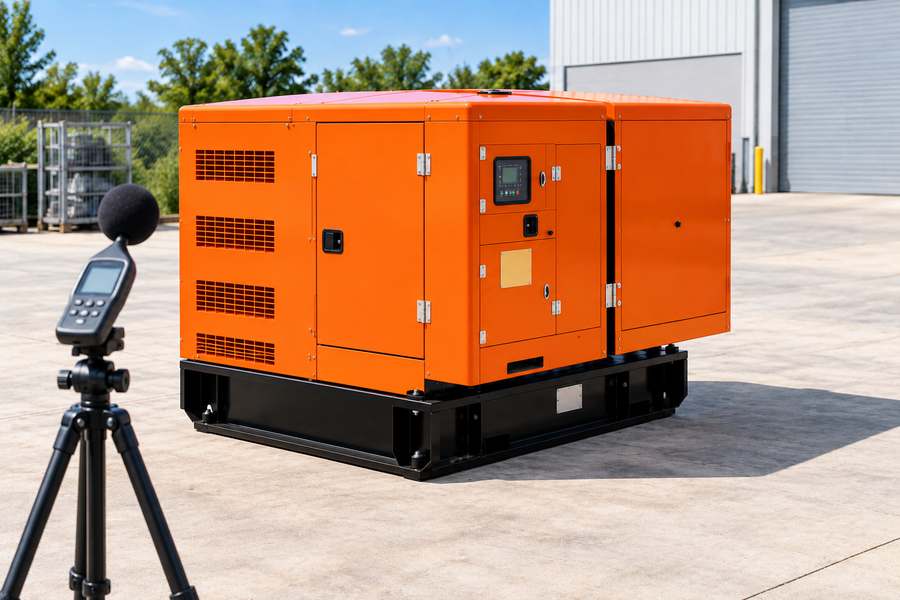
The word silent describes a noise-reduction approach, not an absence of sound. An enclosure, silencer, ventilation arrangement, and vibration mounts can reduce different noise paths, but the result still depends on the complete machine and installation. Buyers need a comparable measurement and a separate assessment of the site where the generator will operate.
Ask Whether The Figure Is Sound Pressure Or Sound Power
Sound pressure level describes the sound measured at a particular receiving position. Distance, direction, reflections, and surrounding conditions influence that measurement. It is useful for describing exposure at a stated point, provided the test conditions are clear.
A sound power result characterizes the generator as a noise source; the test procedure determines how that result is established. It is a different quantity and is not numerically interchangeable with sound pressure level. Two brochures can both show decibels while reporting different things.
Ask the supplier to label the quantity explicitly, including any frequency weighting. A-weighted figures are commonly written as dB(A), but that notation alone does not identify the distance, load, or whether sound pressure or sound power is being reported. Keep those fields separate in the comparison sheet.
Excalibur’s silent diesel generator range provides advertised noise figures for different configurations. Request the supporting conditions for the exact model being quoted. A range-level figure should not be treated as a guarantee for every machine or installation.
Confirm Distance And Measurement Position
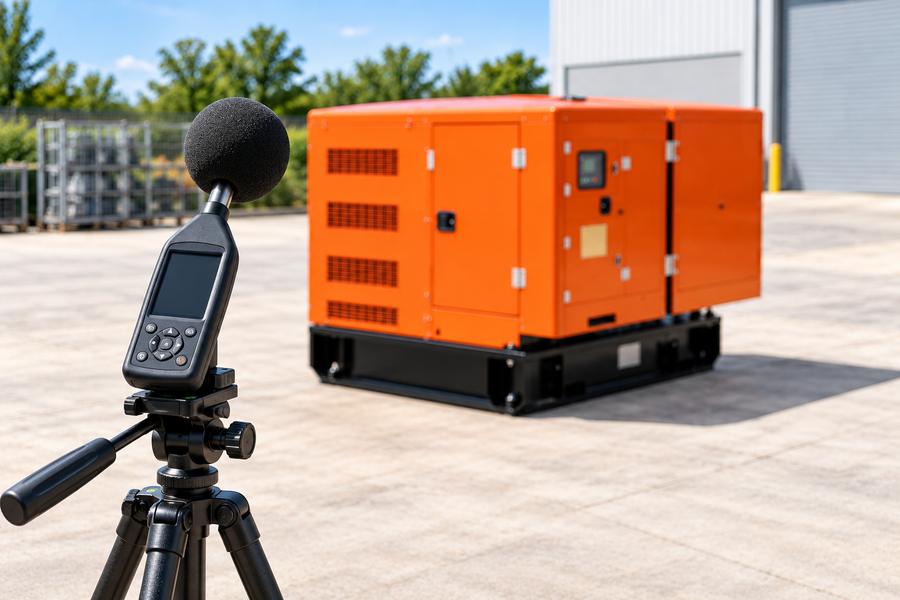
For sound pressure data, ask how far the microphone was from the generator and where the distance was measured from. Also request microphone height and position relative to the machine. A reading near the exhaust side may differ from a reading at another side.
Determine whether the reported value is a maximum, an average of specified positions, or a single reading. Those descriptions can produce different numbers from the same test. A buyer should not compare the lowest position from one machine with an average or maximum from another.
Do not use distance alone to convert a brochure figure into a guaranteed site result. Simple distance relationships rely on acoustic assumptions that may not hold near buildings, barriers, reflective ground, or other equipment. They can support preliminary analysis but cannot replace a suitable assessment.
If the project requirement applies at a property boundary or occupied location, identify that receiver explicitly. The generator’s factory measurement distance may be unrelated to the distance at the site. Ask for a prediction or test plan appropriate to the actual receiver.
Match Load, Speed, And Operating Condition
Ask which load was applied during the acoustic measurement. A figure measured at light load should not be compared directly with one measured at rated load. The load type, engine operating condition, and cooling demand can influence the noise produced.
Confirm frequency and engine-speed configuration. A model offered for different electrical frequencies may not have identical acoustic behavior in every version. Match the enclosure and engine identifiers in the report to the configuration on the purchase order.
Find out whether the generator had reached the relevant stable operating condition before readings were taken. A short reading immediately after startup may not represent the condition reached during sustained service. Cooling fans and temperature-dependent systems, where fitted, also need consideration.
Request data for the duty that matters to the project. If a site will normally operate at a particular load but occasionally reach a higher one, both conditions may be relevant. Avoid selecting a favorable test point that does not represent the expected use.
Check The Exact Enclosure And Exhaust Configuration
Match the report to the enclosure, doors, seals, silencer, air openings, and optional equipment in the quotation. Acoustic performance belongs to the complete tested arrangement. A different canopy, exhaust outlet, or cooling system can change the result.
Confirm that service doors and access panels were in their intended operating positions. A generator that requires doors closed for normal operation should be assessed that way. Conversely, do not accept a noise claim that depends on blocking ventilation openings or fitting temporary covers unsuitable for service.
Ask whether the tested unit used optional acoustic equipment that is excluded from the price. Record the option codes and configuration in the purchase order. Otherwise, a technically valid report may describe a machine different from the one delivered.
For a bulk order, identify how production consistency will be checked. Door alignment, seals, panel fasteners, and insulation installation can affect noise paths. A sample test supports the specification only when the supplied units retain the relevant construction.
Review The Test Environment And Background Noise
Ask where the measurement was performed and which test method was used. Reflective walls, nearby vehicles, hard surfaces, wind, and other noise sources can affect results. A test report should explain the environment and any corrections or limitations.
Background noise must be assessed appropriately. If it is too close to the generator’s noise at the microphone, separating the two becomes difficult. Do not accept a reading taken beside another running machine without an explanation of how background sound was handled.
Check the instrument identification, calibration information, and measurement settings. The required details depend on the test method, but a credible report should allow a competent reviewer to understand how the result was obtained. A screenshot of an unexplained number is weak evidence.
Smartphone recordings and videos are useful for documenting a demonstration, but they do not reliably reproduce calibrated sound levels. Automatic recording gain, microphone response, playback volume, and compression change the listening experience. Use them to supplement, not replace, acoustic data.
Use A Comparison Sheet Before Ranking Quotations
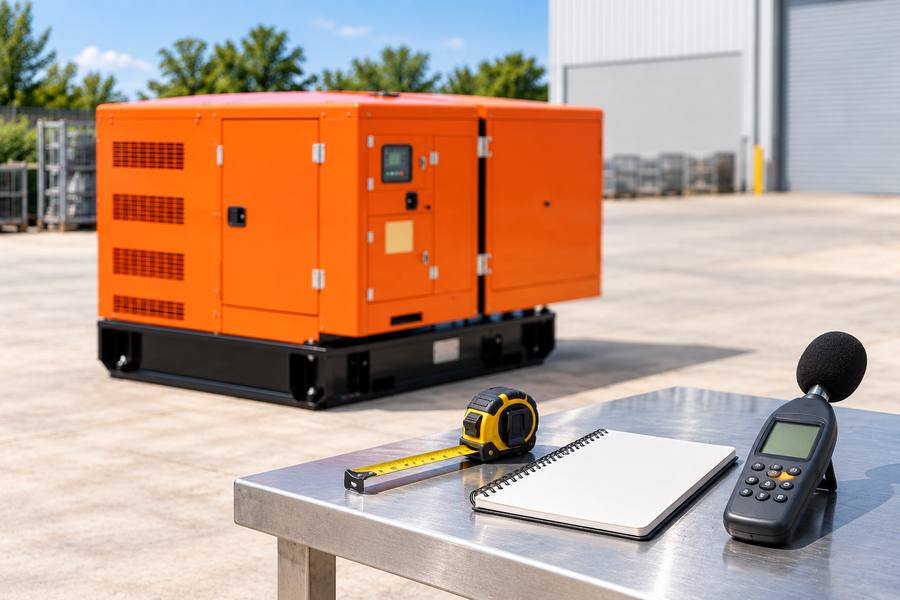
Put the relevant conditions beside every quoted noise value. Leave an unanswered field visibly marked for supplier clarification. If two offers use different methods or operating points, ask for comparable data before deciding which is quieter.
| Field | Information to request |
| Machine identity | Generator model, engine, electrical frequency, and enclosure version |
| Acoustic quantity | Sound pressure or sound power, weighting, and reported statistic |
| Operating point | Load, speed, warm condition, and relevant fan operation |
| Microphone arrangement | Distance, height, positions, and reference point where applicable |
| Test environment | Method, surroundings, background sound, and weather conditions |
| Instrumentation | Meter identification, calibration, and measurement settings |
| Delivered configuration | Doors, seals, silencer, ventilation, and included acoustic options |
A small difference between advertised figures may not be meaningful when the test conditions or uncertainty differ. Ask the reviewer to explain whether the evidence supports the claimed ranking. Do not turn a rounded brochure number into a precision claim that the test never established.
Assess The Site Separately From The Factory Rating
Map the proposed generator location and the people or properties affected by its sound. Include nearby walls, corners, barriers, and other operating equipment. A generator that meets a factory specification may still be unsuitable at a particular receiver without additional site planning.
Include vibration transmitted through the supporting structure in the site review, alongside sound traveling through the air. Mounting, support, and connected services can transmit vibration into nearby structures. An acoustic enclosure cannot automatically solve every vibration path.
Keep cooling and exhaust requirements intact when considering barriers or relocation. A noise barrier placed too close to an air outlet can cause heat recirculation or restriction. Never trade safe ventilation for a lower sound reading.
Local noise requirements can specify particular measurement locations, time periods, or acoustic characteristics. Have the applicable requirements identified for the project instead of assuming that a general dB(A) claim proves compliance. For sensitive sites, obtain an acoustic assessment from a qualified specialist.
Look Beyond The Overall A-Weighted Number
Two generators with similar overall levels may sound different because of their frequency content, tonal components, or intermittent rattles. If the application is sensitive to those features, ask for suitable additional data. An overall number can conceal a prominent tone.
During an approved demonstration, listen for panel vibration, loose hardware, exhaust leakage, and changes when the load varies. These observations do not replace measurement, but they can identify issues for investigation. Record the condition rather than describing the machine only as pleasant or annoying.
Distinguish an individual defect from the expected acoustic character of the model. A loose door on a sample may be repairable, while an inherent low-frequency component may require different site treatment. Ask the supplier to address the cause and demonstrate the corrected configuration where necessary.
Do not assume that a quieter enclosure automatically offers the best overall choice. Service access, cooling performance, weight, and operating duty still matter. The objective is a generator that meets the complete project specification.
Agree A Practical Acceptance Test
Before ordering, state whether acceptance will rely on a factory report, a witnessed sample test, a site test, or a combination. Define the model, operating condition, measurement method, locations, and acceptance criteria. Agree how unexpected background noise or unsuitable weather will be handled.
If a site limit is contractual, clarify who is responsible for the installation features that influence it. The generator supplier, installer, and site owner may each control different parts of the result. Ambiguous responsibility can leave a valid equipment test disconnected from the project’s actual requirement.
Include any acoustic options in the delivered bill of materials and inspection record. Verify that doors, seals, insulation, and silencers match the accepted configuration. Do not approve an unreviewed substitution solely because the replacement looks similar.
Review these decisions alongside the broader diesel generator selection requirements. Electrical capacity, cooling arrangement, and noise performance should refer to the same machine and duty. Comparing separate favorable claims from different configurations can produce a specification that no actual unit meets.
Keep The Evidence With The Order
For example, suppose one quotation reports a sound pressure value at a stated distance with the generator at half load, while another supplies sound power at rated load. Neither figure can be ranked directly against the other. The first follow-up is to request a shared comparison basis, not to subtract the smaller number from the larger one.
A second common mismatch occurs when a supplier tests a premium enclosure but quotes a standard enclosure. Even if the engine and alternator are unchanged, the acoustic evidence belongs to the tested package. Put the enclosure identifier and included silencer on the same comparison line as the noise result.
For a repeat order, retain the original acoustic requirement instead of relying on the phrase same as last time. Product revisions and accessory substitutions can change the configuration. Ask the supplier to identify any change relevant to the accepted test evidence and explain whether new verification is needed.
These checks are particularly useful when several purchasing teams compare offers. A shared evidence sheet prevents one team from evaluating a factory reading while another assumes a guaranteed site-boundary result. The purchasing team can then close the evidence gaps while changes to the specification are still practical.
Retain the acoustic data sheet, complete test report where available, configuration record, and site assessment. Note any unresolved information and avoid describing it as verified. The receiving team should know which physical details must match the tested unit.
After installation, inspect the machine and perform the agreed checks before relying on the advertised noise performance. Maintain doors, seals, mounts, and ventilation according to the manufacturer. A clear chain from test conditions to delivered configuration to actual site use gives the noise rating practical meaning.