A water-cooled silent diesel generator needs maintenance of both the coolant circuit and the airflow that carries heat away from the radiator and enclosure. The routine should cover coolant condition and level, leaks, hoses, pressure components, radiator cleanliness, fan drive where applicable, and temperature protection. Use the schedule and fluid specification for the exact engine rather than a generic coolant-change interval.
The term water-cooled does not mean that ordinary water is the correct service fluid. The approved coolant must provide the protection required by the engine and climate. A clean radiator also cannot compensate for low coolant, poor circulation, trapped air, or an enclosure that recirculates hot discharge air.
Confirm The Cooling Configuration And Service Information
Identify the engine, radiator arrangement, expansion or recovery tank where fitted, fan drive, and any optional coolant heater. Obtain the corresponding maintenance instructions and parts information. Different configurations can place service points in different locations and require different procedures.
Ask the supplier to show the coolant checking point, fill point, approved drain points, and accessible inspection areas. Assign each task to an operator or service technician according to the manual and the person’s training. Do not assume that every visible cap or fitting is intended for routine removal.
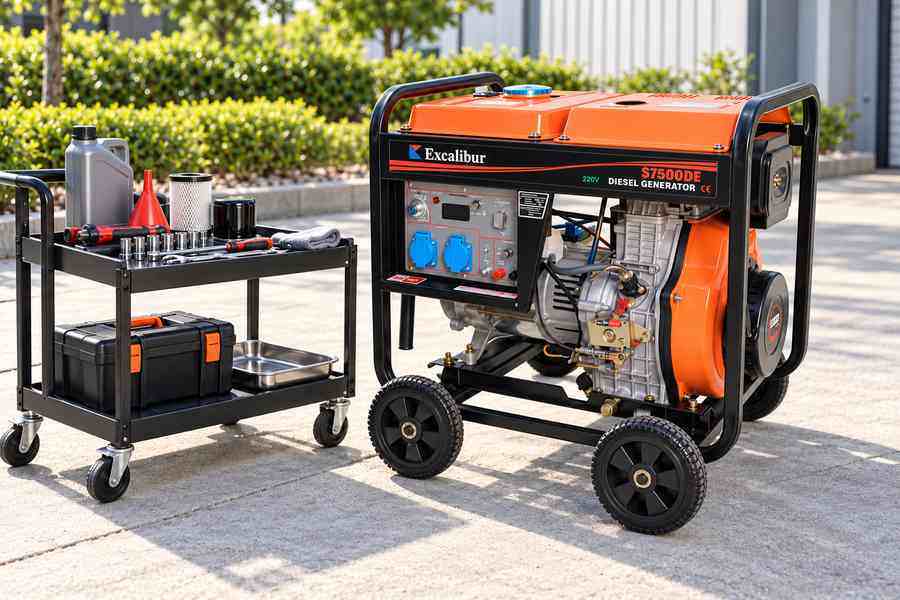
Excalibur’s silent diesel generator range includes both air-cooled and water-cooled versions. Verify the ordered configuration before preparing a maintenance plan. The presence of a sound-reducing enclosure does not identify the engine’s cooling system.
Keep the cooling-system schedule with the generator’s operating record. Include any calendar limits as well as operating-hour requirements. Equipment that runs infrequently can still need coolant and hose attention over time.
Use The Correct Coolant Specification
Request the approved coolant specification, concentration, mixing-water requirements where relevant, and permitted products. Coolant chemistry affects corrosion protection and compatibility with system materials. Identify the fluid by its specification and approval, not by the dye visible in the bottle.
Two bottles displaying the word antifreeze may contain different formulations; obtain confirmation of compatibility before combining them. Ask the engine manufacturer or service provider how to handle an unknown existing fill. Adding another product can create uncertainty that a simple visual inspection cannot resolve.
Follow the specified concentration rather than assuming that more concentrate always provides better protection. The required mixture reflects heat transfer, freeze protection, and the coolant formulation. Use the appropriate test method if concentration must be checked.
Some systems have requirements for additives or condition testing, while others use different maintenance approaches. Do not add supplemental chemicals unless the actual coolant and engine instructions require them. Record the product and any treatment in the service history.
Check Level In The Prescribed Cold Condition
Inspect coolant level using the manufacturer’s procedure and the appropriate reference marks. The required checking point may be a tank, radiator, or another specified location. A recovery bottle reading should not be interpreted without understanding the system design.
Leave the cooling-system pressure cap closed whenever the system is hot. Opening a hot pressurized circuit can release scalding liquid and vapor, exposing the person nearby to serious burn injury. Allow the engine to cool and follow the manual’s pressure-release and access instructions.
Investigate repeated top-ups. A small amount added regularly can indicate a leak or another fault even when the generator continues to run normally. Record the quantity, frequency, and operating conditions so the service team can assess the pattern.
Avoid overfilling beyond the specified level. The system needs the expansion provision designed by the manufacturer. If the correct level is unclear, obtain guidance instead of filling every available space.
Inspect Hoses, Connections, And Visible Leakage
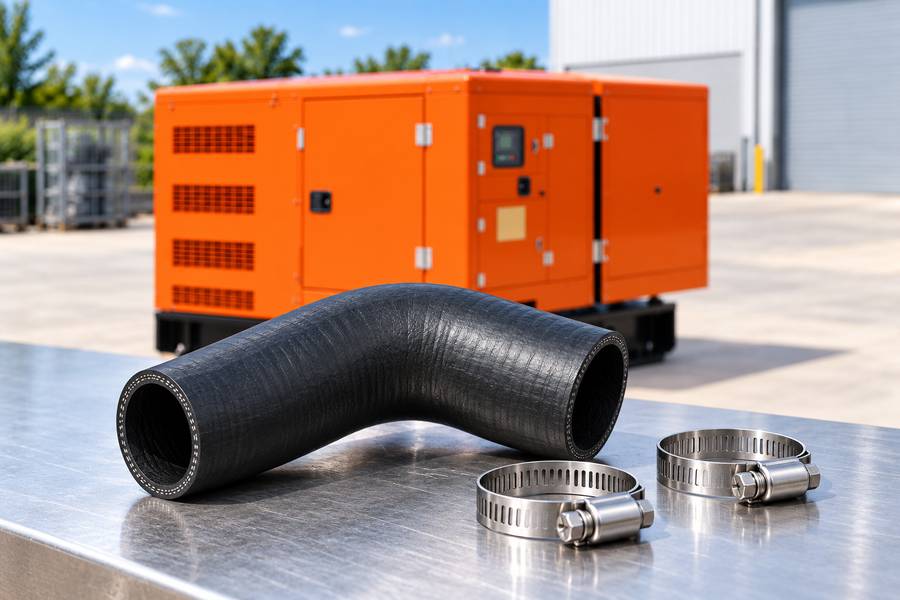
With the machine safely stopped and cooled, inspect accessible hoses for cracking, abrasion, swelling, hardening, or other damage. Check areas near clamps, bends, and contact points. A hose can deteriorate where it rubs against nearby structure even if the rest looks sound.
Look for wetness, dried residue, or staining around connections, the radiator, pump area, and other accessible components. Record the location before cleaning it away. A leak may be easier to trace from its residue than from a brief inspection after topping up.
Do not tighten every clamp indiscriminately. Excessive force or the wrong clamp can damage a hose or connection. Use the specified inspection and installation requirements, and replace unsuitable parts through the correct service procedure.
Any pressure test must use the appropriate equipment and limits for the system. Do not apply uncontrolled shop air to locate a leak. Have qualified personnel perform testing where the maintenance instructions require it.
Maintain Radiator Airflow
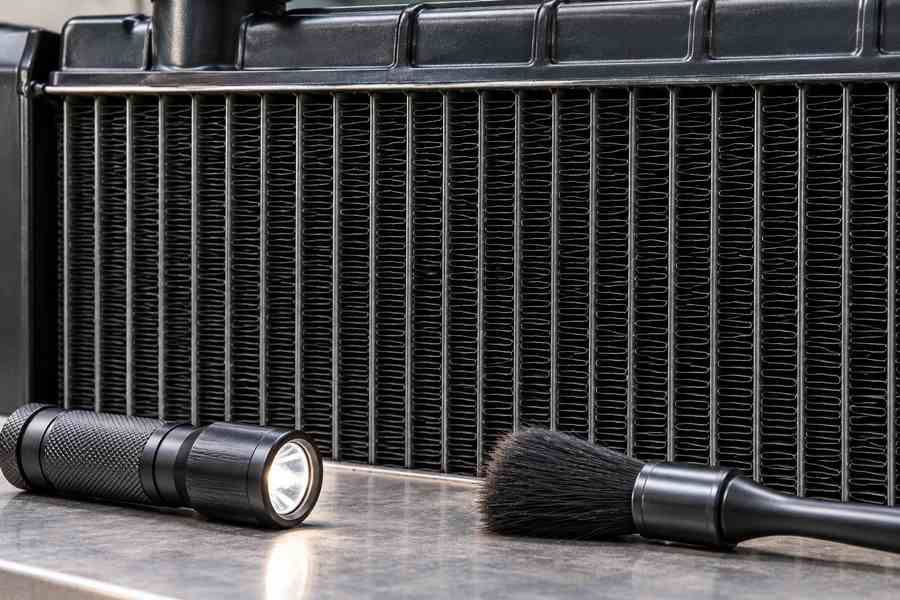
Inspect the radiator’s accessible air side for dust, leaves, insects, and other contamination. Check the surrounding inlet and discharge openings at the same time. The cooling system needs both a usable heat-transfer surface and a clear path for air.
Use the manufacturer’s cleaning method and protect nearby electrical components. Excessive water or air pressure can bend fins or force debris into other areas. Cleaning direction and access should follow the actual assembly rather than a general pressure-washing habit.
If other heat exchangers or guards sit in front of the radiator, ask how the spaces between them are inspected. Debris may accumulate where the front face looks relatively clean. Do not dismantle the assembly beyond the procedure provided for the model.
Correct the source of recurring sticky deposits. Oil or other contamination can bind dust to the core and make cleaning less effective. A repeated cleaning problem may be a leak or placement problem rather than an inadequate service interval.
Check Fans, Drives, And Guards Where Fitted
Identify the fan arrangement and the relevant inspection points. Some systems use belts, while others use different drives. Follow the instructions for the actual equipment instead of assuming that every water-cooled generator has the same adjustable belt layout.
Inspect belts where fitted for condition, alignment, and tension using the manufacturer’s method and values. An adjustment based only on how tight the belt feels is not a reliable service procedure. Replace parts that fail the specified criteria.
Check accessible fan components and guards with the machine isolated. Do not reach into the fan area while the engine can start, and account for automatic-start functions. Damaged or loose rotating components require proper repair before operation.
Restore all guards after maintenance. They may protect people and help preserve the intended airflow arrangement. An apparently improved view of the radiator is not a reason to leave protective parts off.
Preserve The Enclosure’s Cooling Path
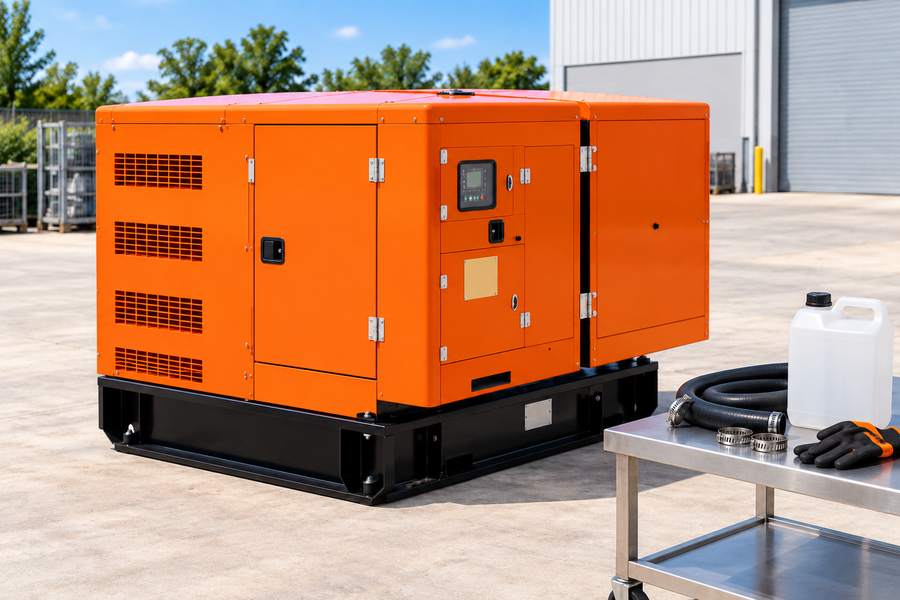
A silent canopy may guide air through specific inlets, ducts, partitions, seals, and outlets. Inspect those components for damage or displacement. A radiator can be clean while the enclosure still prevents effective cooling.
Keep doors and panels in the approved operating positions. Running with a service door open can change the airflow route, increase noise, and expose hot or moving parts. Investigate a temperature alarm with the approved diagnostic procedure instead of adopting open-door running as the operating arrangement.
Keep the surrounding space available for the intake and discharge paths specified in the installation instructions. Nearby barriers, stacked materials, or a weather shelter can restrict flow or send hot discharge air back into an inlet. Review the site whenever surrounding equipment or structures change.
Do not add fine mesh, filters, or acoustic lining across openings without manufacturer approval. Additional airflow resistance must be considered in the cooling design. More material is not automatically better protection.
Service Caps, Thermostats, And Pumps Correctly
Pressure caps, thermostats, pumps, and related components have defined functions and specifications. Replace them with approved parts when required by diagnosis or maintenance instructions. Appearance cannot confirm a replacement thermostat’s opening specification or a cap’s pressure rating.
Do not remove the thermostat as a permanent attempt to solve overheating. The cooling circuit is designed to operate with the specified temperature-control arrangement. Diagnose the cause of abnormal temperature rather than altering the system without approval.
Inspect coolant-heater arrangements where fitted, following their electrical and service instructions. These components add another maintenance and isolation consideration. Do not assume that turning off the engine removes every electrical supply associated with the cooling system.
Report unusual pump noise, leakage, temperature behavior, or repeated coolant loss to the service provider. Avoid assigning a diagnosis from one symptom alone. The technician may need to evaluate circulation, pressure integrity, control, and installation conditions together.
Plan Coolant Replacement And Refilling
Replace coolant at the interval or condition specified for the engine and coolant product. Record the previous fill, operating hours, and service date. Do not substitute an arbitrary annual or hourly rule when the manufacturer provides a different requirement.
Use the approved draining and flushing procedure, including collection and disposal arrangements. Coolant should not be released onto the ground or into unsuitable drains. Keep it away from people and animals and handle it according to the product instructions and applicable requirements.
Use the model-specific filling procedure, including its designated steps for removing trapped air. Trapped air or an incomplete fill can cause problems after an otherwise routine service. The correct procedure may involve specific fill points, venting steps, or follow-up level checks.
After the prescribed run and cool-down cycle, verify the level and inspect for leakage as instructed. Record the final product, concentration where relevant, and completed checks. A service is not finished merely because the drain has been closed and fluid added.
Verify Monitoring And Respond To Warnings
Understand which temperature indications, alarms, and shutdown functions are fitted. Ask how their inspection or testing is performed safely. Never bypass a protective function to keep the generator operating while a cooling fault remains unresolved.
If a temperature warning occurs, follow the shutdown instructions and retain the alarm details. Record load, ambient conditions, operating duration, and recent service work. This helps distinguish a maintenance issue from an installation limitation or another fault.
Do not open a hot system to add coolant during an alarm event. Allow the machine to reach the condition required for safe inspection. Continuing operation after successive alarms risks worsening the fault before a technician has established its cause.
| Maintenance area | Record to keep | Manufacturer information needed |
| Coolant | Product, condition, concentration where applicable, and service date | Specification and testing or replacement requirements |
| Leaks and hoses | Inspection findings and top-up history | Approved parts and test procedure |
| Radiator air side | Contamination and cleaning work | Cleaning method and access instructions |
| Fan and drive | Condition, adjustments, and replacements | Inspection criteria and adjustment values |
| Enclosure airflow | Clearances, panel condition, and site changes | Approved installation and operating arrangement |
| Temperature protection | Warnings, diagnosis, and repair verification | Alarm response and test instructions |
Make Cooling Maintenance Part Of The Purchase Plan
Before choosing among diesel generator configurations, describe the ambient conditions, duty, dust exposure, and service resources to the supplier. Request the cooling-system manual, coolant specification, consumable parts, and access requirements with the quotation. Confirm that the site can perform the required maintenance.
Include a practical walk-through of the coolant inspection points and initial service tasks in the delivery handover. Keep the fluid record and inspection checklist with the machine. The goal is a cooling system whose condition can be tracked and maintained, with clean airflow, correct coolant, intact components, and functioning protection throughout its working life.