A plate compactor needs enough passes to meet the project’s acceptance requirement throughout the placed lift; there is no reliable universal count. Establish a working pattern using the actual material, lift thickness, moisture condition, and machine, then verify the result with the specified field tests. A firm-looking surface alone cannot confirm that the full layer is adequately compacted.
This approach matters for granular bases beneath paving, slabs, and other construction work. Repeating a familiar number from a previous job can overlook a different aggregate, a wetter subgrade, or a thicker placement. Start with the specification and the equipment manual, then use site evidence to establish the method.
What Counts as One Compactor Pass?
Define a pass before comparing production records. For a practical site record, one pass can mean one complete traversal of the machine over a particular point. Moving forward and returning over that same point then produces two traversals, provided the agreed recording method uses that definition.
Coverage of the whole area is a separate consideration. Operators need a consistent travel pattern and the overlap specified in the working method so that strips between tracks are not missed. Turning, reversing, and access restrictions can make coverage uneven even when the total operating time looks sufficient.
Write the definition on the trial record and brief the crew. Otherwise, one operator may count a complete forward-and-back movement as one pass while another counts it as two. That difference makes a successful trial difficult to reproduce.
Why Is Lift Thickness So Important?
A lift is the layer placed and compacted as one stage of construction. The thickness that the chosen machine can compact effectively depends on the material and conditions. Energy applied at the surface does not guarantee an acceptable result at the bottom of an excessively thick lift.
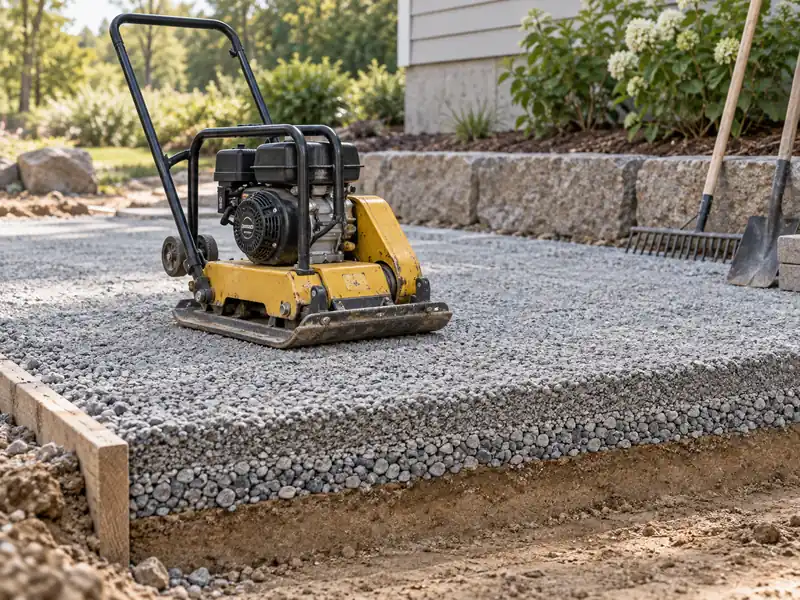
Distinguish loose placement thickness from the thickness after compaction. If a drawing or method statement gives a layer limit, confirm which condition it describes before setting grade markers. Do not convert between the two using an assumed universal shrinkage percentage.
Measure placement depth at representative locations, including depressions in the supporting surface. A layer that appears uniform from above may hide a deep pocket. Where thickness exceeds the approved method, correct the placement rather than relying on extra surface passes to compensate.
Can a Machine’s Force Rating Establish the Allowable Depth?
Centrifugal force is useful when comparing machines, but it does not independently establish compaction depth or a guaranteed pass count. Machine mass, plate dimensions, vibration characteristics, material response, and support conditions also matter. Treat advertised depth figures as information requiring application-specific confirmation.
Excalibur’s reversible plate compactor range can be reviewed alongside the available working space and material specification. Request the proposed model’s operating guidance and explain the intended lift. Our guide to choosing reversible plate compactor size and power expands on the equipment comparison.
How Does Moisture Change the Required Work?
Moisture affects how particles move and how the material responds to compactive effort. Material that is too dry or too wet for the specified method can remain unsuitable despite repeated passes. The useful moisture range must come from the material assessment and project requirements.
The USDA Natural Resources Conservation Service’s guidance on earthfill and rockfill construction discusses moisture control and uniform placement. Its earthwork guidance supports treating moisture as a controlled construction variable. It does not provide a universal pass prescription for every small plate compactor.
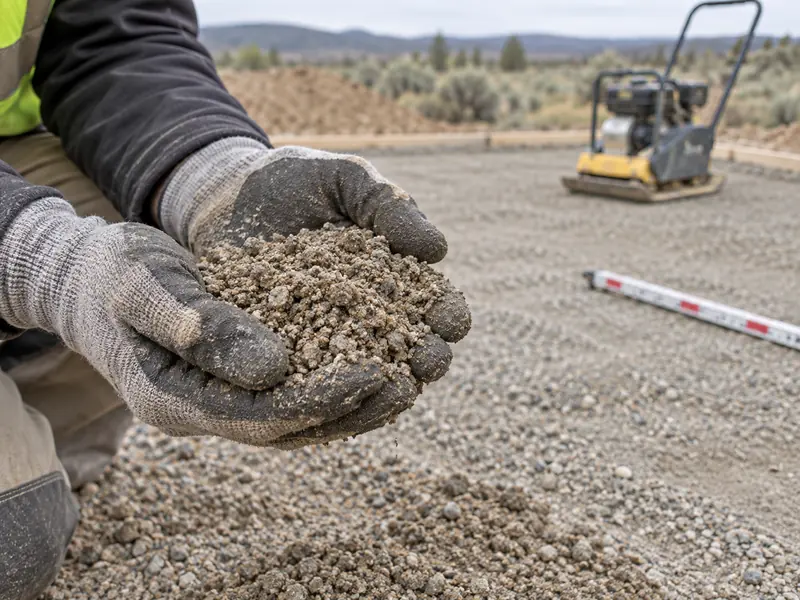
A handful of material can help an experienced operator notice changes, but appearance and feel are preliminary observations. They do not replace the moisture measurement or density testing required by the project. Use the agreed test procedure to decide whether conditioning is necessary.
If water is added, distribute and mix it through the lift using the approved method instead of wetting only the surface. If material is excessively wet, follow the engineer’s direction for drying, reworking, drainage, or replacement. Continuing to vibrate a pumping surface is not a dependable repair.
How Can a Trial Area Establish a Working Pass Pattern?
Select a representative location with the same support, aggregate, placement thickness, and moisture condition expected in production. Record the machine and its approved operating settings. The trial should be large enough to reproduce normal travel and overlap without making every measurement an edge measurement.
- Confirm the acceptance criterion and suitable test method with the responsible inspector.
- Prepare the support and place a measured lift within the approved thickness.
- Record moisture condition and complete an agreed initial coverage pattern.
- Test at planned stages and compare the results with the acceptance requirement.
- Document the successful method and the conditions under which it applies.
For illustration, a project team might choose to investigate results after two, four, and six traversals in a controlled trial. Those numbers describe a possible observation schedule, not a recommendation that every job needs that sequence or that six passes will succeed. The inspector should choose the stages and test locations appropriate to the work.
Keep the test record linked to the material and location. If a density test disturbs the layer, follow the testing procedure for subsequent measurements rather than repeatedly testing a damaged spot. Ask the testing provider how the selected method represents the full lift and its limitations.
| Trial Record | What to Note — Why It Helps |
| Material | Source, grading, and relevant laboratory reference — Identifies the material actually tested |
| Placement | Loose thickness and support condition — Makes the trial reproducible |
| Moisture | Measured condition and any adjustment — Explains changes in response |
| Machine | Model, operating settings, and travel pattern — Connects results to the equipment used |
| Verification | Pass stage, location, method, and result — Shows whether acceptance was achieved |
How Do You Know When the Layer Has Passed?
Use the acceptance method stated in the contract or approved specification. Where relative compaction is specified, the field dry density is compared with the applicable laboratory reference density. The reference test and material sample matter, so a percentage without that context is incomplete.
A requirement such as 95% is not a statement that 95% of air has been removed. Nor can a pass count prove that percentage by itself. Our explanation of what 95% compaction means describes the verification issue in more detail.
Some projects use other approved acceptance approaches or combine density testing with additional checks. Follow the specified method and testing frequency for the actual material. Do not substitute a footprint check, a plate’s bouncing behavior, or elapsed compaction time for a required measurement.
What If Additional Passes Stop Improving the Result?
Pause and investigate the limiting condition. Further vibration may offer little benefit when the lift is too thick, the material is unsuitable, or the support is unstable. A plateau in measured results is a reason to reassess the method, not proof of acceptance.
- Check whether the placed lift matches the trial thickness.
- Compare current moisture and grading with the successful trial.
- Look for yielding support, standing water, segregation, or contamination.
- Confirm machine condition and operation against its manual.
- Ask the inspector whether reworking or a different machine is required.
Repeated effort can also damage some materials or nearby finished work, depending on the application. Stop if the surface breaks down or unusual movement appears and obtain appropriate direction. A failed test should trigger a documented corrective action followed by the required verification.
When Is a Different Compaction Method Needed?
A vibrating plate is commonly considered for suitable granular material, but cohesive soils and confined details may call for another approach. Review the soil classification and access conditions before selecting equipment. Our comparison of a jumping jack tamper and a plate compactor helps frame that choice.
The Excalibur plate compactor range includes options to discuss with the supplier using the actual job details. Include transport, working width, maneuvering room, and the required compaction method in the inquiry. A heavier machine is not automatically appropriate beside a sensitive structure or over a shallow service.
Compacting a granular base and seating finished paving units are also different operations. Follow the paving manufacturer’s instructions for protective mats, joint material, and compatible equipment. A pass pattern approved for the base should not be carried over automatically to the finished surface.
What Should the Crew Record During Production?
Keep a concise daily record of material, lift thickness, moisture checks, machine, coverage pattern, and test results. Reassess the method when the source material, weather, supporting layer, or equipment changes. A trial is useful only while its relevant conditions remain representative.
The practical answer to how many passes are needed is therefore a verified site method with clear limits. Establish it on representative work, reproduce it consistently, and confirm acceptance at the required frequency. This gives the crew a usable instruction and the project a record of the result.