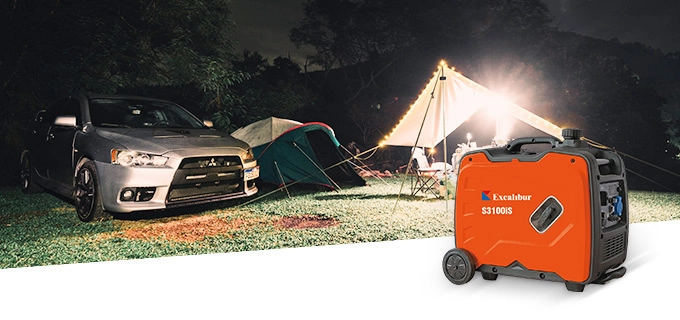
Today’s campers bring smartphones, laptops, electric coolers, coffee makers, CPAP machines, portable induction cookers, drones, cameras, and even small air conditioners into the wilderness. As outdoor lifestyles become more connected and comfort-oriented, reliable, clean, and quiet power is no longer a luxury—it’s a necessity.
What Is an Inverter Generator?
An inverter generator is a portable power source that creates electricity through a three-step conversion process:
- The engine produces high-frequency alternating current (AC)
- This AC is converted into direct current (DC)
- The DC is then inverted back into clean, stable AC electricity
This advanced power conversion results in electricity that is far more stable than that of traditional generators, making inverter generators safe for sensitive electronics commonly used during camping.
Why Camping Demands a Different Kind of Generator
Camping environments place unique demands on power equipment:
- Noise sensitivity in campsites and national parks
- Portability for transport in cars, RVs, or trailers
- Fuel efficiency for extended off-grid stays
- Clean power output for electronics and medical devices
- Reliability in remote areas
Conventional open-frame generators, often loud and fuel-hungry, are poorly suited for these conditions. Inverter generators are purpose-built to meet them.
Quiet Operation: Respecting Nature and Neighbors
Noise Levels Matter in the Outdoors
Most campgrounds enforce strict noise limits, especially at night. Inverter generators typically operate at 50–60 dB, comparable to a quiet conversation, while conventional generators often exceed 70–80 dB.
- Low noise is achieved through:
- Fully enclosed acoustic housings
- Advanced muffler design
- Variable engine speed that adjusts to load
This allows campers to enjoy power without disturbing wildlife, fellow campers, or the peaceful outdoor atmosphere.
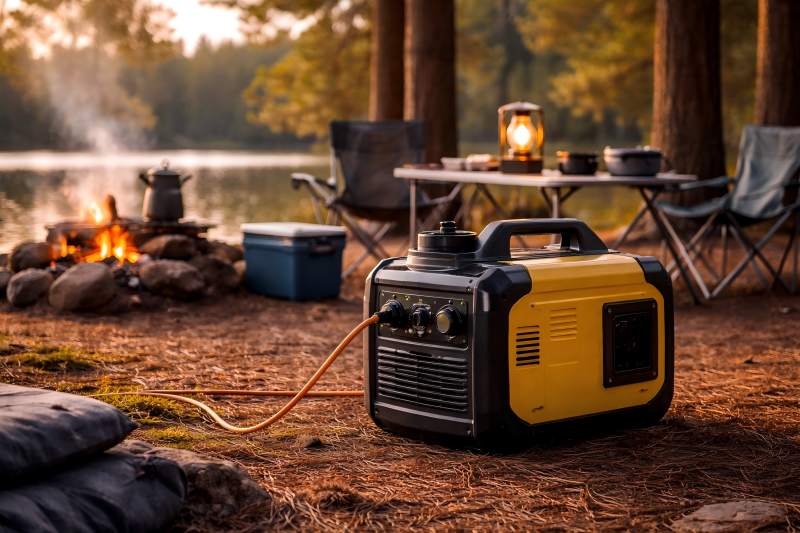
Clean Power for Sensitive Camping Electronics
Why Power Quality Is Critical
Modern camping gear often includes electronics with microprocessors and lithium batteries. Inconsistent voltage or frequency can damage:
- Smartphones and laptops
- GPS devices
- Cameras and drones
- CPAP machines
- Portable refrigerators
Inverter generators produce electricity with low total harmonic distortion (THD)—often under 3%—similar to household utility power.
Power Quality Comparison
| Generator Type | Power Stability | Safe for Electronics |
| Conventional generator | Fluctuating voltage | Limited |
| Inverter generator | Clean, stable AC | Yes |
| Utility grid power | Very stable | Yes |
For campers who rely on electronics for safety, navigation, communication, or medical needs, inverter generators offer peace of mind.
Fuel Efficiency: Longer Camping with Less Fuel
Variable Engine Speed Technology
Instead of running at a constant speed like conventional generators, inverter generators automatically adjust engine RPM according to power demand.
Benefits include:
- Reduced fuel consumption at low loads
- Extended runtime on a single tank
- Lower emissions
- Quieter operation
For example, an inverter generator running a phone charger and LED lights may operate at half speed, dramatically improving efficiency.
Eco Mode for Campers
Most inverter generators feature an eco mode, which optimizes fuel use during light-demand periods—perfect for overnight charging or daytime standby.
Compact Size and Easy Mobility
For outdoor use, camping equipment must be easy to carry, store, and operate in limited space. Inverter generators excel in this area.
Typical advantages:
- Lightweight construction (often 20–30 kg)
- Compact footprint
- Integrated carrying handles or wheels
- Easy storage in vehicle trunks or RV compartments
For solo campers or couples, portability can be the deciding factor between bringing power or leaving it behind.
Power Output: How Much Do Campers Really Need?
Common Camping Power Requirements
Most campers don’t need massive power capacity. Typical devices include:
- LED lights
- Smartphones and tablets
- Electric coolers
- Coffee makers
- Fans or small heaters
A 1,000–2,000 watt inverter generator is sufficient for most camping scenarios.
Typical Camping Devices and Power Demand
| Device | Approximate Power (Watts) |
| Smartphone charger | 5–20 W |
| Laptop | 60–100 W |
| LED camp lighting | 10–50 W |
| Portable refrigerator | 100–300 W |
| Coffee maker | 800–1,200 W |
| CPAP machine | 30–100 W |
Understanding your total wattage needs helps prevent overloading and ensures reliable performance.
Parallel Capability: Power When You Need It
Many inverter generators support parallel operation, allowing two identical units to be connected together.
Advantages include:
- Scalable power output
- Redundancy (one unit can still operate if the other fails)
- Easier transport compared to one large generator
This flexibility is ideal for campers who occasionally need more power without committing to a bulky generator year-round.
Safety Features for Outdoor Use
Camping environments expose generators to moisture, dust, uneven terrain, and temperature changes. Inverter generators feature advanced safety systems to ensure dependable and secure use.
- Low-oil shutdown protection
- Overload protection
- Short-circuit protection
- Ground fault protection (GFCI outlets)
- Enclosed housings to shield components
These features reduce risk in unpredictable outdoor conditions.
Environmental Considerations and Emissions
Lower Emissions for Responsible Camping
Many campgrounds and parks promote eco-friendly practices. Inverter generators typically produce:
- Lower fuel consumption per kWh
- Reduced exhaust emissions
- Cleaner combustion
Some models comply with stringent environmental regulations, making them suitable for use in regulated natural areas.
Supporting Leave-No-Trace Principles
Quiet operation, efficient fuel use, and minimal environmental impact align inverter generators with responsible camping ethics—helping preserve natural spaces for future generations.
Inverter Generators vs. Solar Power for Camping
Solar generators and battery power stations are increasingly popular, but inverter generators still offer key advantages:
- Continuous power regardless of sunlight
- Higher output for cooking and heating
- Faster refueling compared to battery recharging
Many campers combine both systems, using solar during the day and inverter generators as backup or for high-demand appliances.
How to Select the Ideal Inverter Generator for Camping
When selecting an inverter generator for camping, several key factors should be taken into account:
- Power output (starting and running watts)
- Noise rating (dB at 7 meters)
- Runtime at 25% and 50% load
- Weight and portability
- Fuel type and tank capacity
- Parallel capability
- Service and parts availability
Matching the generator to your camping style—weekend trips, RV travel, off-grid camping, or emergency backup—ensures maximum value.
Maintenance and Reliability in the Field
Camping often takes place far from service centers. Inverter generators are generally low-maintenance, but basic care is essential:
- Check oil levels regularly
- Use clean, fresh fuel
- Run the generator periodically during long storage
- Keep air filters clean
Proper maintenance ensures your inverter generator delivers long-lasting, reliable power for countless outdoor adventures.
The Role of Inverter Generators in Modern Camping
Camping today blends adventure with convenience. Inverter generators support:
- Remote work and digital nomad lifestyles
- Medical needs during outdoor stays
- Family comfort and safety
- Emergency preparedness during severe weather
They bridge the gap between modern energy needs and outdoor freedom.
Power That Enhances, Not Disrupts, the Camping Experience
Inverter generators have transformed camping by offering quiet, clean, efficient, and portable power that fits naturally into outdoor life. Unlike traditional generators, they enhance the camping experience rather than disrupt it—providing energy without excessive noise, fumes, or fuel waste.
Whether you are a weekend camper, an RV traveler, a photographer in remote locations, or a family seeking comfort off-grid, an inverter generator is more than just equipment—it is a reliable outdoor companion. In an era where connection and convenience matter even in the wild, inverter generators ensure that adventure and modern living can coexist harmoniously.