Water pump cavitation forms vapor inside the liquid when inlet pressure becomes too low; a suction air leak introduces air from outside the system. Both can reduce delivery and make a portable centrifugal pump sound unhealthy, but they require different corrections. Start by separating inadequate inlet pressure from unwanted air entry rather than treating every noisy pump as a priming problem.
The distinction matters for irrigation, water transfer and temporary drainage. A pump that worked earlier in the day may develop trouble as the water level falls, the strainer loads with debris or a suction connection loosens. The changed operating condition is often more informative than the sound alone.
What Is Actually Happening Inside the Pump?
In cavitation, local pressure falls far enough for some of the liquid to become vapor. As that vapor moves into a higher-pressure region, the bubbles collapse. Repeated collapse near internal surfaces can damage components as well as disturb performance.
Where Does the Air Come From in an Air-Leak Problem?
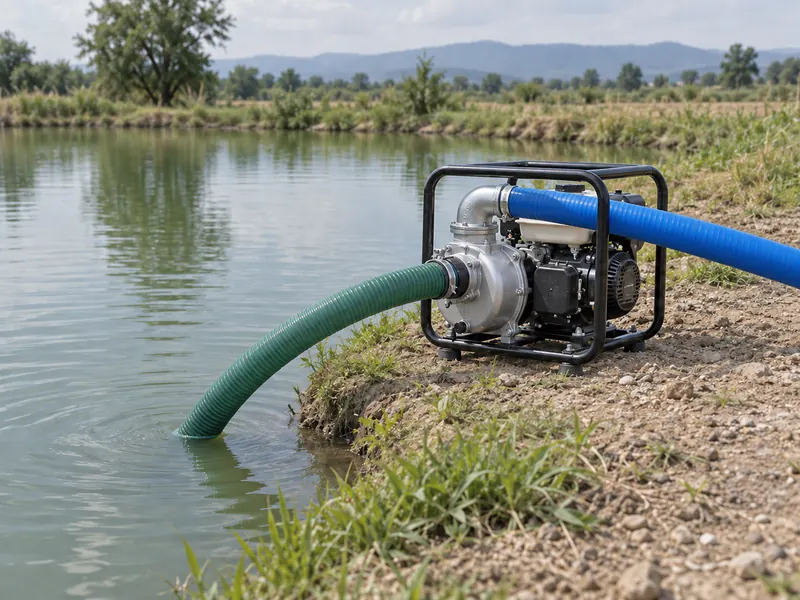
On a suction-lift arrangement, parts of the inlet line operate below atmospheric pressure. An imperfect gasket, damaged hose or loose connection can admit air even when no water visibly escapes. Air may also enter through a surface vortex around an insufficiently submerged intake.
The Hydraulic Institute’s explanation of low pump pressure distinguishes entrained air from insufficient suction pressure. It specifically identifies suction-side leakage and inadequate intake submergence as possible air sources. A dry-looking coupling therefore does not establish that the suction line is airtight.
Does Self-Priming Prevent Either Problem?
Self-priming capability does not make a pump immune to inlet restrictions or continuous air entry. A pump may remove the initial air charge successfully and then lose stable operation when its inlet conditions deteriorate. The process also does not permit indefinite running without an adequate water supply.
For the separate question of initial filling, see how a self-priming pump works. Treat priming instructions as the starting procedure, while this guide addresses the conditions needed to keep water moving afterward. Always follow the specific model’s filling and dry-running limits.
Which Clues Help Tell the Problems Apart?
Look for a pattern across noise, water level, hose condition and discharge behavior. Crackling or a gravel-like sound may be consistent with cavitation, but mechanical faults can also produce noise. Visible bubbles suggest gas in the stream without identifying exactly where it originated.
| Clue | Cavitation Possibility | Air-Entry Possibility |
| Delivery worsens as source level drops | Greater suction lift reduces inlet pressure margin | Intake may lose submergence or draw a vortex |
| Problem follows hose replacement | Replacement may be restrictive or collapse under suction | Coupling or gasket may not seal |
| Repeated loss of prime | Not sufficient evidence by itself | Check leaks and intake exposure |
| Problem appears with warmer water | Higher vapor pressure can reduce margin | Still inspect for independent air sources |
| Rattle with otherwise steady delivery | Requires investigation | Also consider debris or mechanical damage |
This comparison directs an investigation; it is not a diagnosis from a single symptom. Cavitation and air entry can occur together, especially when water levels fall. Avoid ordering replacement parts based only on an audio description.
Why Can an Apparently Small Suction Change Matter?
The pump must receive liquid at sufficient pressure after elevation and inlet-line losses are accounted for. A long hose, unnecessary fittings or a clogged strainer consume part of that inlet pressure allowance. A soft hose that flattens under vacuum can create an especially severe restriction.
What Does NPSH Mean in Practical Terms?
Net positive suction head available describes how far the inlet liquid pressure remains above its vapor pressure, expressed as liquid head. The pump’s required NPSH comes from its performance data at a specified operating point. A suitable margin is needed; simply matching two numbers is not a universal assurance of cavitation-free service.
The Hydraulic Institute’s pump-principles reference explains these pressure relationships. For a field installation, obtain the manufacturer’s relevant curve or technical advice rather than estimating an operating limit from a maximum suction-lift advertisement. Temperature, elevation and inlet losses all affect the available margin.
Why Is Maximum Suction Lift Not a Daily Target?
A published maximum describes a limit under stated conditions, not a promise of full flow at that height. Actual suction conditions include the vertical lift from the operating water surface and resistance through the entire inlet arrangement. As the source level drops, the installation becomes more demanding without any change to the pump itself.
The separate water pump head-versus-flow guide explains how system demand changes delivered flow. Keep suction pressure margin in that discussion as its own constraint. A system can have a plausible discharge duty and still provide poor inlet conditions.
How Should You Investigate a Pump That Becomes Noisy?
Stop operation when noise is severe, delivery collapses or the pump overheats, and follow the manual’s shutdown procedure. Allow hot components to cool and relieve pressure as instructed before opening any plug or connection. Keep engine-powered pumps outdoors and keep people clear of moving parts.
- Check the source: note the current water level and whether the intake remains adequately submerged.
- Check the inlet route: look for a collapsed hose, sharp bend, blockage or unnecessary height change.
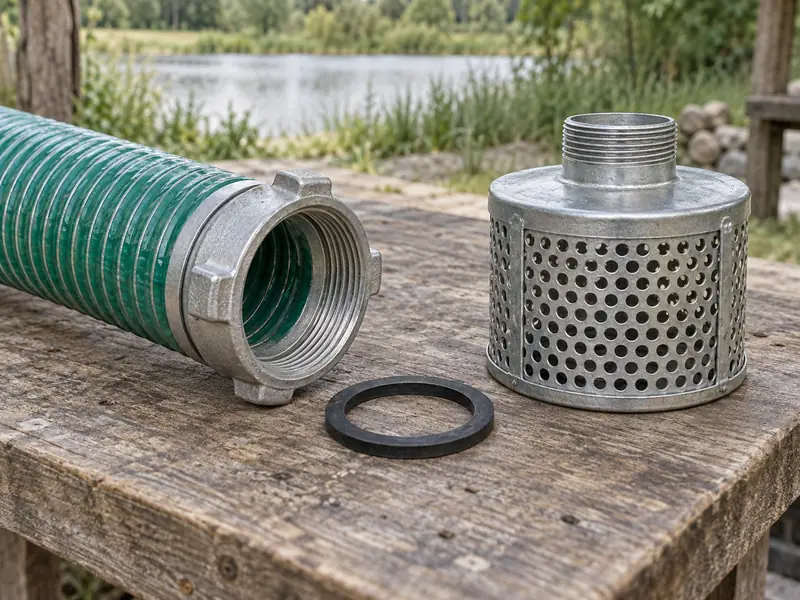
- Inspect after shutdown: clean the strainer and examine gaskets, hose ends and couplings for damage.
- Restore the intended setup: use vacuum-rated suction hose, correct fittings and the manufacturer’s priming procedure.
- Make one controlled change: shorten the suction run or reduce lift where safe, then observe whether stable delivery returns.
Do not restrict the suction line to “calm” the pump; that further reduces inlet pressure. Do not run indefinitely against a closed discharge or keep restarting a pump that cannot maintain prime. If a model permits a temporary operating adjustment, remain within its published limits.
What Does a Falling-Water-Level Example Reveal?
Consider a hypothetical drainage job where a pump starts well beside a shallow collection pond. Later, its delivery becomes intermittent even though engine speed sounds unchanged. The operator notices that the intake is now close to the surface and partly surrounded by floating debris.
Two mechanisms are plausible: the lower water level increases suction lift, and a poorly submerged intake may ingest air. Debris adds a third possible restriction. Calling the whole event “cavitation” too early could miss the intake problem.
The useful response is to stop, restore a clear intake and arrange adequate submergence without resting the strainer in bottom sediment. If the site permits, a lower stable pump position can reduce lift while preserving safe access and outdoor exhaust clearance. If symptoms remain after these changes, the installation needs further technical assessment.
Keep before-and-after notes on water level, hose arrangement and delivery. A successful correction identifies a likely cause, but it does not prove that earlier operation caused no internal damage. Persistent vibration, leakage or reduced performance warrants service attention.
Does Choosing a Semi-Trash Pump Solve the Problem?
A solids-handling design addresses the type and size of material a pump can pass; it does not remove suction pressure limits. Review the intended duty of semi-trash water pumps, then verify the particular model’s permitted solids and installation requirements. Keep the specified strainer in use.
Fine slurry, fibrous debris and aggressive liquids present different issues from occasional permitted particles. The site’s comparison of water pump types helps frame those distinctions. Avoid interpreting a category name as approval for every dirty-water application.
For a recurring problem, send Excalibur’s technical team the pump model, liquid temperature, elevation, suction lift, hose dimensions and symptom timing. Include whether the pump loses prime and what changed before the fault appeared. Those details support a much more useful recommendation than maximum flow alone.
What Is the Most Useful Operating Habit?
Watch the source conditions during pumping, not only at startup. An unobstructed strainer, adequate submergence and a sound suction hose protect the inlet conditions on which the pump depends. Reassess the arrangement whenever the water level, liquid or hose route changes.