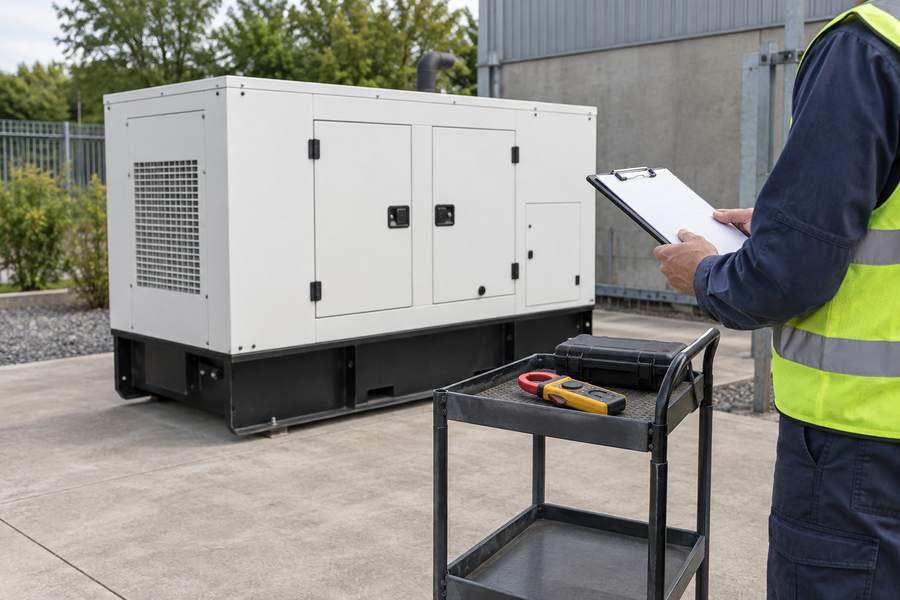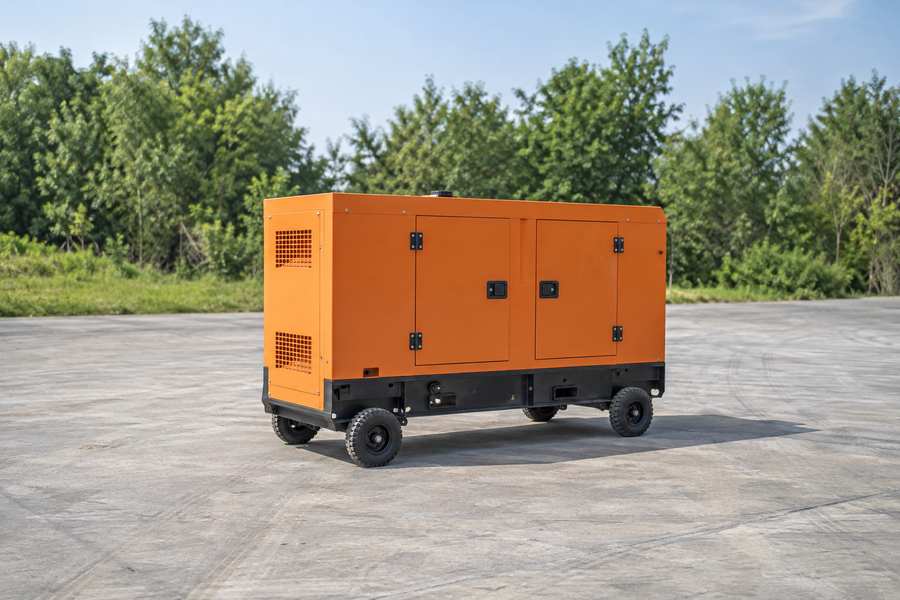
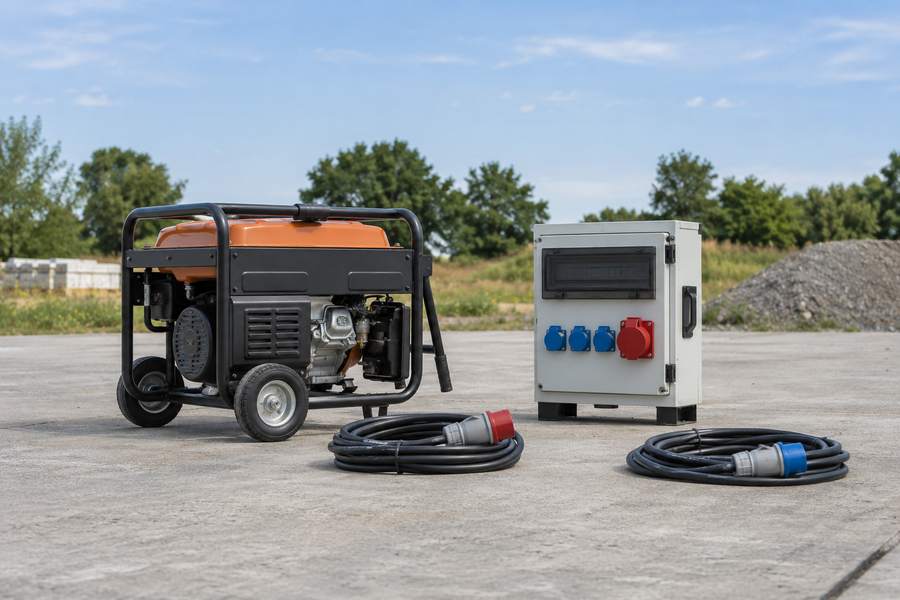
A three-phase diesel generator can supply single-phase loads when its winding connection, voltage, neutral arrangement and outlet configuration support them. The important limit is the capacity available through the intended connection, not just the generator’s total three-phase rating. Buyers must obtain the manufacturer’s permitted single-phase loading and phase-imbalance limits for the exact model. Some installations work well with a mixed load; others are better served by a dedicated single-phase generator.
The question often arises after a buyer sees a three-phase socket alongside smaller outlets on the same panel. It is tempting to assume that all the advertised power can be taken from any outlet. That assumption can produce an unsuitable purchase even when the total connected watts look modest. Start by mapping the loads to the connections that will actually supply them.
Identify which kind of single-phase supply you need
Single-phase does not describe one universal voltage or wiring arrangement. A load may need a line-to-neutral supply, a line-to-line supply or a particular split-phase system. The specified connection determines which loads can be supplied, so substituting one arrangement for another requires a new compatibility review. Provide the supplier with the equipment nameplates and ask which approved generator connection will serve each load. The answer should include the required conductors and a panel or wiring drawing.
For example, a suitably configured star-connected 400 V three-phase system has approximately 230 V between a line and neutral. This familiar relationship does not prove that a particular generator has an accessible neutral or that its outlets are wired for that use. Other winding arrangements behave differently. Do not infer the available supply merely from a front-panel voltage display or a photograph of the receptacles.
The Excalibur diesel generator range lists different phase and panel choices. Treat these as configuration options to discuss with the manufacturer. Specify the selected voltage and phase arrangement in the order, including whether the quoted output refers to three-phase operation, single-phase operation or separate ratings for approved selectable modes.
Three different requests that should stay separate
Supplying several single-phase loads from the phases of a three-phase set is one request. Supplying one substantial single-phase load is another. Reconnecting an alternator for dedicated single-phase operation is a third. Each has different consequences for current, winding utilization and available output. Tell the supplier which arrangement you need rather than asking only whether the machine is “single-phase compatible.”
A fourth issue sometimes appears in enquiries: connecting a three-phase motor to a single-phase outlet. That is not solved by choosing a three-phase generator with a small single-phase socket. The motor needs a suitable supply and starting arrangement. Keep motor compatibility separate from the question of supplying ordinary single-phase appliances.
Understand why total kVA can be misleading
A three-phase rating describes the set’s output under the stated rating conditions. It does not mean that one phase can carry the whole load. The alternator windings, terminals, protective devices and sockets have current limits. Concentrating demand on one connection can reach one of those limits while much of the generator’s advertised total capacity remains unused.
Consider a hypothetical 12 kVA, 400 V, balanced three-phase supply. Its rated line current would be about 17.3 A, using apparent power divided by the square root of three and line-to-line voltage. At approximately 230 V line-to-neutral, that current corresponds to about 4 kVA on one phase. This is an arithmetic explanation of a balanced rating, not permission to connect a 4 kVA load to an arbitrary portable generator outlet.
The actual permitted single-phase output could be lower because of the alternator’s unbalanced-load capability, outlet rating or protection arrangement. It could be governed by a separately documented manufacturer rating for a special configuration. The buyer should ask for the approved limit rather than converting the headline rating into a universal rule.
Ask about current before relying on watts
Loads with different power factors can draw different current for the same real power. Starting currents can also be much higher than normal running currents. Ask for the current available on each relevant phase and outlet, then compare that with both the running and starting requirements of the equipment. Include any shared circuit or connector limitation shown on the panel drawing.
It is also important to distinguish generator capacity from distribution capacity. A suitable generator does not make every extension lead, plug or portable board suitable. The installer must assess the whole route to the load. When purchasing a generator and distribution package together, ask the supplier to identify the rating of each part and the combination they have assessed.
Build a phase-by-phase load schedule
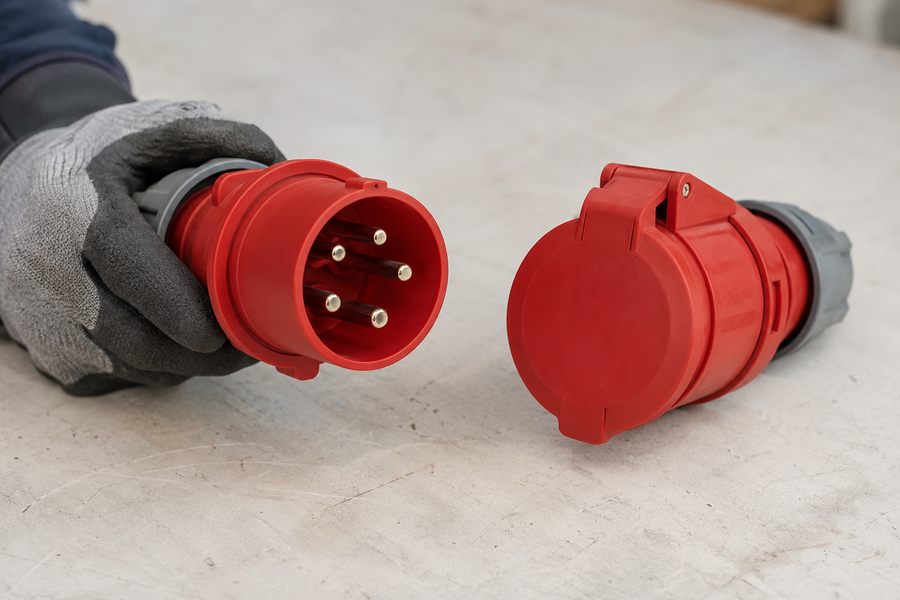
For mixed single-phase loads, list the proposed phase assignment of each circuit. Record its running current, operating pattern and starting behavior. Equipment that looks balanced on a total-watt spreadsheet may be unbalanced at a particular moment. One phase might supply a cycling compressor while the other two carry only lighting. The practical question is how the load changes during the shift, not just how it looks when every appliance is switched on.
Do not distribute circuits by appliance count alone. Three small lights on one phase and a large heater on another are not equivalent groups. Use realistic electrical demand and account for equipment that may start together. Where users can plug equipment into arbitrary outlets, ask whether the proposed panel and operating instructions make phase allocation clear enough for daily use.
| Load group | Information to record | Question for the supplier |
| Lighting and controls | Running current and operating duration | Which phase and outlet should serve them? |
| Compressor or pump | Starting method and starting demand | Can it start with the other loads connected? |
| Heaters | Simultaneous demand and switching pattern | Will one phase reach its limit first? |
| Chargers and electronic loads | Input requirements and load behavior | Are additional compatibility checks needed? |
| Future additions | Expected phase and power demand | Does the proposed configuration retain useful capacity? |
Give this schedule to the manufacturer before approving the quotation. Ask for a written assessment of the worst expected combination, including the case in which a major load on one phase switches off while another remains heavily loaded. That exchange is more useful than an unqualified assurance that the generator has enough total power.
Treat imbalance as a model-specific constraint
Unbalanced loading can affect alternator heating and the quality of the delivered supply. The permissible imbalance depends on the alternator design, the connection and the manufacturer’s operating limits. Do not borrow a percentage from a different generator manual and apply it to the unit being purchased. Ask how the supplier defines imbalance, how it is measured and what limit applies to your proposed operating pattern.
STAMFORD’s application guidance on single-phase loading of reconnectable three-phase windings explains why changing the winding use changes the alternator’s operating conditions. The practical purchasing implication is limited but important: a three-phase rating should not be carried over unchanged into a different single-phase arrangement without manufacturer approval. Detailed acceptance criteria must come from the actual alternator and generator configuration.
Include the neutral and nonlinear loads in the review
Where a neutral is used, ask the installer and manufacturer to assess its rating and protective arrangement. Certain nonlinear loads can create current components that change neutral loading. A simple comparison of total watts will not reveal every issue. Provide the actual equipment information when the load includes a substantial number of electronic power supplies, chargers or similar devices.
Do not disconnect or alter a neutral connection as an improvised way to solve a loading problem. The grounding and neutral arrangement also interacts with the site’s protective devices and any transfer equipment. Those details belong in the installation design and the supplied documentation, with qualified personnel responsible for implementation.
Verify what a voltage or phase selector actually does
A selector on a panel can mean different things. It might change the displayed voltage, select an output arrangement, or operate as part of a manufacturer-designed winding connection system. Ask for the operating instructions and ratings in each position. The label “dual voltage” does not by itself establish equal output in both modes, simultaneous availability or permission to switch while carrying load.
If a supplier offers a set with selectable single-phase and three-phase operation, request a separate rating schedule for each approved mode. Include voltage, frequency, output, current limits and permitted sockets. Ask which connections become unavailable in each mode and what stopping or isolation procedure is required before a change. Those points should be clear to an operator who has not participated in the purchase discussion.
For an open diesel generator configuration, approve the actual control panel rather than a generic product image. Different versions can have different receptacles and switching equipment even when the frame and engine look similar. Match the panel photograph, wiring document and quotation revision before releasing the order.
Ask for an acceptance test that reflects the intended loads
A balanced three-phase load test is useful evidence, but it does not by itself demonstrate the proposed mixed-load arrangement. Ask the supplier to test an agreed representative distribution of single-phase loads. The record should identify the machine, the operating configuration, the loading on each phase and the conditions during measurement. Voltage, current and frequency information should be sufficient to compare the result with the agreed limits.
Where motor starting is a concern, include the initial connected load and the starting event in the plan. A steady reading after the motor has reached speed does not show what happened during acceleration. If the exact equipment cannot be used, agree which substitute test is feasible and what uncertainty remains. This avoids turning a general factory demonstration into an unsupported promise of compatibility.
Review the evidence before shipment
Request results linked to the approved model and configuration. If the report refers to a different alternator, panel or frequency, ask why it applies. For repeat orders, identify which checks will be performed on every unit and which are sample or design-validation tests. A photograph of a running generator is not an adequate replacement for a defined electrical acceptance record.
Also confirm that the delivered instructions explain the limits clearly. If a unit has a large three-phase socket and smaller single-phase outlets, the operator needs to know their individual and combined restrictions. Durable phase identification and an understandable loading guide can prevent errors that a technically correct purchase order would not stop on its own.
Decide whether a dedicated single-phase set is simpler
If almost all the required loads are single-phase, ask the supplier to compare a dedicated single-phase build with the proposed three-phase machine. The relevant comparison is usable capacity for your actual equipment, along with starting performance, outlet arrangement and operating convenience. Buying a larger three-phase rating may not be the most effective way to serve one demanding single-phase load.
A mixed installation may still justify a three-phase generator when it needs three-phase machinery and suitably distributed single-phase circuits. An enclosed model from the silent diesel generator range should undergo the same electrical review. Acoustic housing changes the product form; it does not remove phase-loading limits.
Consider future equipment carefully. A vague expectation that three-phase machinery might be purchased later is weaker than a documented expansion plan. Ask for both options against the current load schedule, then assess the likely future demand separately. This makes the cost and operational implications visible without assuming that one configuration is universally more flexible.
The confirmation to obtain before ordering
The supplier’s final confirmation should identify the exact generator build, the permitted single-phase connection, available output and current, neutral provision, phase-imbalance limits and outlet restrictions. It should also address the stated starting events and any required changes to the installation. Attach the approved load schedule and relevant drawings to the order so that compatibility means something specific.
Include any operating restrictions in the handover material supplied with every unit. A distributor’s sales team may understand the limits, but the eventual operator may only see the generator and a short instruction sheet. Clear outlet identification, the correct manual revision and an agreed load example help carry the original purchasing decision through to practical use. Ask who will answer configuration questions when the unit changes hands or moves to a different site.
For a buyer, the decisive answer is therefore more detailed than “yes.” It is a statement that a particular machine, connected in an approved way, can serve the listed loads within documented limits. When the manufacturer cannot provide that statement, revise the load arrangement or compare a dedicated single-phase configuration before committing to the purchase.