For daily use, confirm that the portable diesel generator is suitable for your actual operating hours, load pattern and site conditions, then check refuelling, servicing, movement, noise and spare-parts support. A unit that starts a few appliances during an occasional outage is not automatically the right choice for repeated working shifts. The purchase should be based on a complete working day, including the time needed to inspect, move, cool, refuel and maintain the machine.
Give the supplier a working-day load description, including operating times and motor starts, before requesting a suitable generator rating. A market stall, a mobile repair team and a remote building site can have very different needs even when their maximum electrical demand is similar. Work through the daily sequence and make the supplier respond to each stage of it.
Describe a normal shift and the hardest shift
Write a short operating profile covering the start time, expected running periods, typical connected load and any breaks. Include the busiest credible period, not just the average day. If a pump, compressor or other motor starts repeatedly, record that behavior. If equipment will be connected and disconnected by different people, explain how much control you have over the resulting load.
Ask the supplier to confirm the generator’s appropriate rating for that profile. “Daily use” could mean a short morning task, a full working shift or extended operation with planned service interruptions. Those are different requirements. Request the applicable operating limits, maintenance intervals and any restrictions on prolonged light loading. Avoid treating a maximum-output figure as a general permission to run at that load for as long as fuel remains.
Compare suitable models within the diesel generator range, but make the final decision using the selected model’s documentation. Broad product-family descriptions are useful for creating a shortlist. They should not replace confirmation of the duty, cooling arrangement and electrical configuration that will be delivered.
Include downtime in the operating plan
Daily availability is not identical to fuel autonomy. A generator may have enough fuel for a long period while still requiring inspection or service according to its manual. Plan who can stop the work, how connected equipment will be shut down and whether another source is needed during maintenance. If uninterrupted business operation is essential, discuss the entire power arrangement rather than expecting a larger fuel tank to solve every interruption.
For a small team, this may be a scheduling issue. For a rental fleet or remote operation, it may require a spare machine or a defined service response. The right solution depends on the consequences of downtime, so include those consequences in the enquiry.
Confirm usable power at the equipment connections
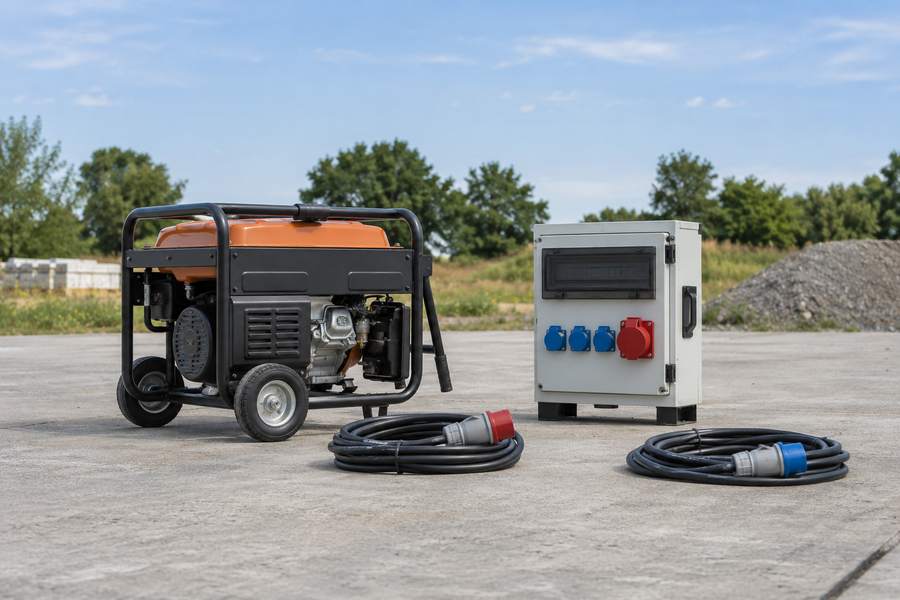
Create a load list using equipment nameplates and realistic operating combinations. Record voltage, frequency, phase arrangement, running demand and starting characteristics. The generator’s overall output must match the load, but so must the individual sockets and protective devices. Ask whether outlets share a circuit limit and whether the proposed plug system matches the equipment already owned.
Daily use makes small incompatibilities expensive. An unsuitable socket arrangement can mean repeated adapter use, awkward cable routes or confusion between circuits. Approve the actual panel layout before ordering. If a three-phase generator will also supply single-phase loads, ask for the permitted single-phase output and phase distribution. Check the current limit printed for the particular socket before allocating any share of the generator output to it.
Where the work includes electronics or motor drives, provide their input requirements. Ask for relevant information about voltage regulation, frequency behavior and load response. A claim that a generator has an AVR does not answer every power-quality question, and a steady no-load voltage reading does not establish performance during a demanding start.
Plan the morning inspection around real access
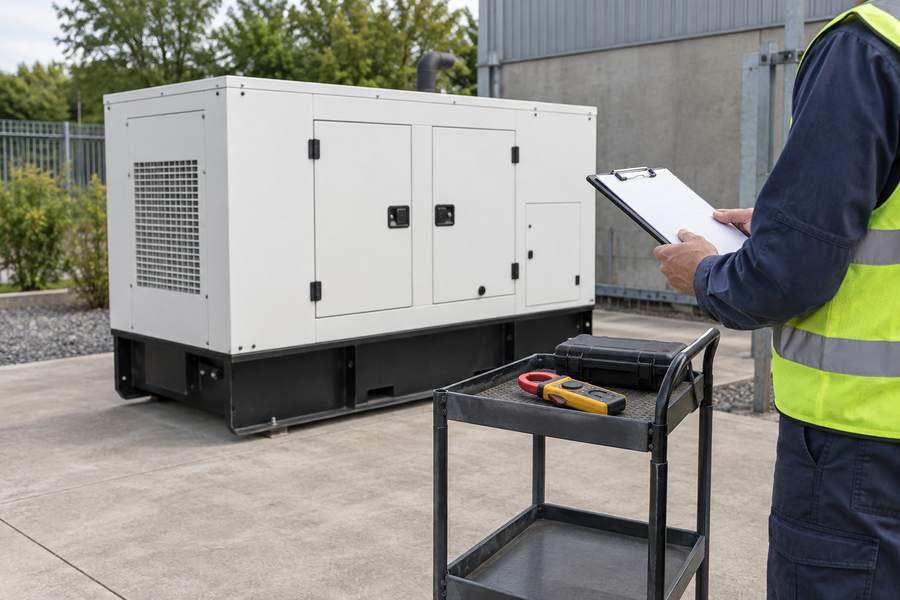
Ask for clear photographs of the routine inspection and service points. The operator should be able to locate the oil check, fuel fill, air intake, battery and relevant indicators without guessing. Request the actual daily inspection instructions and confirm whether they differ from the service schedule used by a workshop technician. Good access helps make the correct routine practical under ordinary working conditions.
Do not assume every diesel generator has the same maintenance items. Air-cooled and liquid-cooled engines have different systems to inspect. Filter arrangements can also differ between engines. A generic checklist may tell the operator to inspect a component the selected machine does not have while missing one that matters. Tie the instructions to the model, engine and document revision.
Check the space needed for servicing
Physical access involves more than seeing a component. There must be room to remove a cover, use the required tool, collect drained fluids and replace the part. Ask the supplier to demonstrate the maintenance sequence for tasks that will occur frequently. A short video of the exact machine can answer questions that a catalogue image cannot.
Also consider where this work will happen. If the generator returns to a workshop each evening, planned maintenance may be straightforward. If it remains at a remote site, the operator needs the approved tools, consumables and handling arrangements there. Identify these requirements before the first shift rather than after the service interval is reached.
Evaluate fuel autonomy using the working load
Ask the supplier to state the load and test conditions behind any advertised runtime. Tank capacity alone does not establish how long a generator will power your equipment. Fuel use changes with operating demand, and the usable fuel available for planning may differ from the tank’s nominal capacity. Request measured consumption information at relevant loads or a clearly defined runtime test.
For variable daily work, divide the shift into meaningful load periods. A morning of lighting and charging may consume fuel differently from an afternoon of pumping. Use the available consumption data to estimate the shift, then leave an appropriate operational reserve agreed for the application. Treat the result as a planning estimate until the actual duty has been observed.
Refuelling also creates a scheduled interruption. Follow the manufacturer’s stopping and cooling instructions, use suitable fuel handling arrangements and avoid spills near hot components. Do not plan on refuelling a running portable generator simply to achieve a claimed continuous shift length. Ask whether the expected workflow can accommodate the approved procedure safely and consistently.
Choose the enclosure for the site, not the label
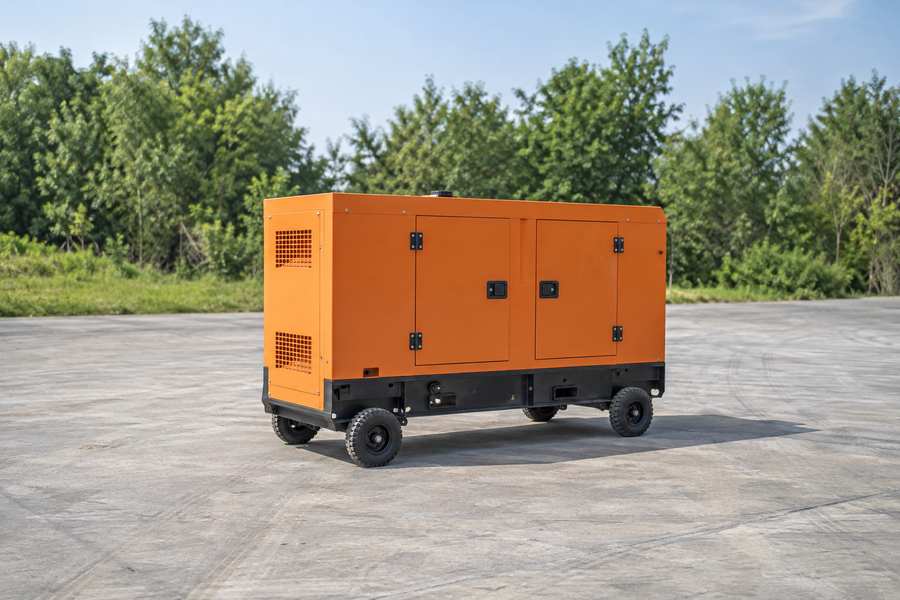
An open diesel generator may make components easy to inspect and can suit some outdoor working environments. An enclosed machine may be preferable where noise control and physical protection are important. Neither description alone establishes weather resistance, permitted installation conditions or suitability for a particular working location.
Ask for the actual noise specification, including the measurement distance and conditions. A value measured at one distance cannot be compared directly with a value measured at another. “Silent” is a product description, not an assurance that the generator is inaudible or acceptable at every site. The operating position, nearby surfaces and local restrictions need separate consideration.
Keep airflow and exhaust requirements central
Portable generators must be operated in an appropriate outdoor location with exhaust kept away from occupied spaces and openings, following the manufacturer’s instructions. An enclosed housing does not make indoor operation acceptable. Assess the proposed position over the whole shift: vehicles, pedestrians, ventilation conditions and access for servicing may change while the generator runs. The location should remain suitable after the site becomes busy.
Cooling airflow also needs the required clearances. Do not assume that a convenient corner, vehicle compartment or improvised cover is acceptable. Ask about approved protection from rain and dust and the conditions in which operation is prohibited. Where the intended site cannot meet the installation requirements, resolve that issue before choosing the generator.
Test portability as a complete movement task
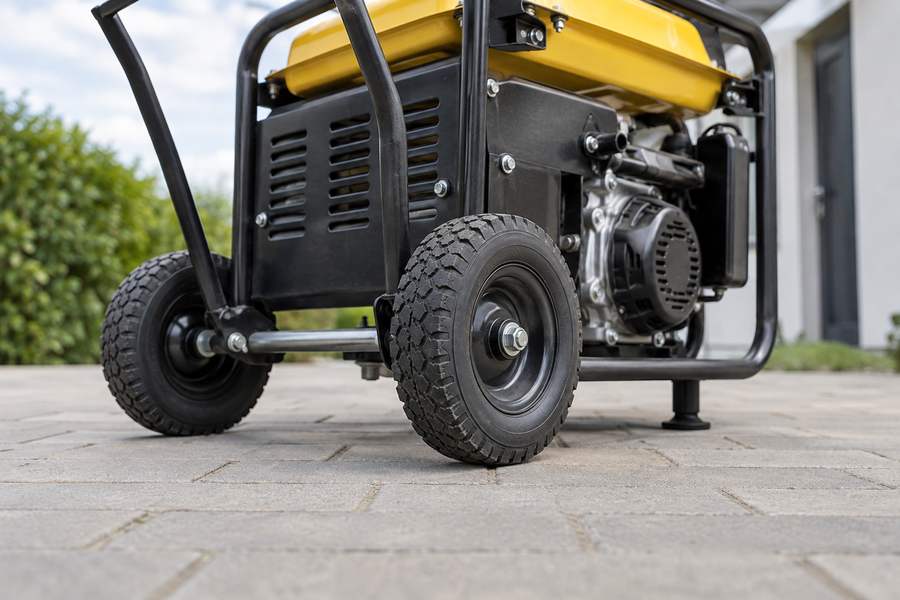
The word portable can describe a wheeled machine that is still too heavy for an individual to lift. Confirm the operating weight, handling instructions and approved lifting or restraint points. Shipping weight and dry weight answer different questions, so ask which value the supplier is quoting. Include the fuel, battery and accessories that will normally be present when the unit is moved.
Describe the route from storage to the operating position. Smooth concrete, gravel, ramps, thresholds and vehicle loading require different handling arrangements. Ask whether the wheel and handle options are suitable for that route. A photograph of large wheels does not establish safe slope use or lifting capacity. Obtain the manufacturer’s handling guidance and assess the work with the people who will perform it.
Check the parked condition as well. The machine needs a stable, appropriate position during operation and a safe arrangement for storage and transport. Confirm how cables are disconnected and secured before movement. If the generator travels between sites daily, include the time needed for loading, unloading and checking for transport damage in the operational assessment.
Decide which controls will simplify daily work
Electric starting can reduce the effort involved in repeated starts, but the battery and charging arrangement become part of the maintenance plan. Ask which battery is supplied, how it is maintained and what the approved starting procedure requires in cold conditions. If manual backup starting is important, verify that it exists on the selected model instead of assuming it comes with every electric-start unit.
For a shared machine, clear indications may matter more than a long feature list. An hour meter helps organize service records. Voltage and frequency displays can support routine observations. Current information can help operators recognize loading differences, provided they understand what the display measures. Specify the actual functions and their purpose rather than requesting only a “digital panel.”
Remote start and automatic start should be considered separately. A hand-held remote is not necessarily an automatic mains-failure system. If unattended operation is part of the plan, discuss the complete control and safety arrangement with the supplier and installer. The operating area must remain suitable even when nobody stands beside the machine at startup.
Check the maintenance supply chain before the first delivery
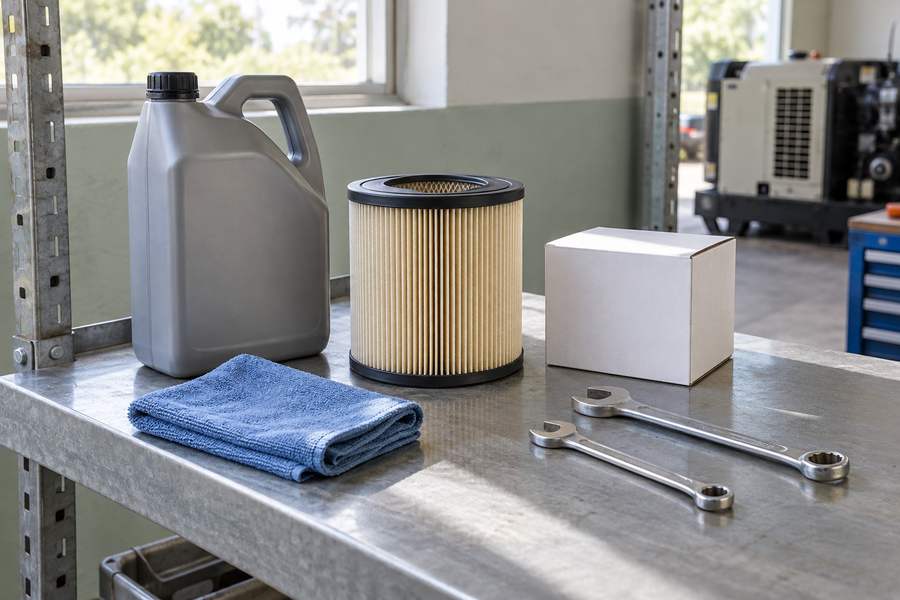
Request a model-specific consumables list and identify the parts likely to be needed during the planned working period. Ask for part numbers, engine applicability and any serial-number restrictions. Filter dimensions or a similar appearance are not enough to establish interchangeability. Include the appropriate manuals and service record format with the purchase.
Discuss how support will work when the machine is away from the supplier. Identify the service contact, the evidence they need to assess a fault and the part-number system used to order replacements. A warranty duration alone does not describe the practical repair process. For daily use, the time needed to diagnose a fault and obtain the correct part can matter as much as the original purchase specification.
Make service records easy to maintain
Use a record that captures the machine identity, hours, inspection findings, work performed and parts fitted. Assign responsibility for updating it. If several people use the generator, the handover should make the next service point and any unresolved issue clear. A well-designed record is useful only if someone can complete it during the normal workflow.
Ask the supplier how an hour meter behaves if it is replaced and how the accumulated service history should be preserved. Keep engine and generator serial information available together. That small administrative step can prevent confusion when ordering parts for several similar machines later.
Approve a machine that fits the whole day
Before placing the order, review the proposed generator against a full shift: initial inspection, movement, starting, equipment connection, changing loads, refuelling, shutdown and return to storage. Record any requirement that remains unconfirmed. If noise is a major factor, compare the appropriate silent diesel generator configurations against the same operating profile rather than judging them only by appearance.
Ask for a demonstration or acceptance test that represents the most demanding credible part of that day. Agree the configuration, test load, observations and documents to be supplied. The goal is a generator that can be operated and maintained consistently by your team, with clear limits and available support. That is a stronger foundation for daily use than choosing the largest advertised output within a budget.