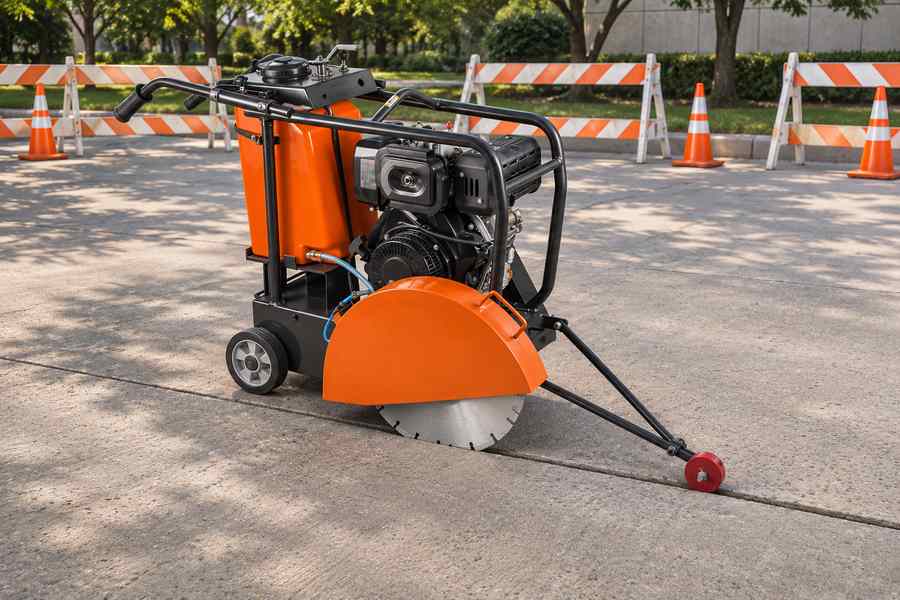
Yes, a walk-behind concrete saw can widen an existing concrete joint for resealing, provided the machine has sufficient cutting capacity, the correct diamond blade, and suitable depth and width adjustments. Widening an existing joint can remove deteriorated concrete along the joint faces, eliminate residual sealant, and create a more uniform reservoir for new sealant.
However, widening is not always necessary. If the existing joint already has suitable dimensions and sound concrete faces, additional cutting may remove material without improving sealing performance. Contractors should first inspect the joint, identify the sealant requirements, and determine whether refacing or widening is actually needed.
Why Would an Existing Concrete Joint Need Widening?
Concrete joints experience repeated movement caused by temperature changes, shrinkage, and traffic loading. Over time, the original sealant may become brittle, lose adhesion, crack, or separate from the joint walls. Simply applying new sealant over an existing joint does not necessarily solve these problems.
Widening or refacing may be necessary when: Damaged joint edges: Concrete along the joint faces has deteriorated or spalled. Insufficient joint width: The existing opening cannot accommodate the specified sealant dimensions. Old sealant residue: Hardened material remains attached to the joint walls.
Irregular joint geometry: The existing reservoir has uneven or damaged vertical faces. Incorrect sealant depth: The available space cannot accommodate the required sealant thickness and backer rod. The objective is to create a clean, properly dimensioned reservoir that allows the replacement sealant to perform as intended.
How Does a Walk-Behind Concrete Saw Widen an Existing Joint?
A walk-behind concrete saw uses a rotating diamond blade to cut hardened concrete along a controlled path. When widening an existing joint, the operator positions the blade to remove a small amount of concrete from one or both sides of the original opening. The process generally involves three operations:
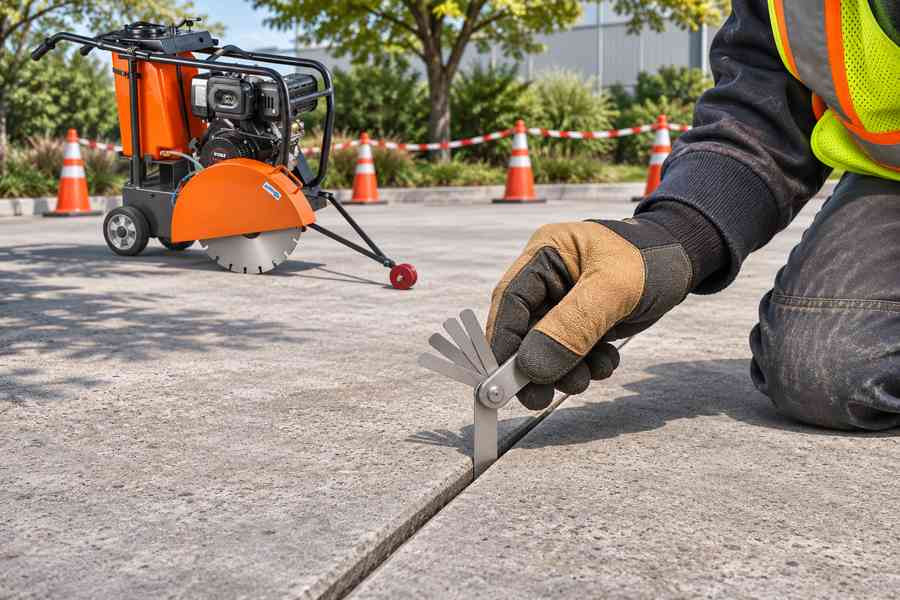
Step 1: Inspect the Existing Joint
Measure the current width and depth, identify damaged sections, and remove loose or deteriorated sealant where necessary. Check whether the joint is straight enough for the saw to follow without cutting into surrounding concrete unnecessarily.
Step 2: Select the Appropriate Blade
Blade diameter, thickness, segment design, and cutting depth must match the machine and concrete conditions. A suitable diamond blade helps produce cleaner joint faces and reduces unnecessary chipping.
Step 3: Make Controlled Widening Cuts
Position the blade according to the required reservoir dimensions. Depending on the joint condition, the operator may make one or two controlled cuts to create the specified width. Avoid excessive material removal because widening the joint beyond the design requirements can affect joint performance and reduce the remaining concrete section.
What Factors Determine Whether a Walk-Behind Saw Is Suitable?
Not every walk-behind concrete saw is suitable for every joint-widening application. The machine must provide sufficient cutting depth, blade compatibility, stability, and control.
| Equipment Factor | What to Check | Why It Matters |
| Engine power | Available cutting power | Maintains stable blade operation |
| Blade diameter | Maximum compatible diameter | Determines cutting depth |
| Blade thickness | Required reservoir width | Controls material removal |
| Cutting depth | Adjustable depth range | Achieves specified geometry |
| Machine stability | Frame and wheel design | Maintains straight cuts |
| Water supply | Wet-cutting capability | Controls dust and blade temperature |
For example, Excalibur’s walk-behind concrete saw range provides equipment options for different concrete cutting applications. The specific machine should be selected according to the required joint dimensions rather than assuming that every floor saw can produce the same reservoir.
Choosing Dimensions for the New Seal.
Start with the joint detail on the project drawings. The required dimensions depend on joint movement, sealant type, manufacturer recommendations, and project specifications. Two important factors are: Reservoir width: Determines the available space for sealant installation.
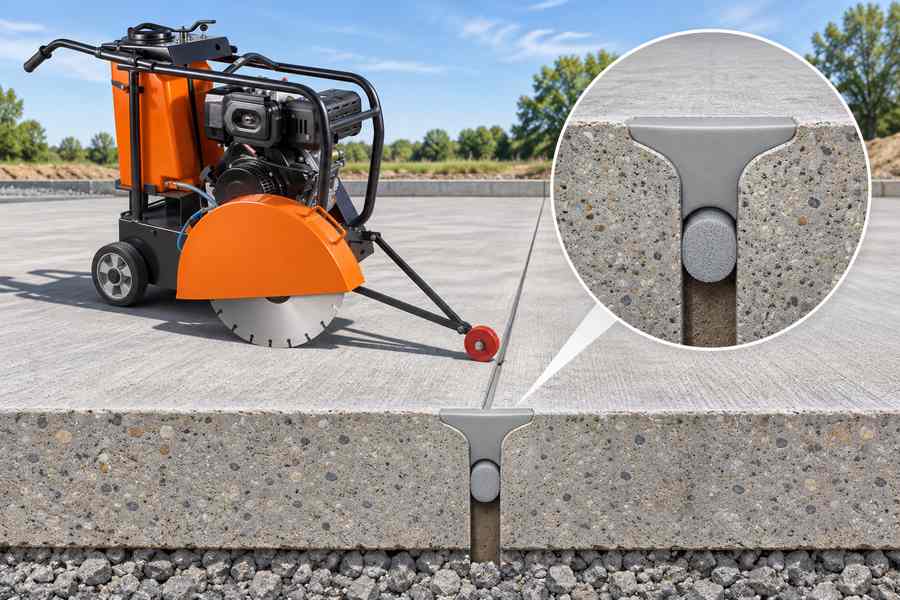
Sealant depth: Controls the thickness of the installed sealant. For a poured seal, the joint detail may call for a backing rod that sets the bead depth. A bond breaker keeps the seal free to move against the bottom while it adheres to the two sidewalls.
The sealant manufacturer’s recommended shape factor should guide the final dimensions.
| Joint Condition | Recommended Consideration |
| Narrow existing joint | Check whether widening is necessary |
| Damaged joint faces | Consider controlled refacing |
| Adequate existing reservoir | Avoid unnecessary cutting |
| Residual old sealant | Remove completely before resealing |
| Excessively wide joint | Evaluate repair or reconstruction |
| Irregular joint profile | Restore suitable vertical faces |
For example, some pavement maintenance guidance identifies approximately 6 mm as a practical minimum width for certain sealant reservoirs that need to be cleaned effectively. This is not a universal design requirement; the actual width must follow the specified sealant system.
Does the Repair Call for a Wider Slot or Fresh Sidewalls?
Although the terms are sometimes used interchangeably, they describe slightly different operations. Joint widening increases the opening to accommodate the required sealant reservoir. Joint refacing removes a small amount of damaged or contaminated concrete to expose clean, sound joint faces.
| Comparison | Joint Widening | Joint Refacing |
| Main purpose | Increase opening width | Restore joint-face condition |
| Material removal | May remove concrete from both sides | Removes damaged surface material |
| Typical application | Insufficient reservoir dimensions | Spalling or deteriorated faces |
| Main consideration | Required sealant geometry | Sound, clean concrete surfaces |
A project may require both operations, but unnecessary widening should be avoided.
How to Prepare the Joint Before Applying New Sealant
Cutting the joint is only one part of the resealing process. Proper cleaning and preparation are equally important. After sawing, contractors should: Remove old sealant and loose concrete debris.
Flush the joint to remove cutting slurry when wet sawing is used. Allow the joint to dry sufficiently. Use appropriate abrasive cleaning to remove remaining contamination.
Blow out residual dust using clean, dry compressed air. Fit the backing material shown on the joint detail. Use the sealant supplier’s procedure to fill the prepared reservoir.
Dust, moisture, and old sealant residue can prevent proper adhesion. The joint should be inspected immediately before sealant installation to confirm that its faces are clean and suitable.
Common Mistakes When Widening Existing Concrete Joints
Poor cutting practices can damage the joint and increase repair costs.
| Common Mistake | Possible Consequence | Prevention |
| Excessive widening | Unnecessary concrete removal | Follow specified dimensions |
| Incorrect blade thickness | Wrong reservoir width | Match blade to design |
| Poor depth control | Incorrect sealant geometry | Adjust cutting depth carefully |
| Misaligned cutting | Uneven joint faces | Follow the existing joint |
| Inadequate cleaning | Poor sealant adhesion | Clean immediately after cutting |
| Cutting damaged concrete without assessment | Further spalling | Inspect joint condition first |
Operators should also avoid forcing the saw through the concrete. Excessive feed pressure can affect cutting accuracy and increase blade wear.
Choosing the Right Walk-Behind Concrete Saw
For joint-widening work, machine maneuverability and cutting accuracy are particularly important. A compact walk-behind saw may be suitable for smaller pavement maintenance projects, while larger machines may be preferable for longer or deeper cutting operations.
Excalibur’s SCT-3 Walk-Behind Concrete Saw is one equipment option to evaluate for concrete cutting applications. Before selecting a machine, confirm: Maximum blade diameter and cutting depth. Compatible blade thickness.
Engine power and operating requirements. Cutting stability and depth adjustment. Suitability for the concrete hardness and aggregate type.
The correct configuration should provide controlled cutting without compromising the surrounding pavement. A walk-behind concrete saw can widen an existing joint for resealing when its cutting capacity and blade configuration match the required reservoir dimensions.
The operation is useful for removing deteriorated joint faces, correcting insufficient widths, and creating a suitable opening for replacement sealant. However, wider is not automatically better. Contractors should inspect the existing joint, determine the sealant requirements, and remove only the concrete necessary to achieve the specified profile.
Combining accurate cutting, thorough cleaning, appropriate backer rod installation, and correct sealant application helps improve adhesion and extend joint service life.