Old road markings can remain visible after scarifying because removing the raised marking material does not necessarily eliminate the residue, surface discoloration, or texture differences left behind. Paint binders, thermoplastic residues, and embedded glass beads may remain between pavement aggregates.
Even when the marking material is completely removed, the exposed pavement may look different from the surrounding surface because of aging, weathering, and mechanical abrasion. For road maintenance contractors, the challenge is to distinguish between incomplete marking removal and a visible scar caused by changes to the pavement itself.
Understanding the difference helps prevent unnecessary cutting, pavement damage, and persistent ghost lines.
Why Does Scarifying Not Always Remove Old Road Markings Completely?
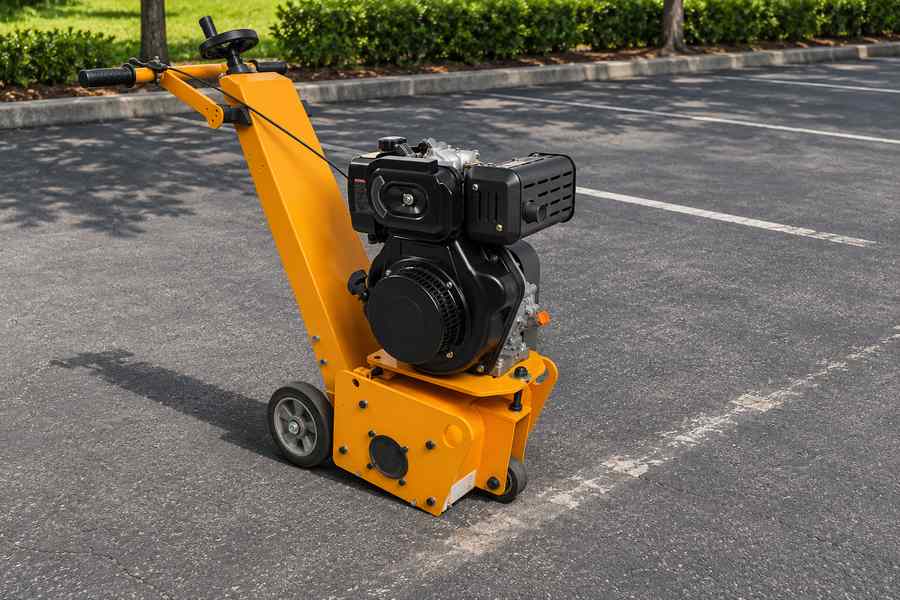
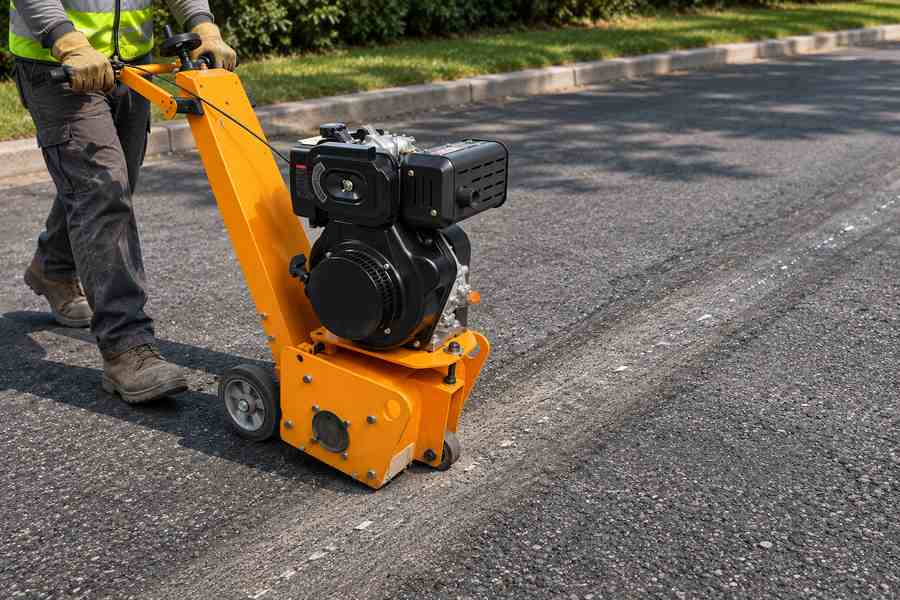
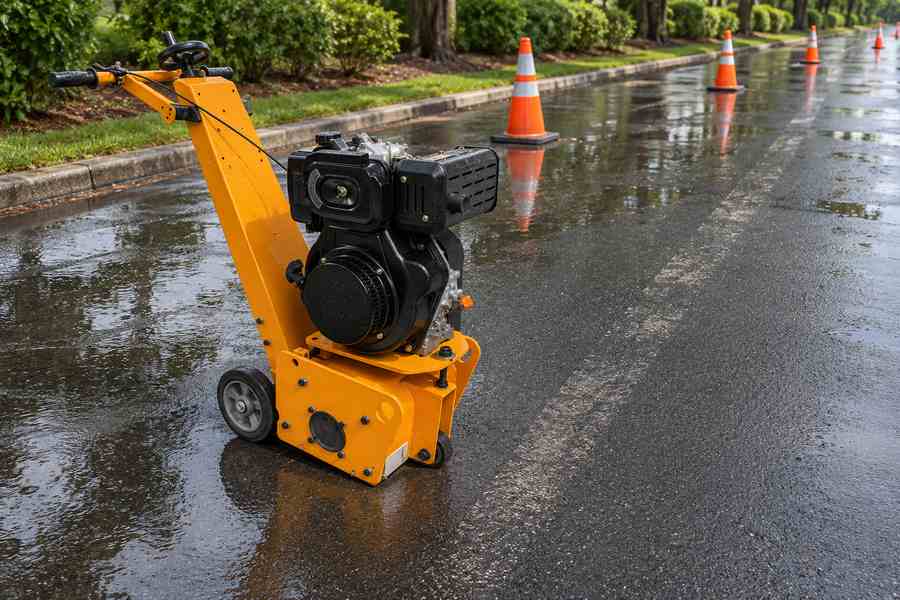
As the scarifier advances, cutters on its spinning drum strike the raised stripe and chip away small pieces. During road marking removal, the cutters break down the marking layer and remove material from the pavement surface. However, the result depends on the marking material, its thickness, and how strongly it has bonded to the pavement.
Several factors can leave visible remnants.
Residual Binder and Pigment
Road marking paint contains pigments, resins, and binders that help it adhere to asphalt or concrete. When the surface is scarified, the upper marking layer may disappear while small amounts of binder and pigment remain in pavement pores or between aggregate particles.
Embedded Glass Beads
Reflective road markings contain glass beads that improve nighttime visibility. Some beads become embedded in the marking material and remain attached to the pavement after mechanical removal. Their reflective properties can make the old line noticeable under certain lighting conditions.
Thick Thermoplastic Layers
Thermoplastic markings are generally more difficult to remove than conventional traffic paint because of their thickness and strong bond with the pavement. Repeated applications can create multiple layers, making complete removal more challenging.
How Pavement Texture and Color Create Ghost Lines
Sometimes the original marking material has been removed successfully, but the old line remains visible because the pavement underneath has a different appearance. This phenomenon is commonly called ghost striping.
Asphalt Pavement
Asphalt gradually changes color through oxidation, sunlight exposure, traffic, and weathering. Areas previously covered by road markings may remain darker than the surrounding pavement because they experienced different environmental exposure.
Concrete Pavement
Concrete can show the opposite effect. Areas previously protected by markings may appear lighter because surrounding pavement has accumulated tire marks and environmental discoloration. The surface texture may also differ, causing light to reflect differently from the former marking location.
Consequently, a line can remain visible even when no significant marking material is left.
Can Scarifying Itself Create Visible Lines?
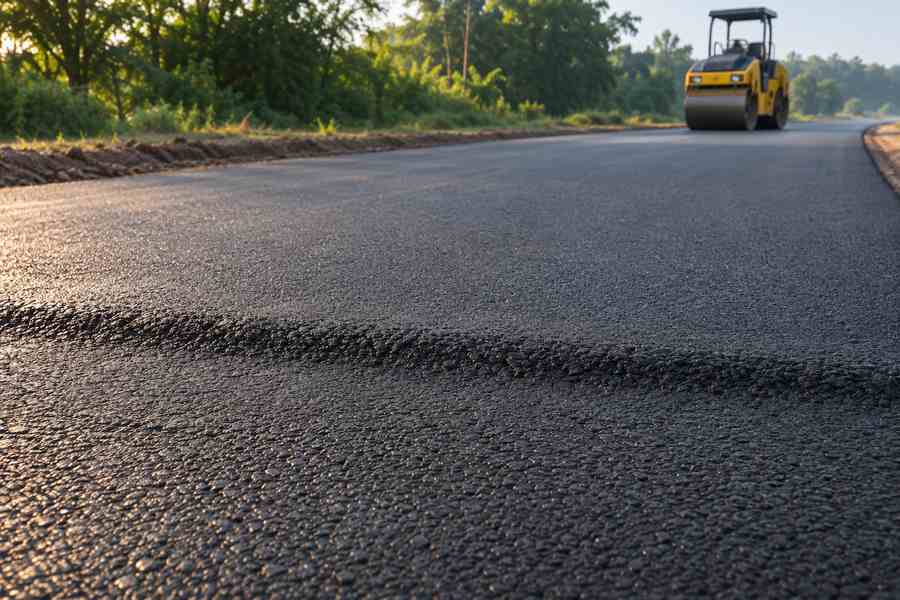
Yes. Mechanical removal can change the pavement texture and create a visible scar in place of the original marking. The rotating cutters may remove surface peaks, expose aggregate, or create shallow grooves along the former line.
These changes can produce a different appearance from the surrounding pavement. For example: Excessive cutting depth may expose more aggregate. Uneven machine movement can create inconsistent surface texture.
Worn or incorrectly selected cutters may produce irregular removal patterns. Repeated passes can create deeper grooves and visible surface bands. The Federal Highway Administration identifies pavement texture changes and surface gouging as potential problems associated with grinding-based marking removal.
Safety FHWA This means that removing more pavement does not necessarily produce a better visual result.
How to Identify Why Old Markings Remain Visible
Before adjusting the scarifier, contractors should determine whether the remaining line contains marking material or represents a change in pavement appearance.
| Visible condition | Possible cause | Inspection focus |
| Colored particles remain | Residual pigment | Check aggregate gaps |
| Shiny spots or reflective points | Remaining glass beads | Inspect under directional light |
| Sticky or raised material | Residual binder or thermoplastic | Check surface buildup |
| Dark or light shadow line | Pavement aging and discoloration | Compare surrounding texture |
| Parallel grooves | Mechanical scarification | Inspect cutting depth and pattern |
| Uneven exposed aggregate | Excessive material removal | Assess pavement damage |
A useful field investigation includes three inspection conditions: Dry conditions: Check whether pigment, residue, and texture differences remain visible under normal daylight. Wet conditions: Observe whether water changes the contrast or creates additional reflections along the former marking.
Nighttime conditions: Inspect the surface under vehicle headlights to determine whether the old line could still be mistaken for an active road marking. Daytime appearance alone is not sufficient for evaluating potential traffic confusion.
Should You Increase Scarifying Depth to Remove the Remaining Lines?
Not automatically. Increasing cutting depth may remove additional marking residue, but it can also damage the pavement surface, expose aggregate, and create deeper grooves. The correct approach is to determine what remains before changing the machine settings.
For example, Excalibur’s Concrete Scarifier features adjustable cutting depth from 1 mm to 25 mm per pass, depending on the configuration. The published range describes the machine’s travel. Choosing a setting for a particular stripe requires a trial on that pavement.
The actual setting should be established through a controlled test area. Consider the following operating practices: Start with a shallow, controlled cutting setting. Inspect the removal result before making additional passes.
Check cutter condition and drum alignment. Maintain consistent machine movement. Collect removed marking material and debris.
Stop when further cutting would damage the pavement without improving removal. Oregon DOT guidance also emphasizes starting removal operations conservatively and monitoring the pavement for deterioration. Its project specifications limit pavement removal during marking removal to 1/8 inch, but this is a project-specific requirement rather than a universal standard.
How to Choose the Right Removal Method
Scarifying is not the only method available for removing old road markings. The appropriate technique depends on marking thickness, pavement type, surface condition, and the required removal result.
| Removal Method | Main Advantage | Potential Limitation |
| Mechanical scarifying | Controlled surface material removal | Can alter pavement texture |
| Grinding | Effective on several marking materials | May create grooves and scars |
| High-pressure water blasting | Can remove markings with less mechanical abrasion | May remove fine aggregate |
| Abrasive blasting | Removes stubborn marking materials | Produces debris and may damage texture |
| Chemical removal | Can soften certain marking materials | Requires compatible chemicals and thorough cleaning |
Thermoplastic markings may require more aggressive removal than conventional paint. However, increasing removal intensity can also increase pavement damage. For this reason, contractors should evaluate the marking material before selecting the removal equipment.
How to Reduce Ghost Lines After Scarifying
If the original marking material has been removed but the old line remains visible, additional cutting may not be the right solution. Instead, consider the following measures:
Remove Remaining Surface Residue
Use appropriate cleaning, brushing, or approved blasting methods to remove loose binder, pigment, and glass beads.
Restore Surface Uniformity
If scarification has created significant texture differences, an engineer-approved surface treatment may help improve the visual consistency of the pavement. Depending on pavement condition, possible treatments include fog seals, sand seals, slurry seals, or microsurfacing.
The correct treatment must be selected according to the pavement material, damage severity, and project requirements. Oregon
Allow Natural Weathering Where Acceptable
Minor color differences may become less noticeable through traffic wear and environmental exposure. However, contractors should not assume that weathering will eliminate every ghost line, particularly where traffic safety could be affected.
8. Final Inspection Before Applying New Road Markings
Before installing replacement markings, inspect the prepared surface carefully. The following checklist helps ensure that removal work is complete and the pavement is suitable for the next operation. Sweep the test strip and look for flakes left on the pavement.
Check for remaining reflective glass beads. Inspect for excessive grooves or aggregate loss. Remove dust, slurry, and cutting debris.
Verify that the surface is clean and sufficiently dry. Check the old marking location under daylight and nighttime conditions. Confirm that the pavement meets the new marking material’s preparation requirements.
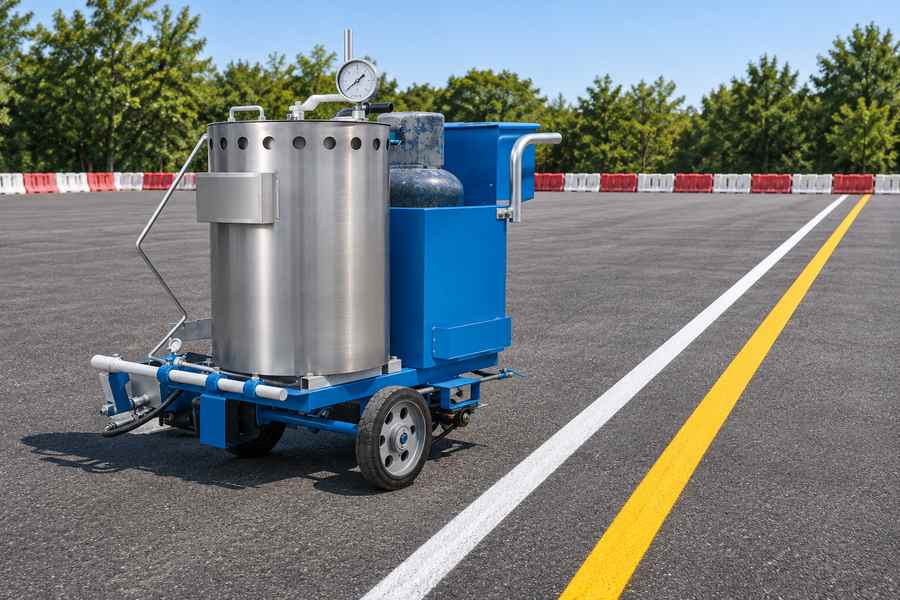
For projects involving replacement thermoplastic lines, Excalibur’s Thermoplastic Marking Machine provides equipment for applying new road markings after the pavement has been properly prepared. The replacement markings should follow the approved traffic layout, and obsolete lines must not create confusion for road users.
Old road markings remain visible after scarifying for several reasons, including residual binder, embedded glass beads, pavement discoloration, and changes in surface texture. The most important step is identifying whether the remaining line represents actual marking material or simply a visual difference in the pavement.
Increasing cutting depth without understanding the cause can create additional damage without eliminating the ghost line.
By selecting appropriate removal equipment, controlling cutting depth, inspecting the pavement under different lighting conditions, and applying suitable surface treatments when necessary, contractors can achieve more effective marking removal while preserving pavement quality. Judge the result from the driver’s approach as well as at ground level.
The pavement needs a sound, even surface and the new layout must be easy to read.