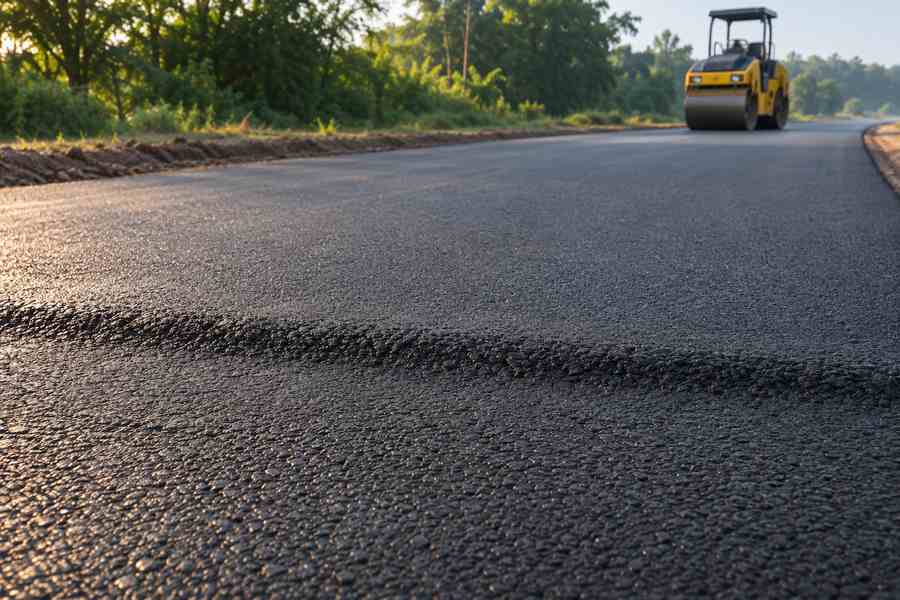
An asphalt ridge near a tandem roller‘s stopping point may indicate that the drum displaced the hot mix during deceleration or direction changes. To identify the cause, contractors should compare the ridge location, shape, and direction with the roller’s operating path, braking points, and restart movements.
This helps distinguish reversal-related shoving from other compaction defects.
What Does a Reversal-Related Asphalt Ridge Look Like?
A reversal-related ridge is a raised area of asphalt that forms when a roller pushes the mixture instead of compacting it uniformly. It often appears near the point where the machine slows down, stops, or changes direction. During normal compaction, the steel drum applies pressure to densify the asphalt mixture.
However, if the drum moves too quickly, brakes abruptly, or reverses direction while the mixture is still unstable, horizontal forces can push material ahead of or around the drum. This movement may create: Bow-shaped ridges: Raised areas that curve across part of the roller path. Diagonal ridges: Surface waves extending away from a stopping or reversing point.
Transverse humps: Raised bands that form when the roller repeatedly reverses at approximately the same location. Localized shoving: Material displaced near the drum edges or overlapping pass boundaries. These defects should be distinguished from ordinary roller indentations.
A parked roller may leave a depression, while vibratory operation at an unsuitable speed or setting can produce washboard-like marks. The distinction matters because each defect requires a different corrective approach.
Trace the Ridge Through Three Stages of Roller Movement
The most effective way to investigate a reversal-related ridge is to reconstruct what happens immediately before, during, and after the roller changes direction. Stage 1:
Before Braking – Material Begins to Move
As a tandem roller approaches the end of a compaction pass, the operator gradually reduces travel speed. If deceleration is too abrupt, the drum’s contact force and horizontal movement can cause the hot asphalt mixture to accumulate ahead of the drum. The risk increases when: The asphalt mixture is excessively hot or tender.
The roller travels too quickly for the mix conditions. The braking action is sudden. The mat has insufficient stability to resist horizontal movement.
The roller applies excessive compactive effort. The resulting ridge may begin forming before the machine reaches a complete stop. What to inspect: Look for a small raised wave ahead of the drum’s final approach position.
Compare its direction with the roller’s travel direction to determine whether the material was pushed forward. Stage 2:
At Zero Speed – Drum Pressure Creates a Localized Mark
When the roller stops on a freshly placed asphalt mat, its static weight remains concentrated on the drum contact area. If the machine stays stationary, the hot mixture may deform under the load, creating a localized indentation or raised edges around the contact area.
Mechanical backlash during direction changes can also produce an irregular movement when the roller transitions from forward to reverse. This stage is particularly important because a visible mark at the stopping point does not necessarily mean the entire defect was created while the roller was stationary.
What to inspect: Whether the ridge is centered around the stopping position. Whether a depression exists directly beneath the drum. Whether the roller remained stationary for an extended period.
Whether the same operator repeatedly stopped at the same location. Stage 3:
First Drum Length After Reversing – Displacement Becomes Visible
The first movement after reversing can reveal whether the direction change contributed to the ridge. When the drum starts moving in the opposite direction, the change in traction and contact forces may disturb the still-plastic asphalt mixture. If the transition is abrupt, material can be pushed sideways or gathered into a raised wave.
Starting vibration too early or changing direction too sharply may increase the disturbance. The resulting ridge may extend beyond the exact stopping point because the drum continues to influence the mixture as it moves away. What to inspect: Follow the ridge along the first section of the reverse pass.
Check whether its orientation and position correspond to the drum’s initial movement after reversing. This three-stage investigation is more useful than examining the finished ridge alone because it connects the visible defect with the actual sequence of roller movements.
How to Match the Ridge with the Roller’s Reversal Point
Once the ridge has been identified, the next step is to determine whether its position corresponds to the roller’s actual reversal pattern. A practical field investigation should include the following checks. Mark the ridge location Record the beginning, end, and approximate width of the raised area.
Note whether it crosses the full drum width or appears only near one edge. Reconstruct the roller’s travel path Review the roller’s operating sequence, including: Starting and stopping positions. Forward and reverse travel directions.
Approximate travel speed. Vibration settings during deceleration and restart. Time spent stationary on the hot mat.
Compare multiple reversal points If similar ridges repeatedly appear at the ends of successive roller passes, the reversal pattern may be responsible. Check whether the operator consistently stops at the same transverse position.
Examine adjacent roller passes Determine whether the ridge occurs within one drum path, along an overlapping section, or across several passes. This helps identify whether the problem is related to reversal movements or a broader compaction issue. The following table summarizes common observations.
| Surface Appearance | Possible Cause | What to Investigate |
| Bow-shaped ridge near the pass endpoint | Abrupt braking or reversal | Deceleration and steering |
| Repeated transverse humps | Reversal points not staggered | Roller operating pattern |
| Longitudinal ridges along the drum path | Excessive speed or mix displacement | Travel speed and mix stability |
| Localized depression with raised edges | Roller stopped on hot asphalt | Stationary time and parking position |
| Regular washboard marks | Incorrect vibration settings or speed | Frequency, amplitude, and travel speed |
Texas DOT guidance recommends slightly turning the roller when stopping or reversing so that the resulting hump is diagonal rather than perpendicular to the direction of travel. Such a mark is generally easier to correct during subsequent passes.
How to Confirm Whether Reversal Is the Main Cause
A visual inspection alone cannot establish that a ridge was caused by roller reversal. Contractors should compare surface observations with operating records and material conditions. Three checks are particularly useful.
Check Roller Speed and Reversal Timing
Record the roller’s speed as it approaches the end of each pass. Sudden changes in travel speed can contribute to horizontal displacement. Also check when vibration is switched off.
Vibratory rollers should stop vibrating before changing direction, with sufficient lead time to avoid leaving vibration-related marks. The appropriate timing depends on the machine and operating conditions.
Check Asphalt Temperature and Stability
Measure the mixture temperature around the affected area and compare it with the project’s specified compaction range. A mixture that is too tender may move under the drum even when the operator follows a relatively consistent rolling pattern. Temperature, aggregate characteristics, binder properties, and mixture design can all influence resistance to compaction.
Compare Surface Profile and Density
Use a straightedge or suitable surface profiling equipment to measure the ridge height and surrounding surface variation. Density testing can help determine whether the affected area has been compacted adequately. Importantly, a raised ridge does not automatically indicate insufficient density.
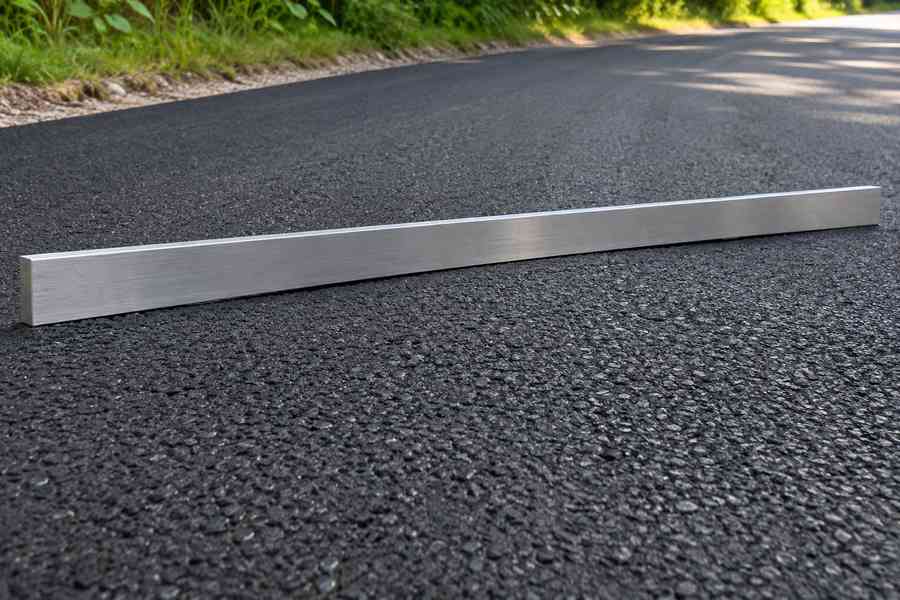
The surface may have experienced horizontal material displacement even when the surrounding asphalt has achieved the required density.
How Can Contractors Prevent Reversal-Related Ridges?
Once the investigation identifies an operating problem, contractors can improve the rolling pattern without necessarily changing the machine. Recommended practices include: Decelerate smoothly: Reduce speed gradually rather than braking abruptly at the end of a pass. Change direction progressively: Avoid sudden steering or aggressive reversal movements.
Stagger reversal points: Do not repeatedly stop at the same transverse position, as this can create continuous humps. Control vibration: Switch off vibration sufficiently before changing direction, following the machine manufacturer’s instructions. Avoid stopping on hot asphalt: Keep the roller moving whenever possible and park on a stable, completed surface.
Check machine condition: Inspect the reversing system for mechanical backlash and confirm that travel and vibration controls operate correctly. For more pronounced direction changes, the roller should transition on stable material whenever the paving arrangement allows.
What If the Ridge Has Already Formed?
Check the mat temperature and examine the ridge before choosing a repair. While the mixture is still workable: Displaced material may be loosened with suitable lutes or rakes, restored to the intended grade, and recompacted. When the mixture has become less workable: Avoid assuming that additional roller passes will remove the ridge.
Evaluate the surface and follow the project’s approved correction procedure. After the mixture has cooled: Surface correction may require mechanical treatment or localized repair, depending on the defect’s severity and acceptance requirements. A ridge that persists after a pass warrants a fresh assessment before the roller crosses it again.
Excessive rolling can further disturb an unstable mixture or damage the aggregate structure. Tracing an asphalt ridge to a tandem roller reversal requires examining the relationship between drum movement, stopping position, and material displacement.
By reconstructing the roller’s operating sequence, checking asphalt temperature, and adjusting reversal techniques, contractors can identify the underlying cause and improve surface uniformity.