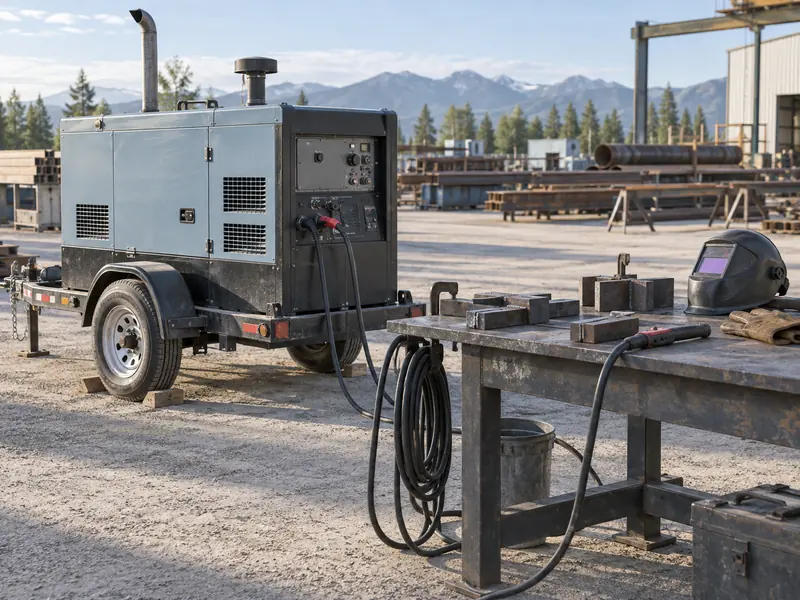
Before powering sensitive electronics, check the generator’s voltage THD under the loads you will actually connect, together with voltage regulation, frequency stability, and starting capacity. A low distortion figure is useful only when its test conditions are clear and the connected equipment accepts that supply. Ask for model-specific evidence instead of treating “clean power” as a complete specification.
This matters when a generator serves a mixture of computers, battery chargers, refrigeration, and workshop controls. A machine can have enough rated watts while still producing an unsuitable supply during a particular combination of loads or a sudden motor start.
What Does Generator THD Tell You?
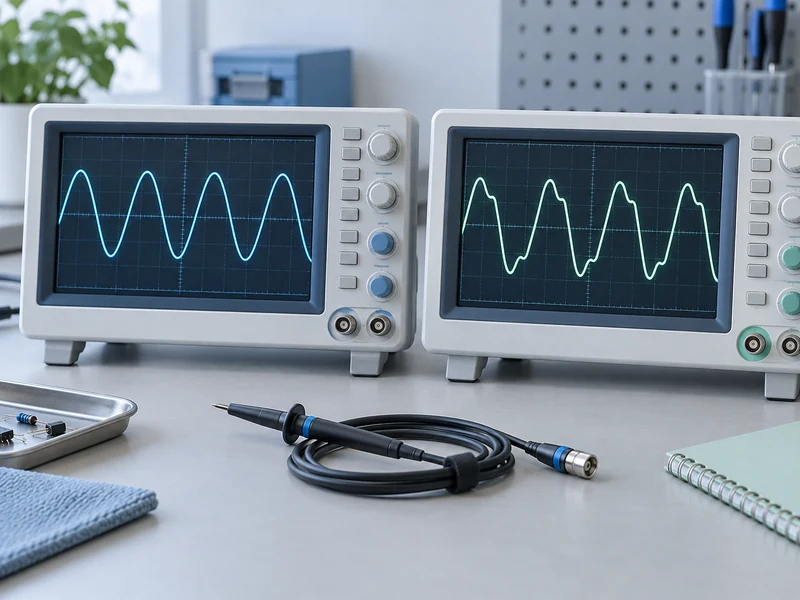
Total harmonic distortion describes how much harmonic content a waveform contains relative to its fundamental component. For a nominal 50 Hz supply, the fundamental is 50 Hz; harmonics occur at whole-number multiples of that frequency. Voltage THD expresses the combined harmonic voltage as a percentage of the fundamental voltage.
Picture an ideal sine wave as a smooth repeating curve. Harmonics alter its shape, which can affect how connected equipment behaves even when a basic meter displays a plausible voltage. A distortion reading needs to identify the quantity being measured: voltage at the supply point or current passing through the circuit.
The first describes the voltage delivered at the measurement point, while the second describes the current waveform drawn through it. A supplier’s current measurement cannot automatically stand in for the voltage quality your equipment receives.
Why Can the Connected Load Change the Result?
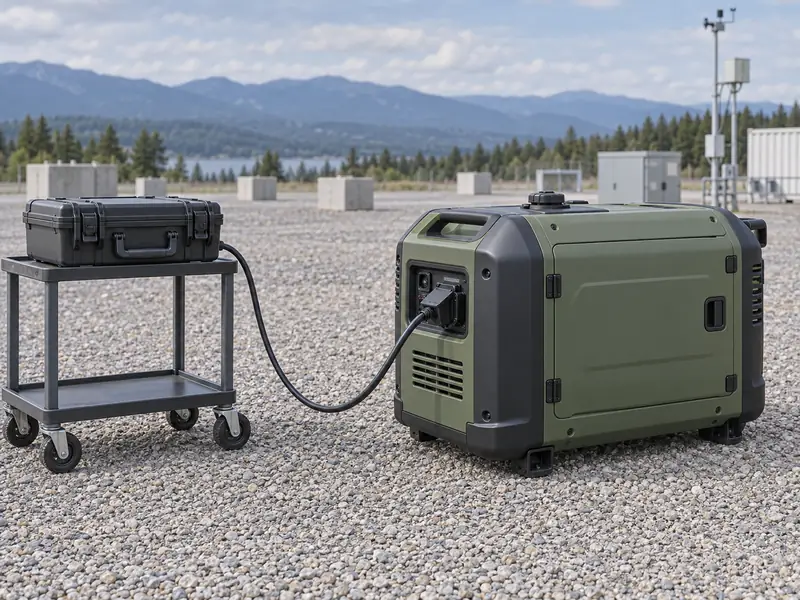
Electronic loads can concentrate their demand into brief portions of each AC cycle, creating a current shape that differs from the supplied voltage. Those currents interact with the generator and distribution system, so the voltage waveform can change when the load mix changes. A reading taken with a simple resistive load therefore does not describe every possible application.
Research summarized by Western Michigan University on harmonic distortion discusses effects including heating, electronic malfunction, and interference. It does not establish a universal damage threshold for every appliance; device design and operating conditions still matter.
Is There One Safe THD Percentage for Every Device?
No single percentage guarantees compatibility with all electronics. Begin with the equipment manufacturer’s power requirements and then compare generator test data obtained under relevant conditions. If a tender sets a THD limit, include the measurement point, load range, and test method in the acceptance criteria.
A bare claim such as “below 3%” leaves several questions unanswered. Was that measured at no load, at rated output, or during operation with nonlinear loads? Does it describe a guaranteed maximum or one typical measurement?
The scope of IEEE’s harmonic-control standard information concerns system distortion at the point of common coupling and distinguishes steady-state conditions from transients. Quoting a system-level standard does not, by itself, prove that a particular portable generator will suit a particular laptop, UPS, or control panel.
Which Other Supply Characteristics Need Attention?
THD is one part of the power-quality check. Short voltage dips, incorrect frequency, wiring faults, and overloads can interrupt operation even when steady-state distortion is low. Use the following comparison to keep the purchasing discussion specific.
| Check | What to Request — Why It Matters |
| Voltage THD | Results at defined loads and measurement points — Describes waveform distortion |
| Voltage and frequency | Operating tolerances and load-step response — Addresses steady output and sudden changes |
| Starting capacity | Supported surge magnitude and duration — Helps evaluate motors and compressor starts |
| Output configuration | Voltage, phase, sockets, and individual circuit ratings — Confirms the available power can reach the intended loads |
| Equipment compatibility | Written input requirements from the device supplier — Connects generator data to the actual application |
Does an Inverter Generator Automatically Solve the Problem?
An inverter design gives the manufacturer electronic control over the output waveform, but the actual performance remains model dependent. Compare measured specifications, protection features, and load response rather than assuming every inverter performs identically. A conventional generator with appropriate verified performance may also meet a particular requirement.
Excalibur’s inverter generator range provides a starting point for comparing available configurations. When requesting a quotation, identify the intended devices and ask for the specific offered model’s voltage THD data; a general product-family description is insufficient for acceptance testing. Fuel choice is a separate decision involving availability, duty, maintenance, and operating cost.
Buyers considering a diesel inverter generator should evaluate those factors alongside power quality, without assuming that diesel fuel itself guarantees a cleaner waveform.
How Should You Build a Useful Load List?
Record how the equipment operates together, including the moments when demand changes. A list of nameplate wattages alone can miss motor starting and the combined behavior of several electronic supplies. Our guide to choosing the right generator size explains the capacity side of this assessment.
- List each device’s voltage, frequency, phase, running demand, and stated input restrictions.
- Identify motors, compressors, and other loads with starting demand.
- Record chargers, UPS units, and electronically controlled equipment separately.
- Note which devices must remain powered while another device starts.
- Include the proposed cable lengths, distribution equipment, and operating environment.
For example, a small site office may run laptops and a router continuously while a refrigerator cycles. Testing only the office electronics overlooks the refrigerator’s start; testing only a heater overlooks the electronic load mix. The office example is hypothetical; it illustrates what to include in a test plan and does not report measurements from an Excalibur generator.
What Should a Practical Acceptance Test Include?
Agree on a test plan before ordering equipment for a sensitive application. A qualified technician should use suitable, correctly rated instruments and safe connections to measure the supply at relevant operating states. An ordinary multimeter that reports volts and hertz generally cannot establish voltage THD unless it has that measurement capability.
Which Operating States Are Worth Recording?
- Confirm the exact generator configuration and inspect the intended distribution arrangement.
- Record voltage, frequency, and voltage THD after the machine has stabilized under the agreed initial load.
- Add representative operating loads in the planned sequence and record the resulting conditions.
- Capture relevant load changes, including motor starts, with instruments capable of observing the events.
- Check device behavior and compare every measurement against the agreed requirements.
Keep the load list, ambient conditions, instrument details, and results with the commissioning record. A test on another model or a different voltage version is useful background but should not be presented as acceptance of the supplied unit. Retain the manufacturer’s operating limits throughout the test.
For home applications, combine this power-quality assessment with the installation and load-planning considerations in our portable inverter generator buying guide . Building connections and protective arrangements require a qualified electrician; portable engines must operate outdoors with exhaust kept away from occupied spaces and air openings.
Will a Surge Protector or UPS Fix High THD?
A surge protector is not a general waveform-correction device. Its presence should not be treated as evidence that distorted generator output has become suitable. Check what the accessory actually controls and the conditions under which it operates.
A UPS also requires a compatibility check because designs differ. Its input limits, transfer behavior, charging demand, and output mode all influence the result. Ask the UPS manufacturer whether the proposed generator supply is acceptable and test the combination if continuity matters.
Similarly, adding a filter without engineering review may create a new problem. Harmonic mitigation depends on the source and loads; it is not a universal plug-in remedy. Diagnose the actual disturbance before buying an accessory.
What Should You Send With Your Generator Inquiry?
Send a short application brief that lets the supplier assess the complete requirement. Include the load list, operating hours, installation country, required voltage and frequency, and any device-specific power-quality limits. Ask for the quoted configuration’s documents and a clear acceptance process.
- State whether continuity, waveform quality, motor starting, or portability is the main constraint.
- Request voltage THD results with the load type and percentage identified.
- Request rated output and circuit limits, rather than relying on the model name.
- Before delivery, agree who will investigate a failed compatibility test and document the remedy available under the quoted warranty and commissioning terms.
Our discussion of portable generator buying mistakes covers related specification gaps. The strongest purchasing decision is one that ties the generator’s documented performance to your equipment and a repeatable test, so both buyer and supplier know what successful operation means.