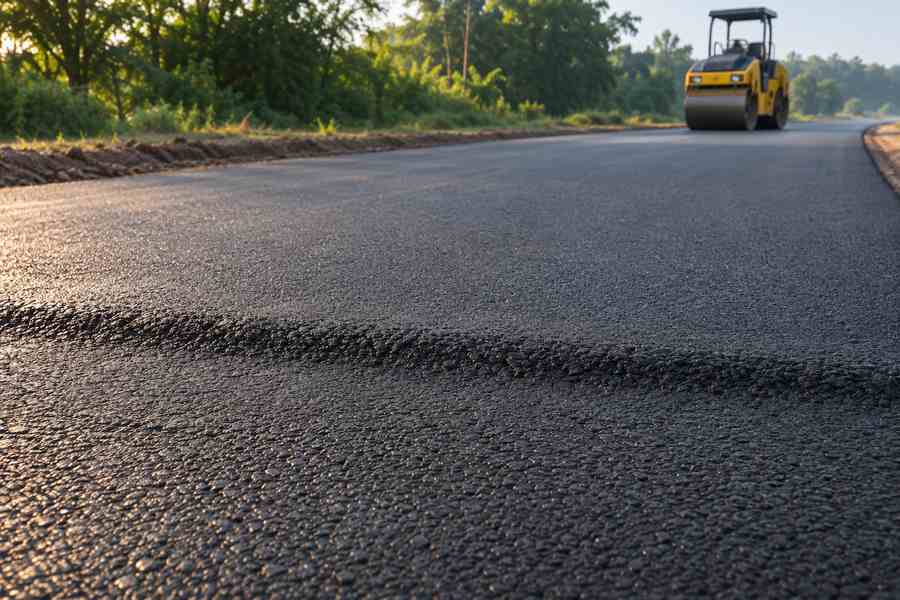
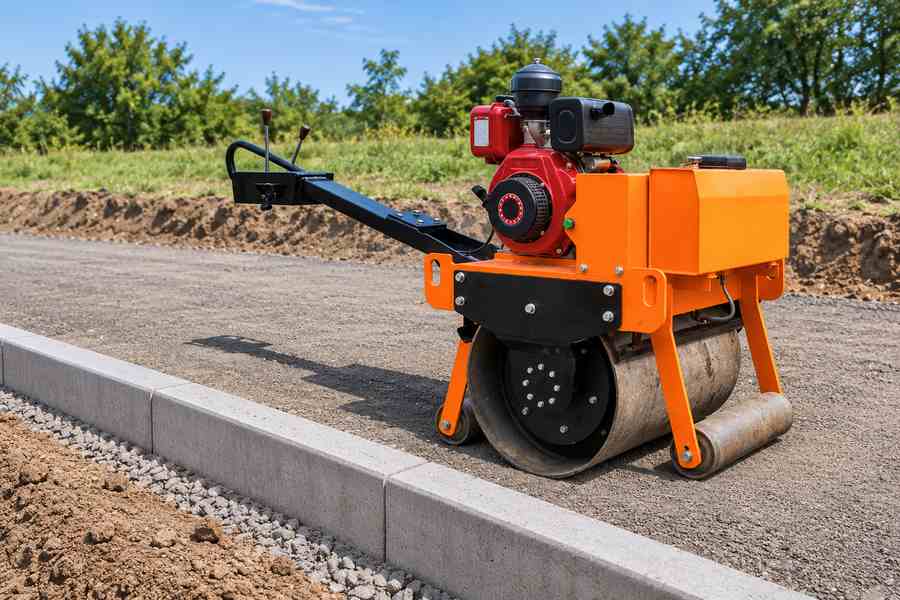
A walk-behind roller can compact asphalt very close to a curb, but the actual working distance depends on drum width, machine clearance, curb height, and the condition of the asphalt edge. The objective is to compact as much of the pavement as possible without striking or climbing onto the curb, damaging the drum, or leaving an uncompacted strip along the boundary.
For contractors, the challenge is not simply getting the roller close to the curb. It is ensuring that the asphalt directly beside the curb receives sufficient compaction without creating ridges, surface deformation, or uneven density. Understanding drum clearance, edge support, and rolling patterns helps operators achieve better results in confined paving areas.
What Determines How Close a Walk-Behind Roller Can Get to a Curb?
The minimum practical clearance is influenced by several machine and site characteristics.
Drum Width and Position
The drum’s width determines how much pavement can be covered during each pass. However, the overall machine width does not necessarily indicate how close the drum edge can approach a curb. Operators should consider: Actual drum width and lateral position.
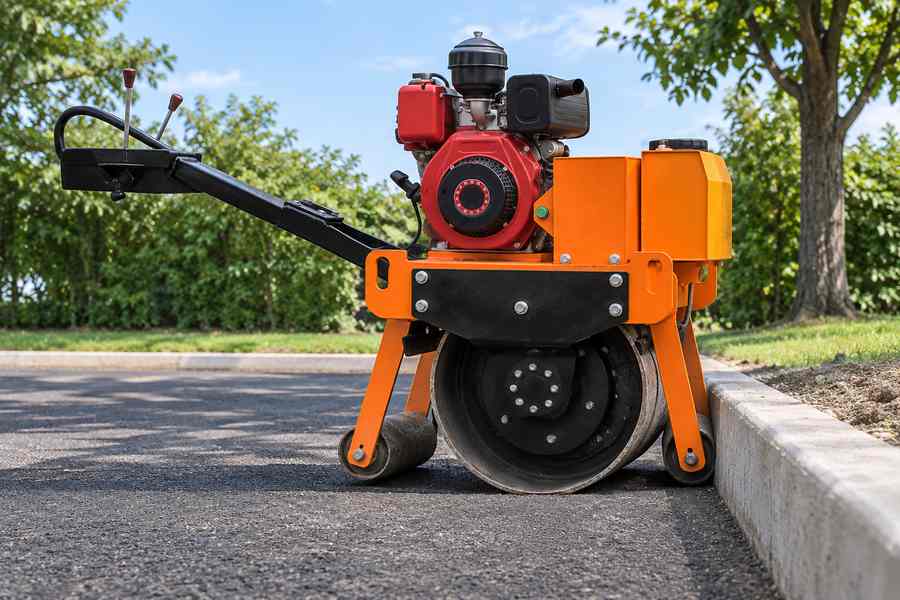
Distance between the drum edge and machine frame. Handlebar and control-arm clearance. Curb height and profile.
Available maneuvering space. A compact roller may have a relatively narrow body but still require additional clearance because of its frame, brackets, or other components.
Curb Height and Geometry
A standard vertical curb presents different challenges from a sloped or rounded curb. A raised curb can obstruct the drum or machine frame, while a sloped curb may create additional clearance depending on its profile. Operators should never assume that the drum can safely ride onto the curb simply because the machine is compact.
Why Is Compaction Along the Curb Important?
The pavement edge is particularly vulnerable to insufficient compaction. Unlike the interior of a paved area, the edge may have limited lateral support. If the asphalt is not adequately confined, rolling pressure can push the material outward instead of compacting it effectively.
Three problems commonly occur:
Uncompacted Edge Strips
If the drum remains too far from the curb, a narrow strip of asphalt may receive insufficient compaction.
Surface Ridges
Repeated rolling near the boundary can push hot asphalt sideways, creating raised edges or uneven surface profiles.
Edge Deformation
Excessive pressure near an unsupported edge can cause the asphalt to move, shear, or lose its intended shape. The objective is to achieve consistent density while maintaining the designed pavement profile.
How to Position the Roller Near a Curb
Correct drum positioning is more important than choosing an arbitrary clearance measurement. Before starting, identify the actual drum edge and compare its position with the curb. A practical approach includes: Inspect the curb for height changes, damaged sections, and irregular profiles.
Check the roller’s drum width and physical clearance. Begin with a controlled pass that leaves a small working margin. Observe the asphalt edge for movement or deformation.
Adjust the rolling path to achieve consistent coverage. Inspect the remaining strip and determine whether additional edge compaction is required. The roller should remain stable throughout the operation.
Never force the drum against the curb or use the curb as a support point unless the machine and approved rolling procedure specifically permit it.
What Happens If the Roller Stays Too Far from the Curb?
Leaving excessive distance between the drum and curb can create a narrow uncompacted strip. This is particularly problematic in parking lots, sidewalks, driveways, and residential road construction, where the finished pavement edge must be both stable and visually consistent. Consider the following examples:
| Roller Position | Possible Result | Main Concern |
| Too far from curb | Uncompacted edge strip | Insufficient density |
| Correct working clearance | More complete edge coverage | Better compaction |
| Drum contacts curb | Equipment or curb damage | Mechanical clearance |
| Drum rides onto curb | Unstable machine positioning | Safety and surface damage |
| Excessive edge pressure | Asphalt displacement | Ridges and deformation |
A small visible gap does not automatically indicate poor compaction. The important factor is whether the asphalt within that gap receives the required density.
How to Develop an Effective Rolling Pattern Along Curbs
A consistent rolling pattern helps prevent uneven density between the pavement center and its edges. For many asphalt applications, contractors use overlapping passes to achieve uniform coverage.
Start with the Main Pavement Area
Complete the primary rolling pattern while maintaining the required overlap between adjacent passes. The operator should avoid repeatedly concentrating the roller at the same edge location.
Address the Edge Strip
After the main pavement area has been compacted, inspect the remaining strip near the curb. Where the machine cannot safely reach the boundary, an appropriate smaller compaction tool may be required.
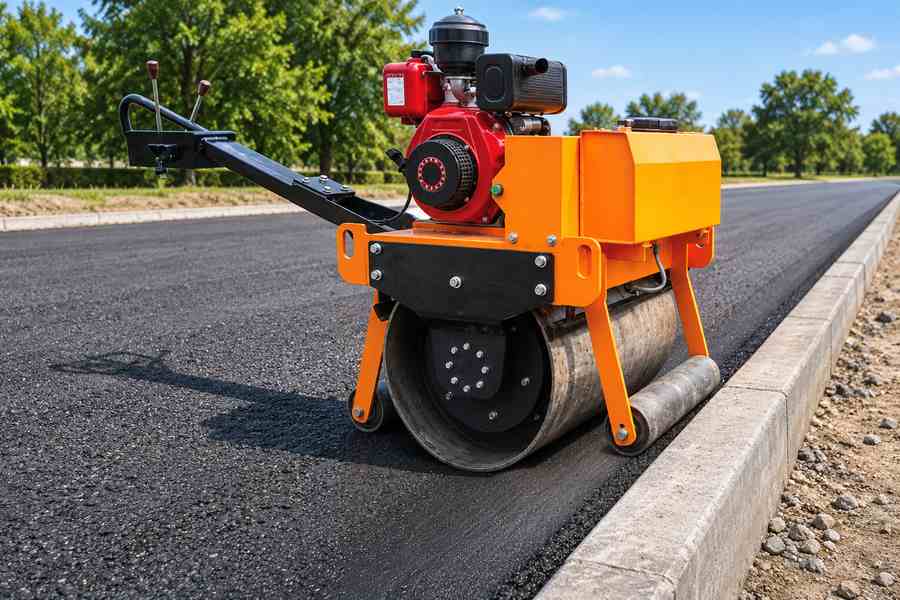
Maintain Consistent Movement
Avoid sudden stopping, reversing, or sharp steering movements on hot asphalt. These actions can create surface displacement, particularly near confined boundaries.
| Rolling Stage | Recommended Practice | Objective |
| Initial pass | Maintain controlled distance from curb | Avoid edge disturbance |
| Main rolling | Use consistent overlapping passes | Achieve uniform density |
| Edge compaction | Adjust drum position carefully | Reduce uncompacted strips |
| Final inspection | Check surface profile and density | Confirm edge quality |
The exact sequence should follow the project specifications and the approved rolling plan.
How to Choose a Suitable Walk-Behind Roller
Machine dimensions and maneuverability are important when working beside curbs. A compact walk-behind roller is often suitable for sidewalks, narrow roads, parking areas, and small asphalt repairs. For example, Excalibur offers several walk-behind road roller models:
| Model | Exciting Force | Vibration Frequency | Full Width |
| SVR600H/SVR600D | 15 kN | 70 Hz | 780 mm |
| SVR700H/SVR700D | 20 kN | 70 Hz | 880 mm |
| DVR600H/DVR600D | 20 kN | 70 Hz | 780 mm |
These specifications illustrate why machine selection should consider more than overall width. Drum dimensions, machine structure, and actual clearance must also be checked.
The SVR700H/SVR700D Walk-Behind Road Roller provides a compact solution for asphalt compaction, while the broader Road Roller product range includes different configurations for various construction applications.
How to Check Whether the Asphalt Edge Is Properly Compacted
Visual inspection is useful, but it cannot confirm actual pavement density. Contractors should combine surface inspection with appropriate testing methods. Check the following: Surface continuity: Look for visible gaps, ridges, and uneven transitions.
Edge stability: Check for signs of asphalt movement or shearing. Drum marks: Identify areas showing inconsistent rolling patterns. Density: Use approved field density testing methods.
Profile: Verify that the pavement maintains the required elevation and drainage characteristics. If the drum cannot reach the curb safely, use an appropriate edge compaction method rather than forcing the machine into an unsuitable position.
Common Mistakes to Avoid
Several operating mistakes can reduce compaction quality near curbs: Assuming overall machine width equals drum working width. Leaving a large uncompacted strip beside the curb. Allowing the drum or machine frame to strike the curb.
Applying excessive vibration to unstable asphalt. Reversing abruptly at the pavement edge. Ignoring density testing and relying only on appearance.
Rolling an unsupported asphalt edge without an appropriate compaction sequence. Avoiding these mistakes helps protect both the finished pavement and the equipment. A walk-behind roller can work very close to a curb, but there is no universal clearance distance suitable for every machine and curb configuration.
The actual working distance depends on drum geometry, machine clearance, curb profile, and asphalt stability. For the best results, operators should position the drum carefully, maintain consistent rolling patterns, avoid excessive edge pressure, and verify compaction through appropriate testing.
Ultimately, the goal is not simply to roll as close to the curb as possible. It is to achieve uniform pavement density all the way to the designed edge without damaging the curb or disturbing the asphalt surface.