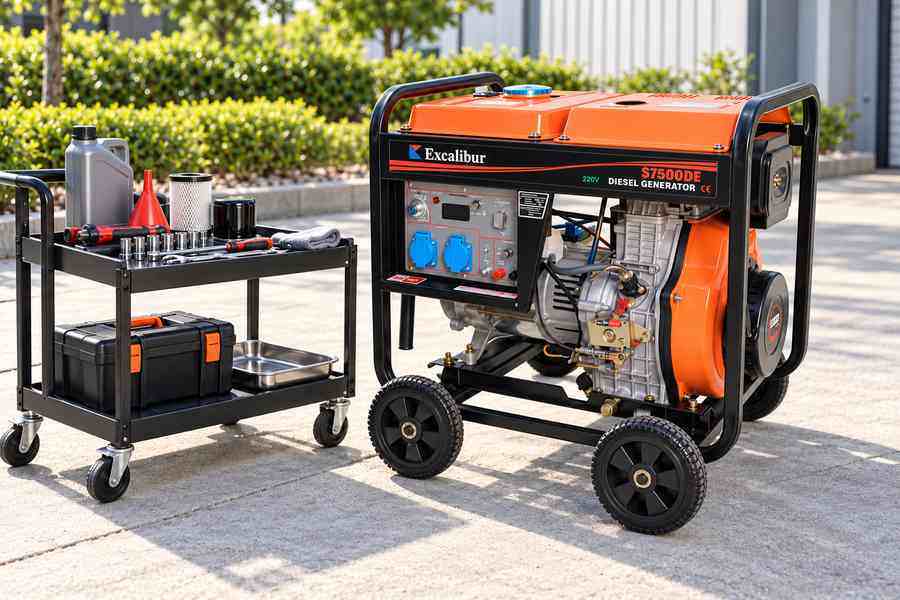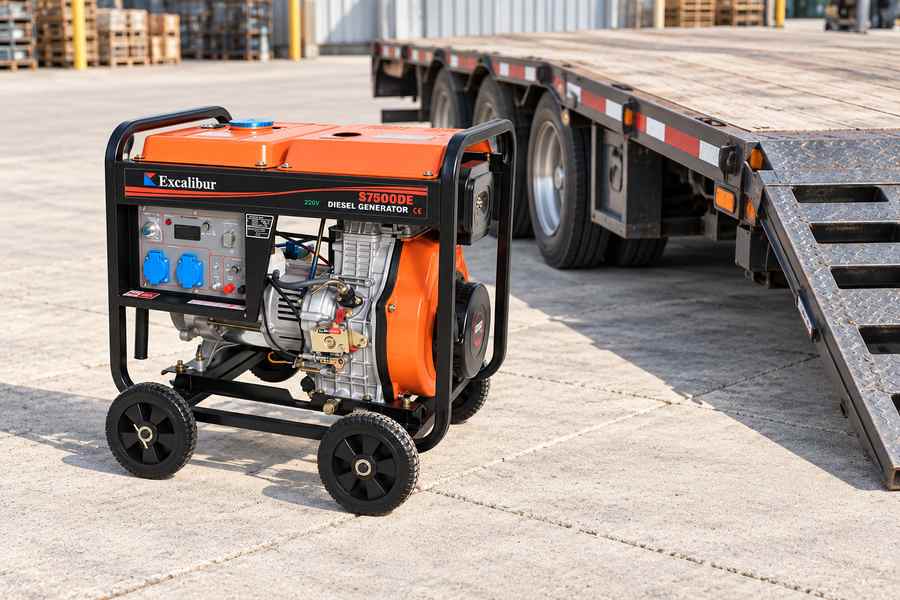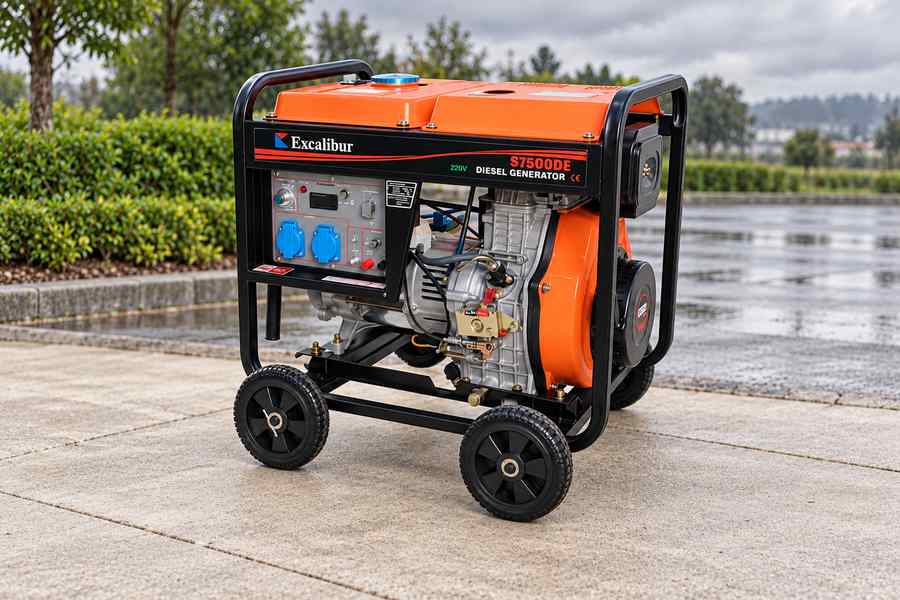
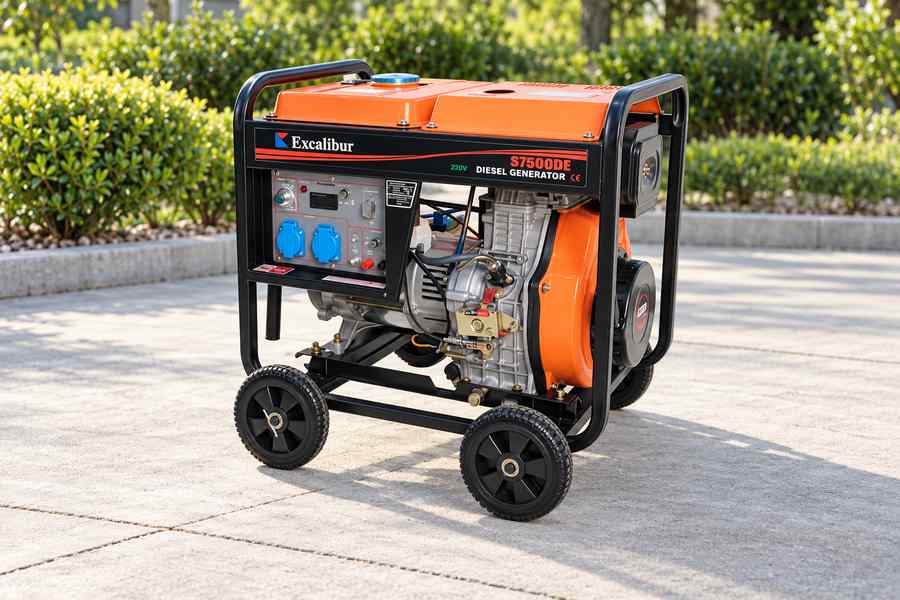
Choose wheels and handles for an open-frame diesel generator by matching the complete machine’s operating weight, the route it must travel, and the way it will be parked and handled. Wheel diameter alone cannot tell you whether the generator will move comfortably or remain stable. The axle, attachment brackets, handle locks, support feet, and available replacement parts deserve equal attention.
Start with a practical question: where will someone actually move this generator after delivery? A smooth warehouse aisle, a gravel yard, and a temporary construction access route place different demands on the same wheel kit. Treat portability as a system that must suit the job, rather than an accessory added after the generator has already been selected.
Define The Movement Task Before Comparing Wheel Kits
Write down the normal travel distance, ground conditions, doorway widths, storage position, and number of people available to handle the machine. Include small obstacles such as thresholds, drainage channels, loose stones, and changes in surface height. These details often reveal a handling problem that a catalog photograph cannot show.
Separate everyday repositioning from loading onto a vehicle. A wheel kit may help move a stopped generator across suitable ground, but it does not establish that the machine can be rolled up a ramp, lifted by its handle, or towed. Each of those activities needs its own approved method and equipment.
For a rental fleet, record the most demanding routine route rather than the easiest demonstration area. A generator that feels manageable on polished concrete may be difficult to control at the customer’s work site. If travel involves steps, steep slopes, or unstable ground, plan suitable mechanical handling instead of expecting larger wheels to solve the entire problem.
Use The Correct Weight And Configuration
Ask what the quoted weight includes. A listed net weight may not represent the machine with fuel, lubricant, a starting battery, wheels, handles, and every ordered accessory fitted. The supplier should identify the relevant assembled weight and confirm which condition was used when approving the mobility kit.
The wheels do not necessarily share the load equally. On a two-wheel arrangement, an operator may support part of the weight through the handles while moving the unit. On a four-wheel arrangement, uneven ground can shift loads between wheels and change steering behavior.
Do not calculate an acceptable wheel rating simply by dividing total generator weight by the number of wheels. That overlooks unequal loading, impacts, brackets, bearings, and the frame itself. Ask for approval of the complete assembly on the specified generator, including any restrictions on surface, speed, slope, or operating position.
Excalibur’s open-frame diesel generator range lists different mobility arrangements and wheel options across its models. Use those options as a starting point for a model-specific quotation. Confirm the delivered configuration in writing, because a general product description does not replace an agreed equipment schedule.
Compare Wheel Diameter, Width, And Material Together
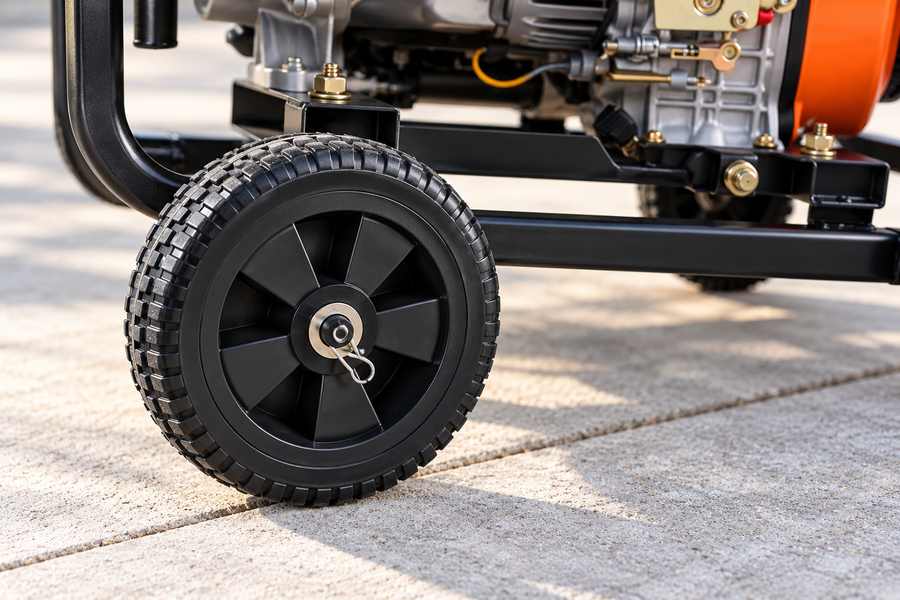
Larger wheels generally negotiate small surface irregularities more easily than smaller wheels of otherwise similar construction. However, diameter does not determine load capacity, puncture resistance, steering effort, or durability. A larger but poorly supported wheel can be a worse choice than a smaller wheel in a suitable engineered assembly.
Wheel width affects how the load is applied to the surface. A narrow wheel may sink into soft ground or catch in joints, while a wider wheel may require more effort to turn in some arrangements. Check the actual route rather than assuming that the widest available tire is always preferable.
Pneumatic tires can cushion movement over uneven surfaces, but they introduce pressure checks and puncture risk. Solid or puncture-resistant constructions reduce that particular maintenance burden, although their ride and rolling resistance differ. Ask the supplier to describe the tire construction clearly; phrases such as heavy duty or all terrain are not substitutes for specifications.
| Movement environment | Questions to resolve | Useful demonstration |
| Smooth, firm floors | Rolling effort, steering space, surface marking | Move and park the assembled generator on a comparable floor |
| Firm gravel or uneven paving | Wheel diameter, tread, axle clearance, control | Inspect an agreed representative route with the supplier |
| Debris-prone work areas | Puncture exposure, bearing protection, replacement parts | Review the tire specification and service procedure |
| Soft ground, steps, or steep routes | Whether manual rolling is appropriate at all | Develop a separate mechanical handling plan |
Inspect The Axle And Frame Attachments
Look past the tire and examine how the wheel load reaches the generator frame. Identify the axle, its supports, the wheel retention method, and the fasteners connecting the brackets. A clearly documented assembly is easier to inspect and maintain than hardware whose purpose is difficult to identify.
Check for obvious distortion, missing retaining components, rubbing, excessive looseness, or damage around attachment points. Ask the supplier to explain any intended clearance instead of assuming that every movement is a defect. Equally, do not accept visible damage merely because the wheel still rotates.
Frame modifications deserve particular attention. An improvised drilled hole, welded bracket, or different axle can alter the original load path and clearance. Obtain manufacturer approval before fitting a substitute wheel kit, even when the replacement appears to match the frame dimensions.
Access matters too. A wheel or bracket should not prevent an oil drain tray from reaching its position, block a service cover, or make a battery connection difficult to inspect. Review the complete generator with the mobility kit installed, rather than checking the accessories on a workbench in isolation.
Check Handle Height, Grip, And Locking
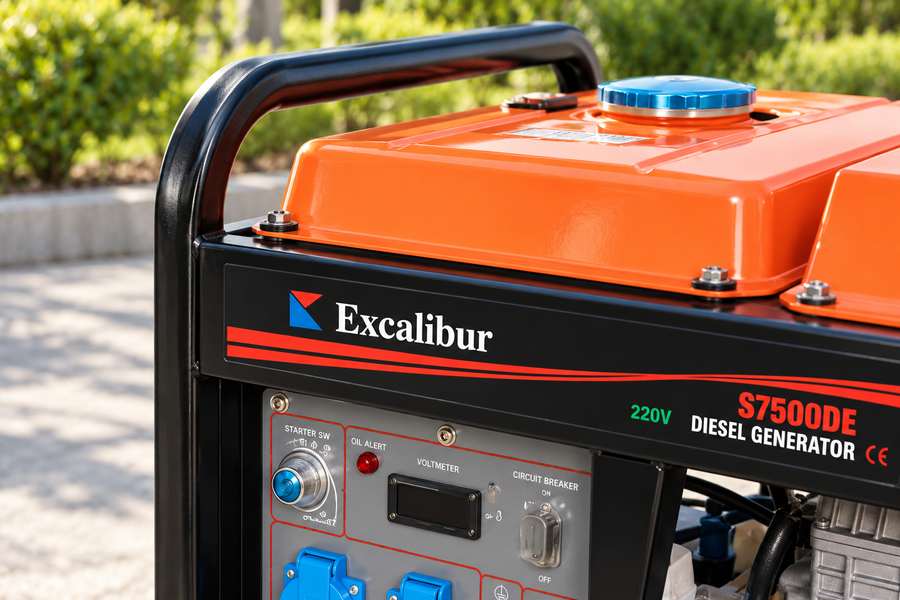
A suitable handle lets the intended operator guide the stopped machine without an awkward reach or contact with hot or sharp components. Assess the grip position when the generator is actually in its approved moving posture. A comfortable handle height on a parked unit may feel quite different once the frame is tilted.
Inspect how folding handles lock. The locking mechanism should be identifiable, accessible, and consistent with the manufacturer’s instructions. Confirm whether a pin must be inserted manually, whether there is a separate transport position, and how the operator checks that the lock is engaged.
Pay attention to finger clearance around pivots and between the handle and frame. Keep hands clear of closing joints during the demonstration, and never use fingers to test whether a moving gap is safe. Ask the supplier to show the intended grip locations and folding sequence.
Grips should remain secure under normal handling and be replaceable when damaged. Check their compatibility with the work environment, including exposure to dirt, sunlight, and routine cleaning. A soft grip is useful only if the handle beneath it is correctly attached and the operator can maintain control.
Distinguish Rolling Handles From Lifting Points
A handle intended for manual repositioning is not automatically a lifting eye or a tie-down point. The frame may also contain tubes that appear convenient for a sling but were never approved for that purpose. Ask the manufacturer to identify the permitted lifting and securing locations separately.
This distinction is especially important when a buyer expects frequent loading. Wheel kits can make a machine easier to move at ground level without making it suitable for improvised ramp loading. The vehicle, lifting equipment, ramp, restraints, and attachment points need a coordinated handling plan.
Request a drawing or manual illustration that labels the approved functions. A written statement such as portable generator is too broad to resolve whether an individual bracket can support lifting forces. Keep the handling instructions with the machine so that the delivery team and the eventual operator use the same method.
Verify Parking Stability And Operating Position
Once the machine reaches its position, it must remain stable. Review the support feet, any supplied wheel brakes, and the manufacturer’s requirements for the supporting surface. A wheel brake may help with parking, but it does not authorize operation on an unsuitable incline or replace vehicle cargo restraints.
Check whether the approved operating position places the generator on its support feet, wheels, or a combination. Confirm that all required supports contact the surface correctly and that the frame sits as intended. Do not add blocks or alter the support arrangement simply to compensate for unsuitable terrain.
Observe clearance beneath the engine and around the exhaust, air inlet, and control panel. A different wheel diameter can alter height and geometry, so an apparently simple upgrade may affect more than rolling comfort. The manufacturer should confirm compatibility before the order is finalized.
Before repositioning, shut down the generator, disconnect loads using the prescribed procedure, and allow hot components to cool. Follow the manual’s fuel and movement instructions. Never attempt to steady, tilt, or relocate a running generator by pulling on its cables.
Arrange A Useful Sample Inspection
Ask to inspect the exact wheel and handle configuration proposed for the order. If the demonstration unit has different accessories, record the differences and request evidence for the final configuration. A sample with upgraded wheels cannot validate a cheaper kit that will be supplied later.
Use a short repeatable inspection route that the supplier considers appropriate. Note how the stopped generator starts rolling, changes direction, passes permitted minor surface transitions, and returns to its parked position. Stop if control is poor; the purpose is to assess suitability, not to prove that someone can force the machine across an obstacle.
Include the people who will actually handle the equipment, subject to their training and the supplier’s safety arrangements. Their reach, available space, and ability to follow the locking procedure matter more than a sales demonstration performed under ideal conditions. Do not turn the assessment into an unapproved strength or overload test.
After the demonstration, inspect the wheel retention, handle locks, and attachment points again. Record any questions and obtain answers before accepting the sample. Photographs of the agreed configuration can help prevent misunderstandings, but they should accompany specifications rather than replace them.
Specify Replacement Parts And Delivery Details
A mobility kit will receive wear even when the generator runs relatively few hours. Ask for part numbers for wheels, bearings or bushes where applicable, axle hardware, retaining pins, grips, and handle locks. Confirm which items can be replaced individually and which are supplied as assemblies.
Also establish whether the machine arrives fully assembled. If wheels or handles are removed for shipping, obtain the assembly instructions, fastener identification, and any required tightening values from the manufacturer. Do not infer those values from a visually similar generator.
For multiple units, make the accepted configuration part of the purchase specification. Record wheel count, diameter, construction, handle arrangement, locking method, support layout, and approved uses. Define how substitutions will be reviewed so that the delivered equipment remains consistent with the sample.
The broader diesel generator selection page can help organize the electrical, starting, and cooling options alongside mobility. Keep those decisions connected: changing the engine, tank, or battery arrangement can change the handling assessment. Recheck the wheel kit whenever the complete generator specification changes.
Keep A Mobility Approval Record
Before releasing the order, assemble a brief record that the purchasing and operating teams can both use. It should identify the generator model, approved mobility kit, weight condition, handling restrictions, and replacement parts. Attach the relevant manual pages and the supplier’s written answers.
- Confirm the exact wheels, handles, locks, and support feet included in the quotation.
- Describe the intended route and document any conditions that require mechanical handling.
- Separate rolling, lifting, loading, and tie-down instructions.
- Record the sample inspection findings and resolve any substitutions before delivery.
- Include assembly instructions and an incoming inspection checklist with the shipment.
The right mobility arrangement is the one that makes the specified generator controllable on its approved route and stable at its working position. A clear acceptance record gives the buyer something concrete to verify when the equipment arrives, while helping operators understand the limits of the wheels and handles they will use.