A contractor can pay surprisingly little to rent a plate compactor and still spend too much getting the job compacted. Collection takes an employee away from site. A delayed delivery can hold up the paving crew. Another rain shower may add a billable rental day without adding a single completed square metre. Buying removes some of these pressures, but it also creates a machine that needs storage, servicing and work to justify its purchase.
The useful question is therefore specific: how much does each option cost for the jobs your company can realistically win? A workable comparison separates annual ownership costs, operating costs and the number of days for which a rental supplier would actually charge. It also checks whether the machine being priced can do the work. A cheap unit that cannot meet the required compaction specification is an expensive purchase.
Define The Work Before Comparing Prices
Start with your last twelve months of projects rather than next year’s most optimistic sales target. List every job that needed compaction, the material involved, site access, planned layer thickness and the equipment used. Record productive operating days separately from collection days and days when a rented machine sat unused.
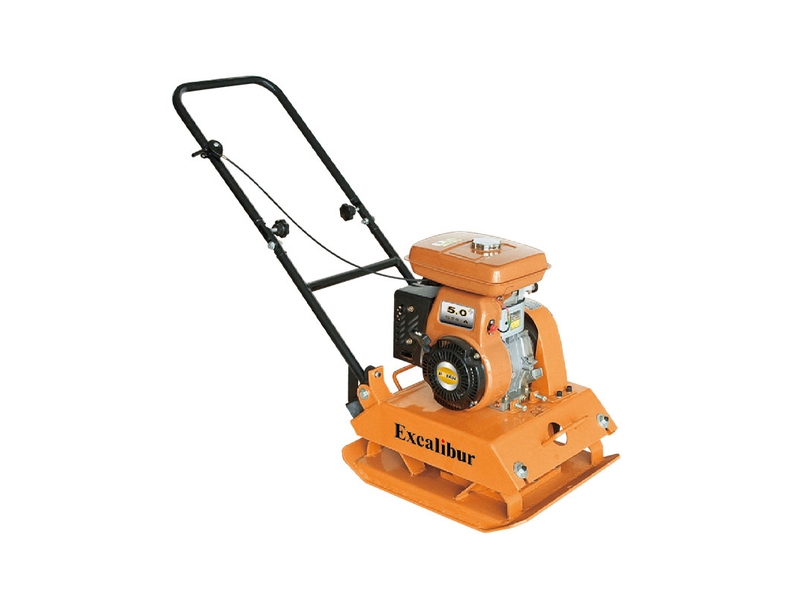
Your plate compactor shortlist should match that workload. Paving bases, granular trench backfill and asphalt repairs do not automatically call for an identical machine or accessory package. Forward travel may suit an open working area, while restricted turning space can make reverse travel particularly useful.
- Record the material and the project’s acceptance requirements.
- Check access width, obstacles and available loading equipment.
- Identify any required paving protection pad or water system.
- Ask how the selected machine will be transported between sites.
- Compare complete working packages, including essential accessories.
For mixed workloads, owning one frequently used machine and renting specialist equipment can be more economical than buying a larger machine for every possible future contract.
Three Calendars Determine The Rental Bill
The first calendar contains productive days: the dates when someone actually operates the machine. The second contains billed days under the rental agreement. The third contains the collection and return trips. These calendars rarely match perfectly.
Suppose a patio requires compaction on Monday and Thursday. Keeping the rental between those operations may create four charged days. Returning it after Monday avoids idle rental but adds another collection cycle. Neither option is automatically cheaper. The answer depends on the supplier’s weekly rate, distance from the depot and the value of the employee’s time.
Ask for written details of weekend charging, minimum periods, damage waivers, fuel arrangements and late-return cutoffs. A headline day rate cannot answer those questions. Also establish whether the supplier counts a working day by calendar date or by a defined number of operating hours.
Build An Ownership Budget That Includes Resale
Purchase price is a cash outflow, not the complete annual cost of ownership. A machine normally retains some value when sold, and that expected resale value should be spread across the planned holding period. Use a conservative resale estimate supported by local used-equipment listings or a dealer’s written indication.
A simple planning formula is:
Annual ownership cost = (purchase price minus expected resale value) ÷ years held + annual fixed expenses.
Annual fixed expenses may include secure storage, insurance, scheduled servicing and a financing or capital allowance. Include the costs that genuinely apply to your business. If a finance model already counts interest, do not add a second full interest allowance under another name.
| Budget item | Illustrative amount | How it is treated |
| Delivered machine and accessories | USD 2,400 | Initial purchase |
| Expected resale after four years | USD 600 | Deducted from purchase cost |
| Annual value loss | USD 450 | (2,400 − 600) ÷ 4 |
| Storage and insurance allocation | USD 180 per year | Fixed expense |
| Scheduled service allowance | USD 120 per year | Fixed expense |
| Capital allowance | USD 150 per year | Fixed expense |
| Total annual ownership cost | USD 900 | Before daily operating costs |
These amounts are invented planning inputs, not Excalibur prices, rental quotations or promises of resale value. Replace every line with figures for your location, currency, tax treatment and chosen machine.
Calculate The Break-Even Point
Let D represent productive operating days per year. For an initial comparison, assume each productive day creates one billed rental day. Let N represent the number of separate rental bookings. Under those assumptions:
Rental cost = D × daily rental rate + N × cost per collection-and-return cycle.
Ownership cost = annual fixed ownership cost + D × ownership operating cost.
Operating cost must be defined consistently. Fuel and the operator’s normal wages may apply equally to either option. Omit an expense only after confirming that its amount is identical under rental and ownership. Keep extra owner-paid wear, repair and servicing costs in the ownership side.
For the example below, use a USD 75 daily rental rate, USD 50 per collection-and-return cycle, five productive days per booking, USD 900 annual ownership cost and USD 15 per productive day for owner-paid variable costs. Common site fuel, ordinary operating labour and identical site transport are excluded from both options.
| Productive days per year | Rental bookings | Annual rental cost | Annual ownership cost | Lower-cost option |
| 5 | 1 | USD 425 | USD 975 | Rent by USD 550 |
| 10 | 2 | USD 850 | USD 1,050 | Rent by USD 200 |
| 15 | 3 | USD 1,275 | USD 1,125 | Buy by USD 150 |
| 25 | 5 | USD 2,125 | USD 1,275 | Buy by USD 850 |
| 40 | 8 | USD 3,400 | USD 1,500 | Buy by USD 1,900 |
With an average of five working days per booking, rental costs USD 85 per productive day. The owner’s variable cost is USD 15, leaving a USD 70 daily difference to recover the USD 900 fixed annual cost. Dividing 900 by 70 gives approximately 12.9 productive days. Actual bookings are indivisible, so the practical result should be recalculated using the real schedule.
Test How Easily The Answer Changes
A break-even point is only as reliable as its inputs. A weekly rental discount, fewer collection trips or a higher repair allowance can move the result substantially. Run at least a low-use, expected-use and high-use version before committing cash.
If the effective rental cost falls from USD 85 to USD 60 per working day, the same ownership model breaks even at 900 ÷ (60 − 15), or 20 days. If annual ownership overhead rises to USD 1,300 instead, while rental remains USD 85, the threshold becomes approximately 18.6 days.
These calculations reveal which assumptions deserve investigation. When transport is driving the result, obtain a delivered rental quotation. When maintenance dominates, ask for a parts list and service schedule. When utilisation is uncertain, base the purchase on confirmed work and treat unawarded projects separately.
Do Not Confuse Annual Economics With Cash Payback
The annual model distributes equipment value across several years. Your bank balance does not. Buying the example machine still requires USD 2,400 at the start, even if its annual economic cost looks attractive.
At 25 productive days, the example rental bill is USD 2,125. If the owner pays USD 375 in variable costs plus USD 300 in storage, insurance and scheduled servicing, cash operating expenditure is USD 675. That creates USD 1,450 of annual cash savings before financing, tax and major repairs. A simplified payback is 2,400 ÷ 1,450, approximately 1.7 years.
This payback calculation excludes the earlier non-cash value-loss allocation and capital allowance. It is a separate view, not an extra saving to add to the first table. Businesses with expensive borrowing or limited working capital should compare actual loan payments and cash reserves as well.
Put A Price On Availability Without Exaggerating It
Ownership can help when jobs change at short notice. The machine can remain available for an extra pass, an unexpected repair or a second work area. However, availability has value only when it changes a real project outcome.
For example, a two-person crew waiting 90 minutes uses three person-hours. At an assumed loaded labour cost of USD 30 per person-hour, that delay costs USD 90. Record such incidents rather than attaching an unsupported productivity percentage to every owned machine.
Keep the estimate symmetrical. An owned machine can also fail. A rental supplier may offer a replacement, whereas an owner may need emergency hire while waiting for a belt, clutch or exciter component. Include realistic recovery arrangements on both sides.
Check The Equipment Package Behind The Quotation
Two machines with similar engine output can create very different ownership experiences. Baseplate dimensions affect access and handling. Operating weight affects transport. Local parts availability affects repair time. A protective pad, transport wheel kit or water tank may change whether the supplied machine is ready for the intended work.
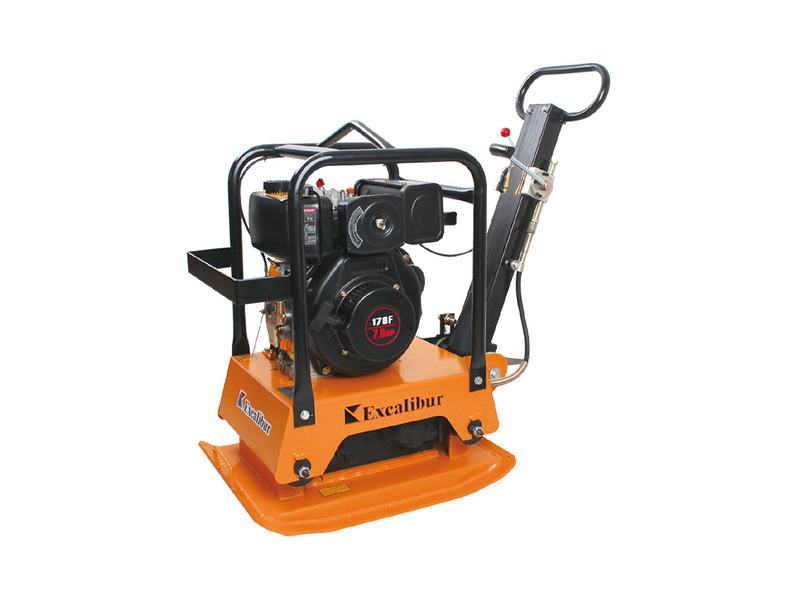
If your workload needs reversible plate compactors, price that class consistently against comparable rentals. Do not compare buying a light forward plate with hiring a heavier reversible unit and describe the result as an equivalent saving.
- Request the operating weight with the proposed engine and accessories.
- Confirm the baseplate dimensions and site-access clearance.
- Obtain the recommended service intervals and lubricant specifications.
- Check replacement-part prices and normal delivery times.
- Verify lifting and securing provisions against your transport plan.
- Obtain written warranty exclusions together with the name of the service provider.
A lower purchase figure can be useful, but only after these details are aligned. Freight, required accessories and commissioning costs belong in the purchase budget from the beginning.
Use A Decision Rule Your Team Can Repeat
Renting often fits occasional work, uncertain project pipelines and contracts needing a machine outside your normal equipment range. Buying becomes more persuasive when similar jobs recur, productive days exceed the tested threshold and the company has a practical storage and service arrangement.
A mixed strategy also deserves a line in the budget. Own the machine used most weeks, then rent a heavier, narrower or otherwise specialised unit when a contract requires it. This keeps capital tied to proven demand rather than hypothetical versatility.
- List confirmed projects and expected productive days.
- Convert the programme into real rental bookings and billed periods.
- Get comparable delivered purchase and rental quotations.
- Calculate annual cost, cash payback and a repair contingency.
- Repeat the comparison with lower utilisation and better rental discounts.
- Choose only after checking transport, service support and job suitability.
Review The Decision After One Working Season
Keep a short machine log from the first day. Record the job number, hours used, transport trips, service expenditure and any time when another crew needed the same machine. This separates a good purchase from a machine that merely looks busy because it travels frequently.
For shared equipment, nominate one person to check condition between crews. Otherwise, missing accessories and delayed servicing can become an invisible cost charged to whichever project receives the machine next. Use a brief condition checklist that the receiving operator can complete before unloading.
At year end, compare actual productive days with the figure used to approve the purchase. If utilisation is lower, investigate whether the problem was weak demand, scheduling or poor equipment fit. Each explanation leads to a different response: retain the machine, share it differently, sell it or change the specification for the next purchase.
Rental records deserve the same review. Several short bookings may reveal a repeat workload that was not obvious at the start of the year. Conversely, a single unusual contract should not become the permanent basis for a larger equipment fleet.
Prepare A Quotation Request That Produces Comparable Answers
Give each supplier the same description: material, working area, access width, required accessories, typical daily operating hours and delivery destination. Include whether the machine will serve one crew or move between several crews. Those details make the quotation more useful than asking only for the cheapest compactor.
To discuss an Excalibur machine, send that workload summary through the equipment enquiry page. Ask for the complete delivered package and the consumables needed during your planned ownership period. Keep the response alongside your rental quotation and the cost worksheet, so the purchasing decision can be checked against actual usage after the first season.