A copper-wound alternator tells you which conductor material is used in the specified windings. It is a useful construction detail, but it does not establish the diesel generator’s continuous output, voltage quality, thermal margin, or service life on its own. Buyers should verify the winding claim and then examine the complete alternator design, engine match, control system, and test evidence.
The practical purchasing question is therefore broader than whether the alternator contains copper. You need to know what equipment the supplier will deliver, under which conditions it can supply the required load, and what evidence supports those statements. A material description becomes valuable when it is connected to a traceable model and a meaningful performance specification.
Clarify What The Copper Claim Covers
Ask the supplier to define the wording used in the quotation. All-copper alternator, copper-wound motor, and copper wire may be used loosely in sales material. The written specification should identify the relevant winding assemblies and the alternator model.
For an alternator with wound stator and rotor assemblies, clarify whether the claim applies to both. Other excitation arrangements have different components, so do not assume that every generator shares the same construction. Request a drawing, parts description, or manufacturer declaration appropriate to the actual design.
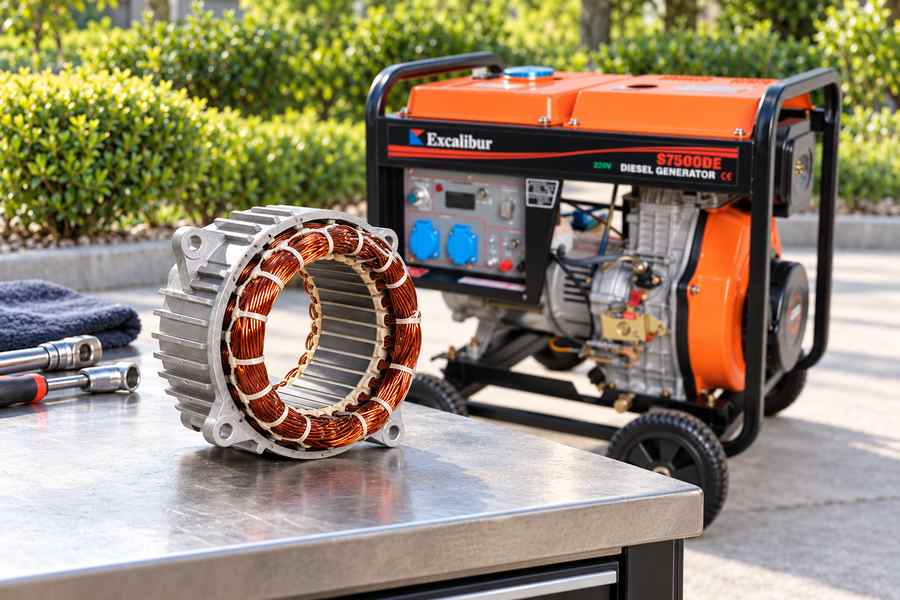
Also distinguish solid copper conductors from copper-clad alternatives if the material is a purchase requirement. A surface color in a photograph cannot establish the full conductor composition. Avoid treating a polished sample wire or a generic workshop image as conclusive evidence for every unit in a shipment.
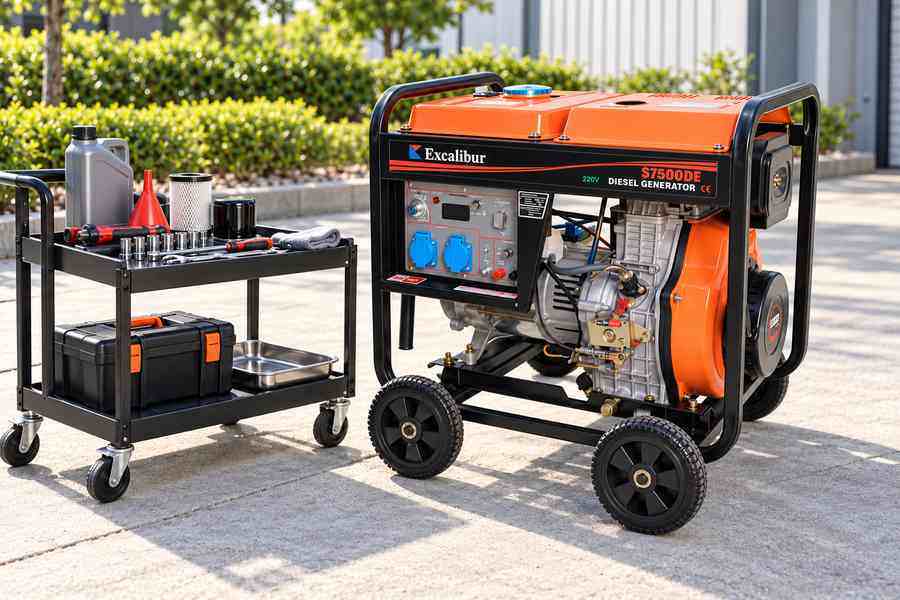
Excalibur describes copper-wire alternators within its open-frame diesel generator offering. Confirm the exact model and scope of that statement in the order documents. The material declaration should remain tied to the configuration that will actually be manufactured and delivered.
Understand The Benefit Without Overstating It
Copper is a good electrical conductor, and winding resistance contributes to heat generation while current flows. The designer must also choose the wire dimensions and winding layout, then produce reliable joints that remain suitable at operating temperature. Two machines described as copper-wound can therefore have quite different electrical and thermal behavior.
For a simple resistance, the heating loss is expressed as P = I²R, where P is power in watts, I is current in amperes, and R is resistance in ohms. This describes one loss mechanism rather than the efficiency of the complete generating set. A full assessment also accounts for the engine and the alternator’s other mechanical and electrical losses.
For example, a simplified circuit carrying 10 amperes through a resistance of 0.5 ohm would dissipate 50 watts in that resistance. This is an explanatory calculation, not a specification for an actual alternator winding. Real-machine comparisons require the appropriate circuit, temperature, phase arrangement, and measured data.
Do not infer that a copper-wound generator always consumes less fuel than another generator of similar advertised size. Fuel use also depends on the engine, operating point, load characteristics, and other losses. Request comparable test results if fuel consumption is an important selection criterion.
Separate Winding Material From Rated Output
The generator’s useful output is limited by the complete system. The engine must provide the required mechanical power, the alternator must tolerate the electrical and thermal duty, and the controls and protection must suit the load. A conductor description cannot increase the approved rating of that system.
Check whether the quotation states rated output, maximum output, or a duty rating with defined operating conditions. A short-duration maximum figure cannot be used as the basis for a continuous-duty purchase without the manufacturer’s supporting rating. Ask which figure applies to the hours and load pattern expected at your site.
Confirm whether the figure is in kilowatts or kilovolt-amperes, and identify the associated power factor. Also verify voltage, frequency, phase configuration, and any limits on individual sockets or phases. An alternator can have copper windings while still being unsuitable for the intended electrical arrangement.
Site temperature and elevation can affect the available output. Obtain the manufacturer’s applicable conditions and any required derating information. Do not assume that a rating measured under one set of conditions applies without adjustment at every installation.
Examine Insulation And Temperature Rise
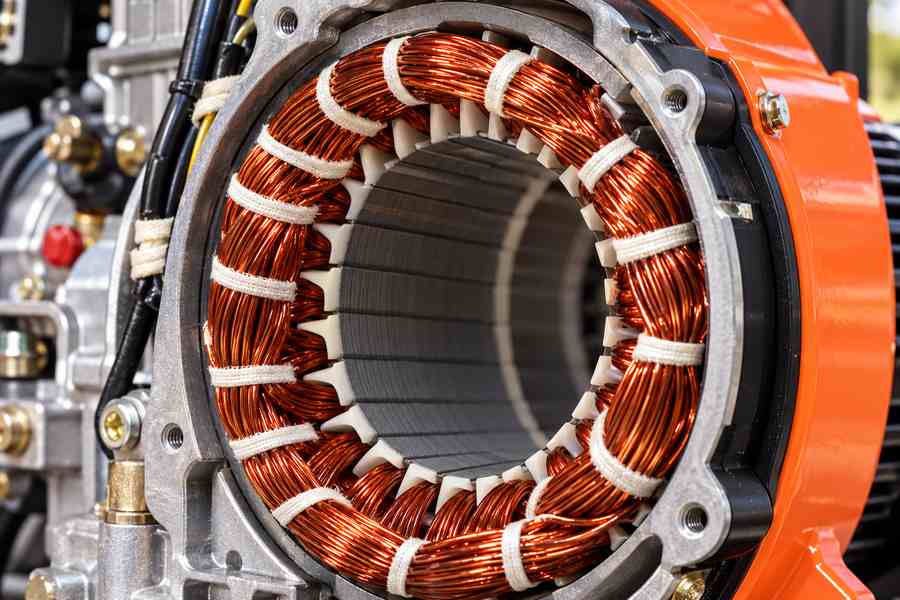
Conductors must be insulated from other conductors and from the relevant machine structure. Ask for the insulation system specification and the thermal conditions associated with the rating. Insulation class and measured temperature rise describe different aspects of the design and should be reported separately.
A higher insulation class does not, by itself, prove a cooler-running machine. It describes a thermal capability of the insulation system, while temperature rise concerns how hot the equipment becomes above the relevant reference conditions during a test. Ask the supplier to show how the measured rise and stated ambient condition fit within the approved thermal design.
Request the test conditions when the supplier provides temperature data. Load, ambient temperature, operating duration, stabilization criteria, and measurement method affect interpretation. A single temperature reading taken shortly after startup cannot establish steady-duty thermal performance.
Cooling passages and airflow are part of this assessment. Blocked vents, contamination, high ambient temperature, or poor installation can overheat an otherwise correctly specified alternator. Copper windings do not remove the need for clean cooling paths and operation within the approved conditions.
Review How The Winding Assembly Is Built
A conductor declaration leaves several assembly questions unanswered. Winding placement, connection workmanship, insulation integrity, and mechanical support influence how the assembly responds to heat and vibration. Buyers rarely see all of these features in a finished generator, which makes documentation and factory process control useful.
Ask how the manufacturer controls winding identity and checks completed assemblies. The answer should describe the actual quality process for the supplied alternator, rather than a general claim that every product is high quality. Relevant records may include model traceability, inspection stages, and electrical test results.
Protective impregnation or coating can be relevant, but a coating name alone is not a complete environmental qualification. Clarify the manufacturer’s intended operating environment and any limitations involving humidity, dust, salt, or corrosive contamination. Do not equate an exposed open-frame alternator with a sealed electrical enclosure.
For a bulk order, establish how changes in winding supplier, alternator model, or manufacturing configuration will be handled. Identify the accepted alternator on the sample record and compare shipment documentation against that identity. Require review of material substitutions when they affect an agreed purchase requirement.
Evaluate Voltage And Frequency Performance Separately
Voltage regulation depends on more than the conductor. The excitation arrangement, regulator, sensing system, load behavior, and alternator design all play a role. Ask for performance limits and test conditions rather than assuming that copper winding automatically means stable voltage.
Frequency behavior also depends on engine speed control and the generator’s response to changing load. A suitable alternator cannot compensate for every limitation in the engine or governor. Review the performance of the assembled generating set.
If the load includes electronic equipment, discuss waveform quality and the relevant load conditions. A no-load waveform measurement may not describe behavior with nonlinear loads connected. Specify what the generator must power and ask for evidence that addresses that use.
Motor starting creates another separate question. Starting current and the permitted voltage and frequency dip can determine whether a generator is suitable even when the running load is below its rating. Obtain a model-specific assessment rather than choosing solely from a continuous-power number.
Choose Tests That Answer The Purchase Question
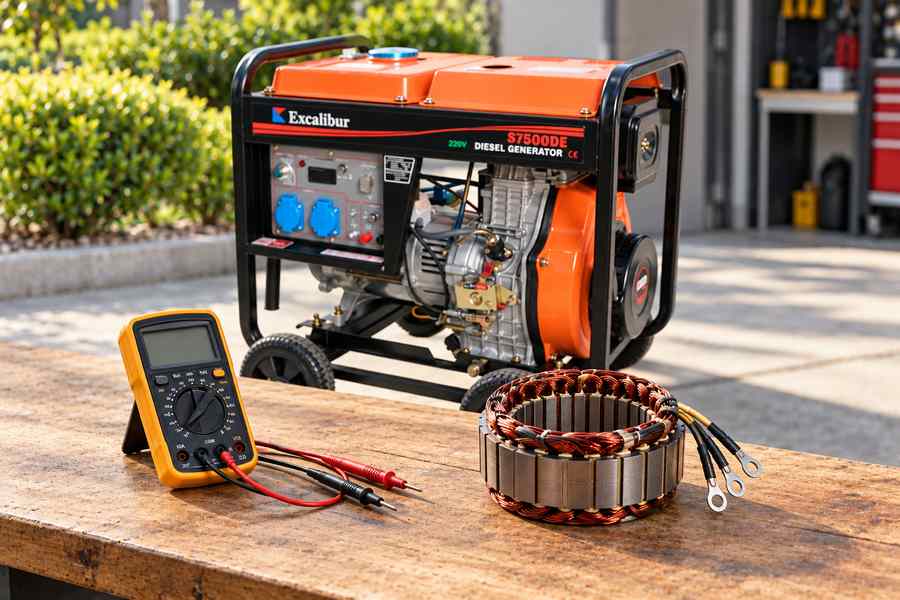
Begin with a clear acceptance specification. List the electrical output, duty, environment, load characteristics, and construction requirements that matter to the project. Then ask the supplier which factory checks demonstrate compliance with each item.
Specify who is responsible for the electrical acceptance tests and require a technician competent in the particular alternator and test equipment. Some test methods can damage connected electronic components if applied incorrectly. Buyers should request documented results rather than improvising tests on a new machine.
A controlled load test can provide evidence about the complete generator, provided its scope is defined. Record the load, duration, ambient conditions, voltage, frequency, and any other agreed measurements. A brief video showing a lamp illuminated does not demonstrate the full rated duty.
| Claim | Useful supporting evidence | What it does not establish alone |
| Copper windings | Model-specific construction declaration and traceability | Continuous output or waveform quality |
| Suitable thermal design | Insulation specification and relevant temperature-rise results | Performance outside approved ambient conditions |
| Stable electrical output | Defined steady-state and load-change measurements | Compatibility with every possible connected load |
| Consistent production | Agreed sample, inspection records, and change control | Freedom from all future maintenance needs |
Avoid Unreliable Material Checks
Do not open protective covers or disturb windings simply to inspect their color. The generator may contain hazardous electrical connections and rotating components, and unnecessary disassembly can damage insulation. Arrange any internal inspection through the manufacturer or a qualified service provider.
A photograph can support identification, but lighting, varnish, surface treatment, and image quality make it a weak basis for material verification. A magnet test is also not a complete conductor-composition test. Treat such informal checks as questions to investigate, not as definitive acceptance evidence.
When conductor composition is commercially critical, agree an appropriate verification method before manufacture or delivery. Specify who performs it, what sample or assembly it covers, and how results are linked to the shipment. Avoid destructive testing unless it is explicitly agreed and properly managed.
Be equally cautious with weight comparisons. A heavier alternator may contain more material, but housing, rotor, core, frame, and accessories also contribute to mass. Weight cannot tell you the conductor material or prove that the generator meets its advertised output.
Review Serviceability And Protection
Ask how the alternator is serviced and which replacement parts are available. Bearings, regulators, connection components, and other items can matter to downtime even when the windings remain sound. Confirm that parts information matches the supplied model and electrical configuration.
Review the protective functions of the generator set. Overload, short-circuit, and relevant engine protection should be described accurately for the selected configuration. A material upgrade does not replace a correctly designed and maintained protection system.
Document inspection and maintenance requirements for the operating environment. Dust accumulation, moisture exposure, loose connections, and obstructed airflow can undermine performance. Include the alternator’s specified servicing in the ownership schedule; the conductor material does not eliminate these operating concerns.
The broader diesel generator selection options should be reviewed as a complete package. Match the alternator to the engine, controls, starting arrangement, cooling system, and intended loads. This produces a more useful comparison than ranking quotations by one material claim.
Request A Complete Alternator Evidence Pack
Before approving the order, ask for the alternator identification, winding-material declaration, rated electrical data, insulation specification, applicable environmental limits, and agreed test records. Include the generator model and configuration on the same record. Keep any unresolved exceptions visible in the purchase documents.
- Define exactly which windings the copper claim covers.
- Confirm rated output and duty under the relevant operating conditions.
- Review thermal, voltage, frequency, and load-response evidence separately.
- Agree production traceability and approval of substitutions.
- Obtain service information and the appropriate inspection records.
Copper windings are a useful specification when they are accurately defined and verified. The purchasing decision becomes stronger when that detail sits beside evidence of how the complete diesel generator performs, how consistently it is built, and how it will be maintained throughout its working life.