A vibrating screed is an important concrete finishing machine that uses vibration to level, compact, and smooth wet concrete. It improves work efficiency, reduces labor effort, enhances surface flatness, and helps produce stronger concrete slabs.
From small sidewalks to large industrial floors, different types of vibrating screeds can meet different construction needs. By choosing the right model, using proper operation methods, and maintaining the machine regularly, contractors can achieve better concrete finishing results and improve overall project quality.
What Is a Vibrating Screed?
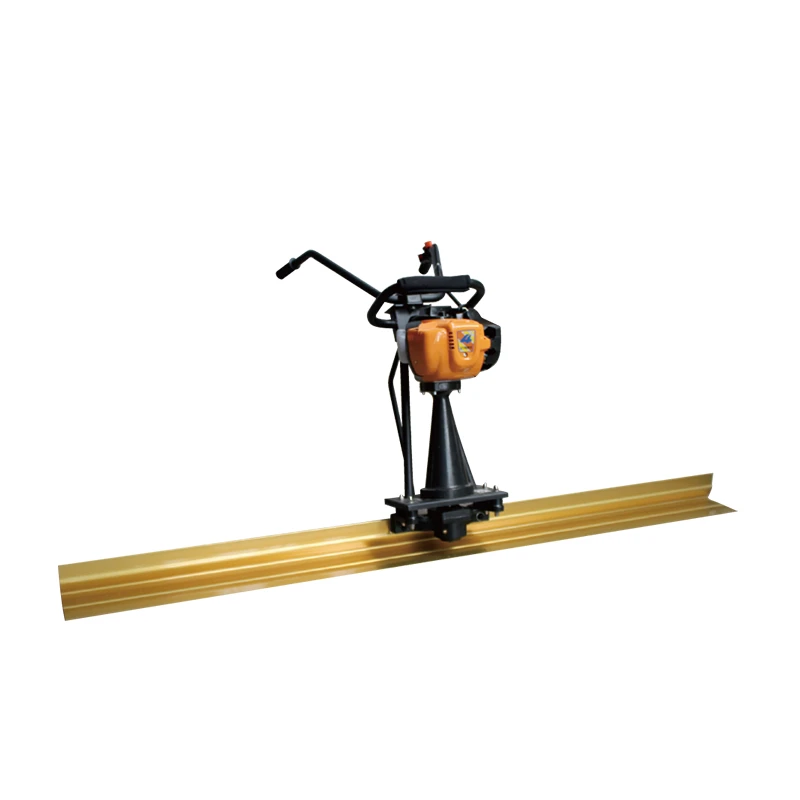
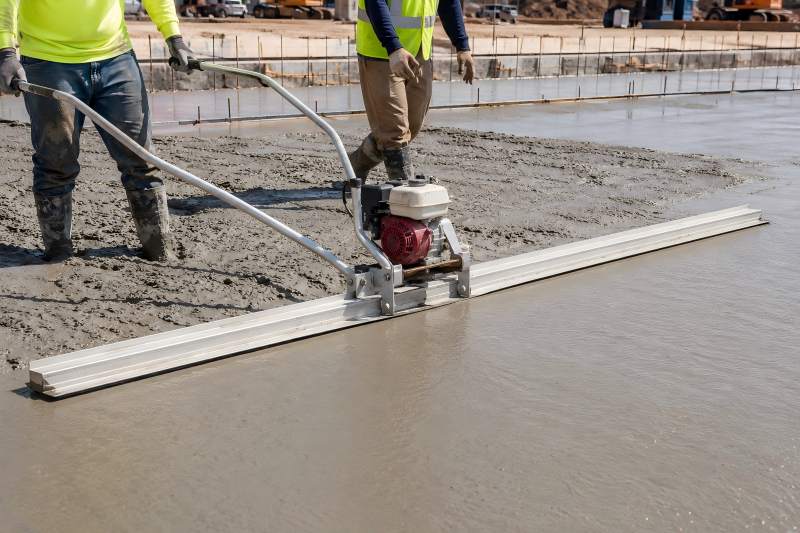
A vibrating screed levels fresh concrete through controlled vibration. It usually consists of a long screed blade, a vibrating motor or engine, handles, and a control system. When the machine runs, the blade vibrates rapidly while moving across the concrete surface. This vibration helps the concrete settle, removes air pockets, and creates a flatter surface.
The screed blade can be made of aluminum, steel, or alloy materials. Its length can vary depending on the jobsite requirements. Small models may be used for sidewalks and residential floors, while larger machines are suitable for roads, bridges, and industrial floors.
Main Parts of a Vibrating Screed
| Part | Function |
| Screed Blade | Smooths and levels concrete |
| Vibrating Motor or Engine | Generates vibration for compaction and leveling |
| Handle | Guides machine movement |
| Frame | Supports the motor and blade |
| Control Switch | Starts, stops, or adjusts machine operation |
| Power Source | Multiple power options available |
Each part works together to make concrete finishing faster and more uniform.
How Does a Vibrating Screed Work?
A vibrating screed works by transferring high-frequency vibration from the motor to the screed blade. When the blade touches the wet concrete, the vibration helps the concrete flow and settle evenly.
The working process is simple:
First, concrete is poured onto the working area.
Second, workers roughly spread the concrete to the required level.
Third, the vibrating screed is placed on the surface or along guide rails.
Fourth, the machine is pulled or pushed across the concrete.
As the blade vibrates, it cuts off excess concrete, fills low spots, and levels the surface. At the same time, vibration helps release trapped air and improves concrete density.
This process creates a smoother and stronger surface compared with manual screeding alone.
Types of Vibrating Screeds
There are several common types of vibrating screeds. Each type suits specific construction requirements.
Handheld Vibrating Screed
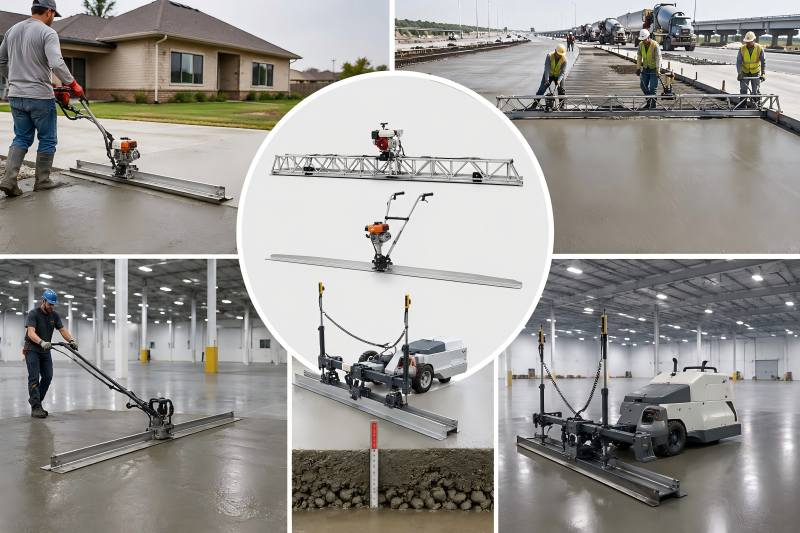
A handheld vibrating screed is lightweight and easy to operate. It is often used for small and medium concrete projects such as sidewalks, patios, small floors, and driveways.
It is usually operated by one or two workers and is suitable for jobs where flexibility is important.
Truss Screed
A truss screed is a larger machine designed for wide concrete slabs. It uses a truss-style frame and can cover long spans. This type is widely used in roads, bridges, airport pavements, and large industrial floors.
Truss screeds provide high efficiency and good flatness for large-scale projects.
Roller Screed
A roller screed uses a rotating tube to spread and level concrete. It is commonly used for slopes, drainage channels, sidewalks, and special concrete surfaces. It is easy to control and useful for projects where traditional blade screeds may not be suitable.
Laser Screed
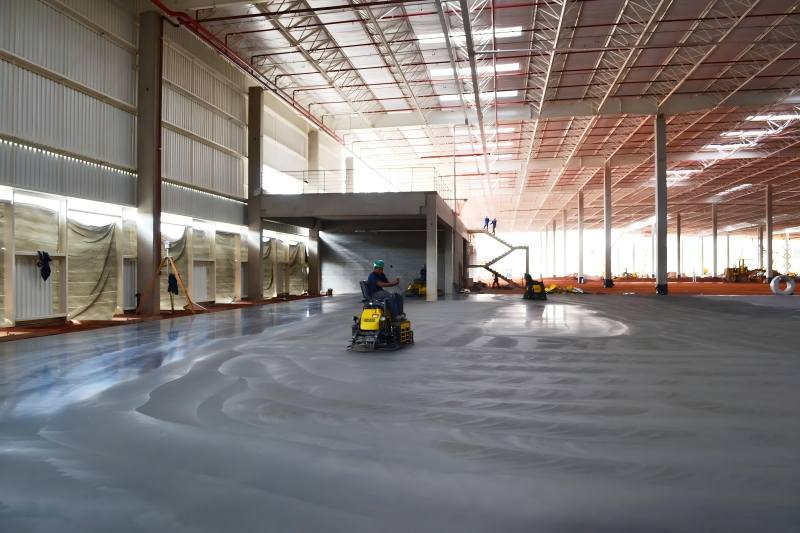
A laser screed is an advanced concrete leveling machine. It uses laser control technology to achieve very accurate surface levels. It is ideal for warehouses, logistics hubs, factories, and precision concrete floors.
Although laser screeds are more expensive, they provide excellent precision and productivity.
Benefits of Using a Vibrating Screed
A vibrating screed offers many advantages in concrete construction.
Better Surface Flatness
The vibration helps distribute concrete evenly, reducing high and low spots. This improves the overall flatness of the finished surface.
Higher Work Efficiency
Compared with manual screeding, a vibrating screed can cover a larger area in less time. This helps reduce labor costs and shorten construction schedules.
Improved Concrete Compaction
The vibration helps remove air bubbles and makes the concrete denser. Improved compaction helps create a stronger, more durable concrete slab.
Reduced Labor Intensity
Manual concrete leveling requires heavy physical effort. A vibrating screed makes the process easier and reduces worker fatigue.
More Consistent Quality
Because the machine provides continuous vibration and even blade movement, the finished surface is more consistent than manual work.
Common Applications of Vibrating Screeds
Vibrating screeds are used in many construction fields, including:
| Application | Typical Use |
| Concrete Floors | Warehouses, factories, workshops |
| Road Construction | Pavements, small roads, repair areas |
| Bridge Decks | Leveling bridge concrete surfaces |
| Sidewalks | Residential and municipal walkways |
| Driveways | Home and commercial driveway paving |
| Industrial Sites | Heavy-duty concrete slabs |
| Parking Areas | Outdoor and indoor parking surfaces |
Because of their efficiency and simple operation, vibrating screeds are widely used by contractors, builders, and concrete finishing teams.
Vibrating Screed vs Manual Screeding
| Item | Vibrating Screed | Manual Screeding |
| Efficiency | High | Low to medium |
| Labor Requirement | Lower | Higher |
| Surface Quality | More consistent | Depends heavily on worker skill |
| Compaction Effect | Better | Limited |
| Suitable Area | Small to large projects | Mainly small areas |
| Cost | Higher equipment cost | Lower equipment cost |
Manual screeding may still be suitable for very small projects. However, for medium and large concrete areas, a vibrating screed usually provides better speed, quality, and long-term value.
How to Choose the Right Vibrating Screed
When choosing a vibrating screed, several factors should be considered.
Project Size
For small residential projects, a handheld vibrating screed may be enough. For large floors, roads, or bridges, a truss screed or laser screed may be more suitable.
Concrete Thickness
Thicker concrete may require stronger vibration and a more powerful machine. The machine should provide enough force to level and compact the concrete properly.
Power Source
Gasoline vibrating screeds are common for outdoor projects because they do not require an electrical supply. Electric models are suitable for indoor work where low noise and no exhaust emissions are important. Battery-powered models are also becoming popular for flexible jobsite use.
Blade Length
Choose blade length based on the working width. A longer blade can cover more area but may be harder to control. A shorter blade is easier to handle in narrow or complex spaces.
Surface Flatness Requirement
If the project requires high flatness, such as a warehouse floor for forklifts, a laser screed may be the best choice.
Operation Tips for Better Results
To get the best performance from a vibrating screed, operators should follow proper working methods.
Before starting, make sure the concrete is evenly poured and roughly spread. Check that the screed blade is clean and straight. Start the machine before placing full pressure on the concrete surface.
During operation, move the screed at a steady speed. Moving too fast may leave uneven areas, while moving too slowly may cause excessive vibration or surface defects. Avoid over-vibration, which can cause aggregate separation and surface bleeding.
After use, clean the blade and machine immediately before the concrete hardens.
Maintenance of a Vibrating Screed
Regular maintenance helps extend machine life and keep performance stable.
Basic maintenance includes cleaning the screed blade after every use, checking bolts and fasteners, inspecting the engine or motor, lubricating moving parts when required, and storing the machine in a dry place.
For gasoline models, regularly inspect fuel, oil, air filters, and spark plugs. For electric models, cables and switches should be inspected for damage.
Good maintenance reduces downtime and helps ensure stable concrete finishing quality.