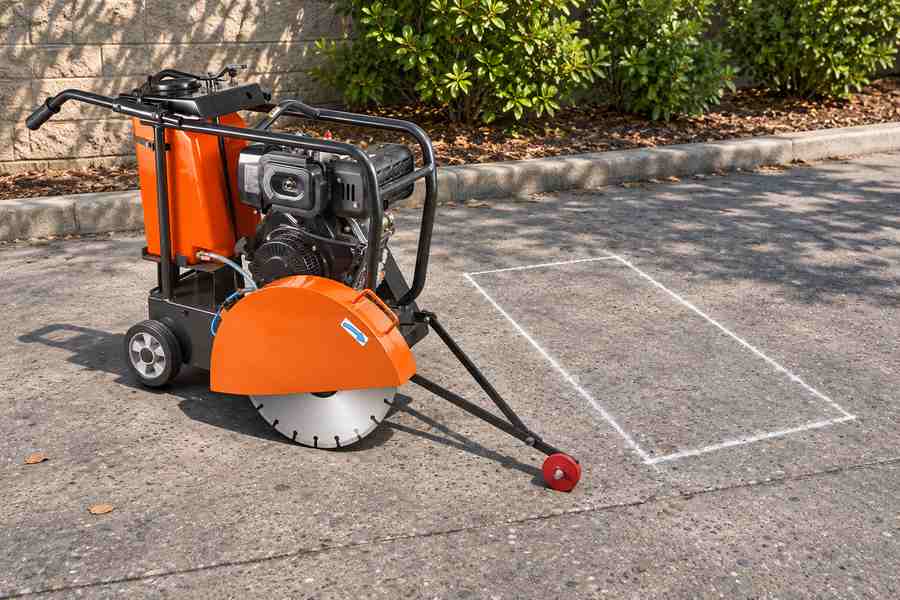
A round concrete saw blade often extends beyond the marked corners of a rectangular patch because its cutting edge follows a circular path rather than a straight line. To achieve the required cutting depth at a corner, the blade may need to travel beyond the surface intersection.
Understanding this geometry helps contractors plan saw cuts, protect surrounding concrete, and avoid unnecessary damage.
Why Does a Circular Saw Blade Overcut Corners?
A circular concrete saw blade removes material through continuous rotation. Unlike a square cutting tool, it cannot produce two perpendicular cuts that meet precisely at a corner without considering the blade’s radius and cutting depth. When a contractor cuts along one side of a rectangular concrete patch, the blade gradually enters the concrete.
As the saw approaches the corner, the upper portion of the blade reaches farther along the cutting direction than the deepest part of the blade. If the operator stops exactly when the visible cutting line reaches the corner, the bottom portion of the cut may remain incomplete. To achieve the required depth, the blade may need to continue moving beyond the corner.
This creates an additional saw mark known as an overcut. Several factors influence its size: Blade diameter: Larger blades have a greater radius and generally require more horizontal clearance to achieve the same cutting depth. Cutting depth: Deeper cuts increase the horizontal distance between the blade’s surface intersection and its deepest cutting point.
Saw positioning: Blade alignment and travel direction affect where the overcut appears. Patch geometry: Small rectangular patches and tightly spaced boundaries leave less room for additional cutting.
How Does Blade Geometry Create an Overcut?
Understanding the relationship between blade radius and cutting depth helps explain why overcuts occur. Side View:
Understanding the Circular Cutting Path
Imagine a circular blade positioned above the concrete surface. As the blade rotates and penetrates the slab, only part of its circular edge enters the concrete. The blade’s cutting edge does not enter the material vertically at every point.
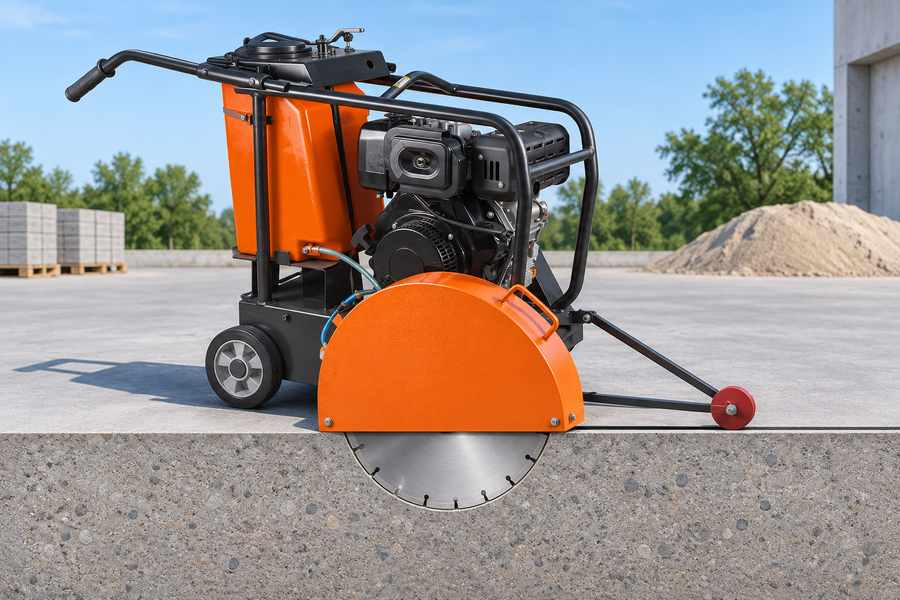
Instead, its curved shape creates a horizontal reach beyond the blade’s centerline. As the required cutting depth increases, the blade must travel farther horizontally to complete the cut at the intended depth. For example, a contractor using a large-diameter blade for a relatively deep cut may notice that the blade extends considerably beyond the marked corner.
This is a geometric consequence of the circular cutting path rather than necessarily an operator error. Plan View:
Why the Corner Extends Beyond the Marked Boundary
From above, a rectangular concrete patch has two straight cutting lines meeting at 90 degrees. However, the circular blade must travel beyond their visible intersection to complete the required depth at the corner. The result is a short extension beyond the marked boundary.
If the operator repeats this process on adjacent sides, the two extensions can create an oversized or crossed saw-cut pattern. A kerf beyond the patch boundary cuts into the slab that will stay in service.
When Is an Overcut Acceptable in Concrete Patching?
Not every overcut is automatically a construction defect. Some repair procedures deliberately allow saw cuts to extend beyond the marked patch boundary to achieve the specified cutting depth throughout the repair perimeter. For example, certain highway partial-depth repair procedures allow controlled extensions beyond patch boundaries.
However, these dimensions are specific to the approved repair detail and should not be treated as universal allowances. Some repair details limit how the crew may form a corner. Where the layout permits, the U.S.
Bureau of Reclamation advises crews to round the corners of the repair in its Guide to Concrete Repair. Because a circular saw cannot directly produce rounded corners, operators can stop the cuts short of their intersections and finish the corners using controlled chipping or short core holes.
| Situation | Recommended Approach |
| Approved highway patch detail | Follow the specified overrun dimensions |
| Small rectangular concrete patch | Plan blade travel before cutting |
| Repair near existing joints | Protect adjacent joints and surrounding concrete |
| Structural or reinforced concrete | Verify reinforcement locations and approved cutting limits |
| Corners requiring protection | Stop cuts short and use an approved corner-finishing method |
The key is to distinguish between an intentional overcut permitted by the repair design and an uncontrolled extension caused by poor cutting practice.
What Problems Can Excessive Corner Overcutting Cause?
Uncontrolled overcutting can affect both the structural condition and long-term durability of a concrete repair. Stress concentration An extended saw kerf creates a notch beyond the intended repair boundary. This can concentrate stresses and provide a potential starting point for cracking.
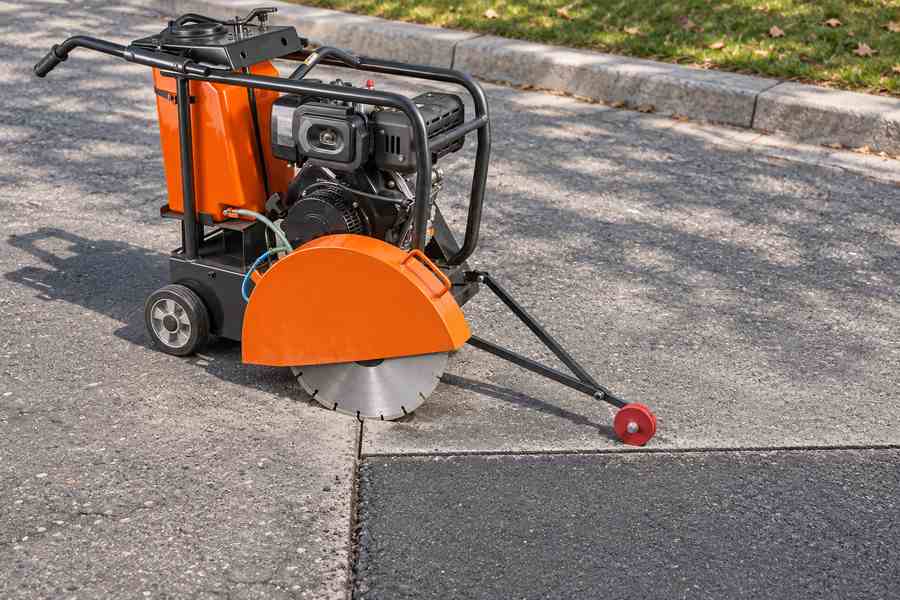
Damage to surrounding concrete If the blade extends too far, it may cut into concrete that should remain undisturbed. This increases the repair area and may require additional removal work. Water and debris accumulation Unnecessary saw grooves can collect water, dirt, and other contaminants.
These conditions may contribute to further deterioration. Difficult repair finishing Overextended corners and intersecting cuts can make it harder to achieve a clean repair perimeter and properly place repair material. For these reasons, controlling corner geometry is an important part of concrete patch preparation.
How Can Contractors Reduce Unnecessary Overcuts?
The objective is not always to eliminate every overcut. Instead, contractors should control the cutting path according to the repair design. The following practices can help: Calculate the expected blade reach: Consider blade diameter and required cutting depth before marking the patch.
Select an appropriate blade size: Smaller blades can reduce corner runout for shallow repair work. Plan the cutting sequence: Determine where each cut should start and stop before operating the saw. Use alternative corner-finishing methods: Consider short core holes or controlled chipping when the design requires protected corners.
Avoid crossing saw cuts: Check intersection points to prevent unnecessary extensions. Follow the repair specification: Never assume that an overcut is acceptable without checking the approved detail. For projects involving different slab thicknesses and repair depths, selecting suitable equipment is equally important.
Compare the approved blade diameter and maximum cut depth for each Excalibur walk-behind saw under consideration. The SCT-3 walk-behind concrete saw is one example for contractors evaluating cutting equipment.
6. How Should Contractors Inspect Saw Cuts Before Concrete Removal?
After completing the perimeter cuts, inspect the repair area before removing the deteriorated concrete. A practical inspection checklist includes: Cut alignment: Confirm that the saw cuts follow the approved patch boundaries. Cut depth: Measure the depth at several locations, especially near corners.
Corner condition: Check for excessive extensions, crossed kerfs, and damaged edges. Vertical faces: Confirm that the perimeter provides the required removal profile. Adjacent concrete: Look for unintended cracks, spalling, or damage outside the repair area.
Surface cleanliness: Remove cutting slurry and debris before continuing with concrete removal. If an overcut extends beyond the specified boundary, assess the affected area before proceeding. Do not assume that filling the extra groove automatically restores the original concrete condition.
The removal method should also avoid damaging sound concrete beneath and around the repair perimeter. Conclusion Round saw blades overcut concrete patch corners because their circular cutting paths require additional travel to achieve the intended depth.
By understanding blade geometry, planning cut sequences, and protecting repair boundaries, contractors can minimize unnecessary overcuts and produce cleaner, more durable concrete repairs.