Generators lose power at high altitude because thinner air supplies less oxygen to the engine and can reduce the effectiveness of air cooling. The engine may therefore be unable to sustain the same electrical load it supports at a lower elevation. The amount of reduction depends on the engine, generator design, temperature, and manufacturer’s operating limits.
This explains why a portable generator can run normally at home yet struggle with the same appliance during a mountain trip. The appliance has not necessarily become more demanding. The generator may simply have less usable capacity in the new environment.
What Changes in the Air as Elevation Increases?
Air pressure and density generally decline as elevation increases. A cylinder drawing in a given volume of air then receives less air mass, including less oxygen, than it would under denser conditions. Less available oxygen limits how much fuel can be burned effectively during each cycle.
NASA’s explanation of air properties and altitude connects atmospheric pressure, temperature, and density. These physical properties matter to an engine even when its displacement and rotational speed remain unchanged. The engine’s intake volume alone does not establish the oxygen mass entering it.
Weather adds another variable. At the same pressure, warmer air is less dense than cooler air, so altitude and temperature should be considered together. Even without moving the generator, a rise in the temperature of its intake air changes the environment in which it must support the load.
Is There Less Oxygen in Each Cylinderful of Mountain Air?
At ordinary terrestrial operating elevations, the important issue is the amount of oxygen in a given intake volume, rather than a large change in air’s oxygen percentage. Think of the cylinder taking a smaller mass of the same general mixture. This distinction helps explain why adding more fuel alone cannot restore the missing output.
A generator also needs air around its engine and electrical components to remove heat. Lower air density can make that task more difficult. Installing a unit inside an improvised enclosure to protect it from mountain weather can introduce an additional cooling and exhaust problem.
Why Can a Carbureted Generator Run Rich in the Mountains?
A carburetor calibrated for lower elevation may supply more fuel than the available air can burn efficiently at altitude. Depending on the engine and conditions, the result can include reduced performance, rough running, harder starting, or fouling. These symptoms are possible effects, not a diagnosis of every engine that runs poorly.
An approved high-altitude carburetor adjustment changes fuel metering to suit the operating environment. It can improve the mixture and running quality, but it does not add oxygen to the intake. Better combustion control and recovery of the original sea-level power are different outcomes.
Use the engine manufacturer’s instructions for the exact configuration. Altitude thresholds and replacement jets vary, and a part that fits another engine is not automatically appropriate. When returning to lower ground, the high-altitude setting may also need to be reversed to avoid an unsuitable lean mixture.
Do Fuel Injection, Diesel Engines, or Inverters Remove the Effect?
Electronic fuel injection can adjust fueling when its sensors and control strategy account for changing air conditions. That helps manage mixture, but a naturally aspirated engine still has less air mass available at higher elevation. Electronic control cannot create the missing oxygen.
Diesel engines are also subject to air-supply and thermal limits. Turbocharging can compensate over part of an engine’s operating range, but the permitted altitude and load remain specific to the engine and complete generating set. Avoid treating all diesel machines as if they share one altitude capability.
An inverter controls the electrical conversion process; it does not remove the engine’s mechanical power limit. Excalibur’s inverter generator range illustrates that electrical architecture. A stable-looking output waveform does not mean unlimited capacity remains available as air density falls.
The same distinction applies to a diesel inverter generator: fuel type, engine breathing, cooling, and electrical regulation contribute different constraints. Our explanation of generator THD and sensitive electronics discusses waveform quality separately. Power quality and available watts should not be used as interchangeable terms.
How Should You Understand an Altitude Derating Figure?
Derating means reducing the allowed output for stated conditions. Use the manufacturer’s reference elevation, temperature, and calculation method rather than applying a percentage found for a different generator. Some instructions describe engine horsepower, while others state usable electrical output for the assembled machine.
The distinction matters because electrical output also depends on conversion losses, cooling, and component limits. A reduction in engine horsepower cannot always be copied directly into a generator’s electrical rating without further information. Follow the complete unit’s published allowance where available.
| Information | How to Interpret It |
| Reference conditions | The elevation and temperature from which the rating or correction begins |
| Altitude correction | A model-specific reduction, not a universal percentage for every engine |
| Continuous output | The sustained electrical allowance under the stated conditions |
| Starting capability | The separately limited demand a motor may impose during acceleration |
| Fuel-system adjustment | A mixture correction that does not guarantee full power recovery |
What Would a Simple Example Look Like?
Suppose a hypothetical generator has a 4,000-watt continuous rating and its documentation gives a 0.80 output factor for a particular site condition. Multiplying 4,000 by 0.80 gives 3,200 watts as the continuous allowance in that example. The 800-watt difference is capacity that should no longer be included in the operating plan.
This is an arithmetic illustration, not a published derating factor for an Excalibur model. It also says nothing about starting a compressor or supplying an individual outlet. Those limits must be considered on their own terms.
Why Might a Motor Fail to Start Even When Running Watts Look Acceptable?
Getting a stationary motor up to operating speed can place a brief electrical demand on the generator that exceeds the demand once the motor is running. If altitude has reduced the generator’s available reserve, a combination that previously started successfully may now cause a trip or stall. Several loads starting together can make the transition more demanding.
Imagine a mountain work area with steady lighting and a compressor that cycles intermittently. The lighting may operate normally for a long period, while the compressor’s next start exposes the shortage. A successful low-load run does not establish that the busiest moment will also succeed.
Our guide to generator running and starting capacity explains this difference. At altitude, apply the relevant environmental allowance before comparing the available supply with the load sequence. Do not repeatedly reset protection without resolving the reason for the trip.
What Can Operators Do to Reduce Avoidable Load Problems?
Manage the work around the output that the machine can actually provide at the site. Separating discretionary loads can be more effective than trying to make every device operate simultaneously. This is especially useful when a short motor-starting event overlaps with a heater or battery charger.
- Run high-demand tasks at separate times when the work permits.
- Allow one motor to reach normal operation before starting another, where the equipment instructions permit that sequence.
- Use the manufacturer’s operating mode for demanding starts rather than assuming one economy setting suits every event.
- Keep intake and cooling paths in the condition required by the maintenance instructions.
- Reduce the connected load when operation exceeds the documented environmental allowance.
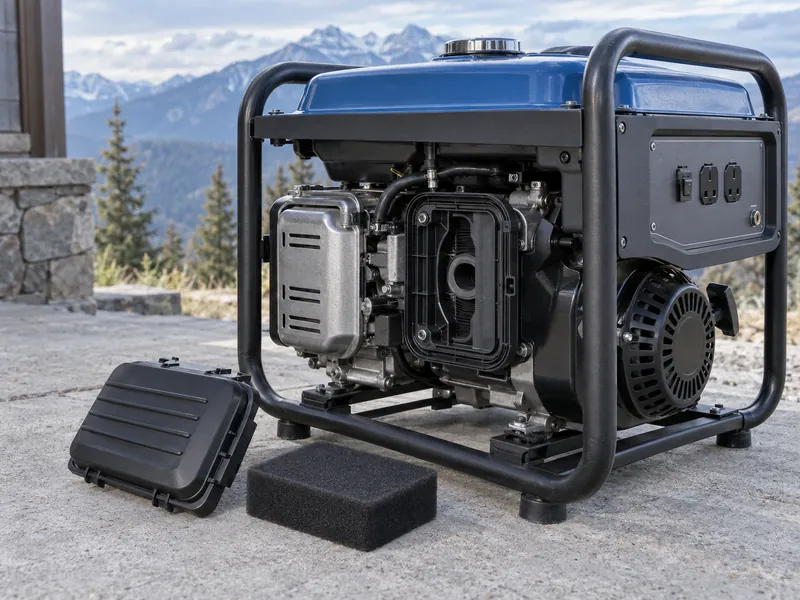
A clean air filter helps avoid an extra restriction, but removing the filter is not a suitable way to recover altitude performance. Dust entering the engine creates a different problem. Likewise, altering a governor or bypassing protective controls is not an acceptable substitute for respecting the reduced output.
Does Cooler Mountain Air Guarantee That the Generator Will Stay Cool?
No: ambient temperature and cooling-air density affect heat removal in different ways. A cool location may help compared with a hot one, yet the complete machine still needs its specified clearances and ventilation. The engine, alternator, and inverter electronics do not necessarily reach their limits at the same load.
Do not place portable engines inside tents, vehicles, garages, or enclosed shelters. Keep exhaust away from occupied areas and openings, following the unit’s placement instructions. Weather protection must not create an exhaust accumulation or block cooling airflow.
A general description of a mountain campsite is therefore insufficient to predict output. Elevation, local temperature, actual placement, fuel, and the exact machine all contribute. Our portable inverter generator guide provides related operating and load-planning context.
How Can You Keep Mountain Operation Within the Generator’s Limits?
Treat altitude as a change in the generator’s operating environment, rather than automatically interpreting reduced output as a defect. Fuel adjustment can improve how an engine runs, while load reduction may still be necessary. Those two actions address different parts of the problem.
The practical aim is to keep combustion, cooling, and electrical demand within the machine’s documented limits. When symptoms persist at modest loads or also occur at lower elevation, an unrelated maintenance fault may need attention. Understanding the air-density effect makes it easier to distinguish an expected capacity change from abnormal behavior.