Rental companies should specify portable diesel generators around repeated hire cycles: selecting the right unit for a customer, delivering it safely, explaining its limits, checking it on return and restoring it to service quickly. Electrical capability remains essential, but fleet suitability also depends on durable controls, practical handling, clear identification, service access, parts consistency and usable documentation. A machine that suits one careful owner may require additional preparation for many different hirers.
Begin with the jobs the fleet is expected to serve. Small building work, temporary workshops, events and remote maintenance can have different power, noise, movement and connection requirements. The purchase specification should reflect those recurring jobs rather than trying to make every generator serve every possible customer.
Build the range around common hire requirements
Review past enquiries and hire records to identify typical loads, starting demands and operating periods. Group them by voltage, frequency, phase arrangement and useful output requirement. Include cases in which an unsuitable generator caused a return, an extra delivery or excessive support calls. These records can reveal a gap in the fleet more reliably than selecting sizes at evenly spaced headline power intervals.
Ask suppliers to assess representative customer load schedules. A generator for motor-driven equipment may need different starting performance from one serving lighting and heaters. A three-phase machine is not automatically the best way to cover single-phase hires. Confirm the useful single-phase capacity and outlet limits before treating one product as a universal replacement for several fleet categories.
Use the diesel generator range to shortlist configurations, then establish a controlled specification for each fleet category. Give each category a clear internal description that hire-desk staff can use. The description should state the appropriate applications and important restrictions without relying on technical assumptions hidden in the model number.
Leave room for deliberate alternatives
A small number of standardized configurations can simplify training and spares, but excessive standardization can create unsuitable hires. Keep distinct categories where customers require materially different supplies or operating conditions. The goal is a manageable range that covers real demand, not a single model chosen only because it is easy to stock.
Record the decision rules for choosing between categories. Staff should know when to ask for an equipment nameplate, starting information or installer review. This supports consistent selection and reduces the chance that a customer receives a machine based solely on an approximate wattage estimate.
Design the panel for unfamiliar operators
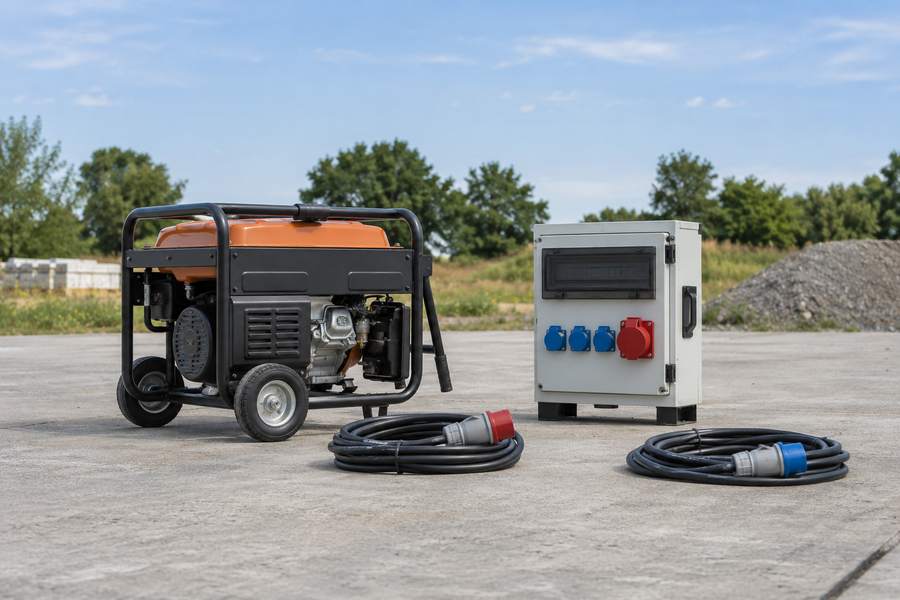
Specify an outlet arrangement that matches the market and the intended hire applications. Confirm socket ratings, shared circuit limits and phase identification. Customers should be able to understand which connection serves their equipment and which limits apply. A large generator rating should not encourage them to draw the entire output through a smaller receptacle.
Clear, durable labels are valuable in a rental environment. Ask for an approved panel drawing and label artwork before production. Include the selected starting method, essential readings and easily understood fault indications. More features are not always better if they create confusing controls that ordinary hirers do not need.
Control access to settings
Ask which settings customers can change and which are reserved for trained technicians. Controller configuration, sensor ratios and protection thresholds should not be accidentally altered during a hire. The supplied system should support the fleet’s approved access and service procedures. Avoid relying on a verbal instruction that will not reach every user.
If remote starting is offered, decide which hires genuinely need it and how the accessories will be tracked. Confirm pairing, replacement and loss-of-signal behavior. A remote transmitter should not become an unrecorded loose item that is difficult to identify when a machine returns to the depot.
Assess movement from depot to operating position
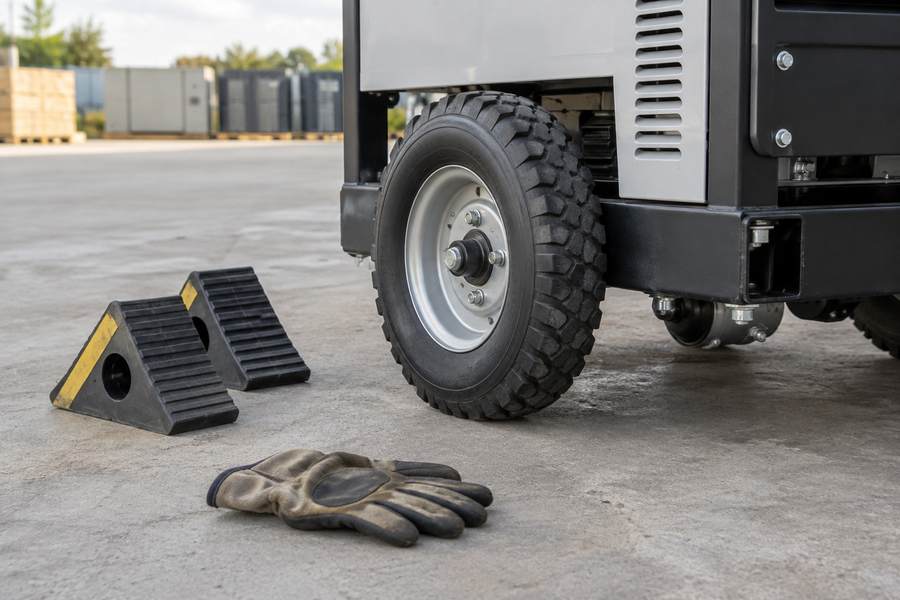
Evaluate the complete transport route: storage, loading, vehicle restraint, unloading and movement around the customer site. Obtain the relevant weights, dimensions and approved handling instructions. A wheeled portable generator can still be too heavy for manual lifting. Specify the handling equipment and procedures appropriate to the selected model.
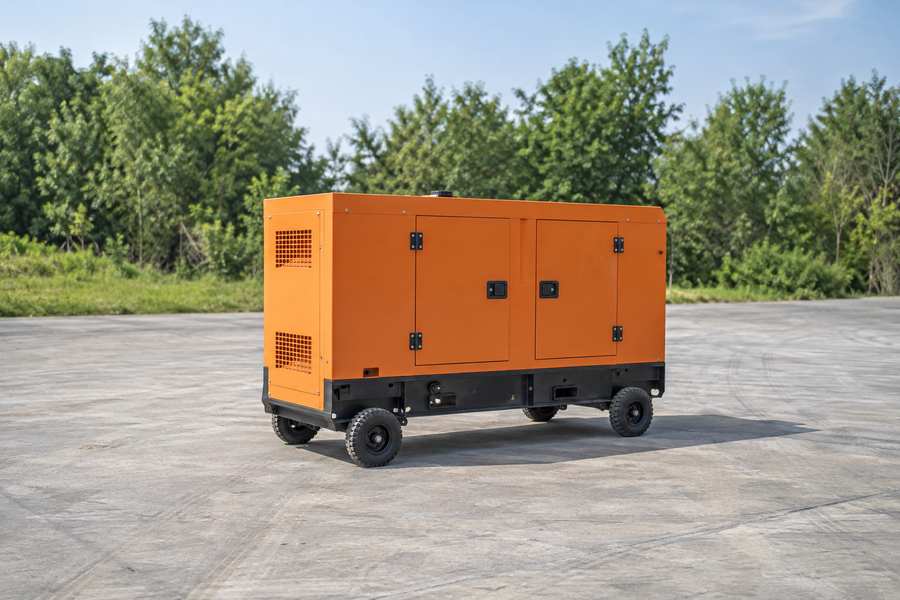
Wheel and handle options should reflect the surfaces commonly encountered. Smooth depot floors do not represent gravel, thresholds or uneven work areas. Ask the supplier to identify suitable options and any slope or movement restrictions. Do not treat a frame tube or handle as an approved lifting or tie-down point without manufacturer confirmation.
Include the returned condition
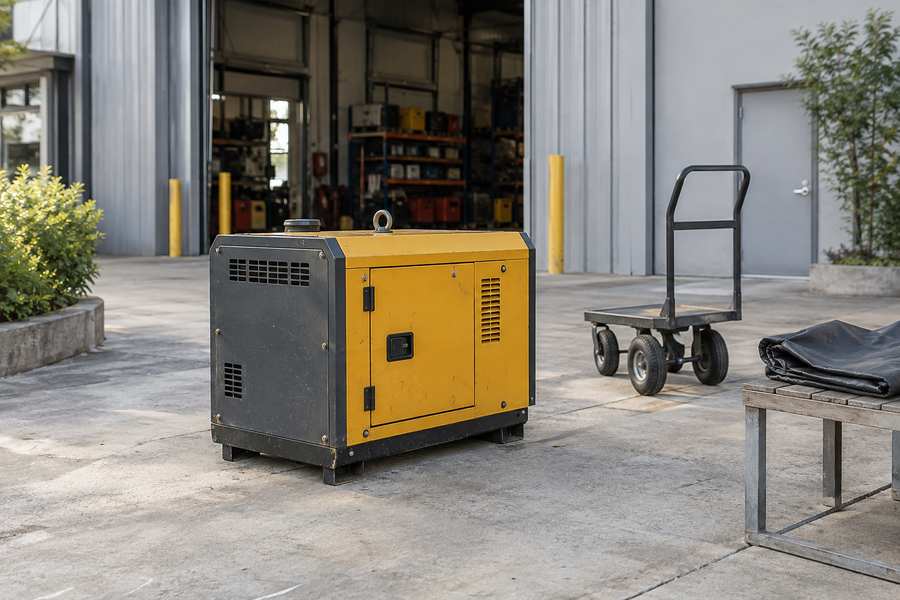
Rental equipment comes back with cables, accessories and sometimes incomplete information about how it was used. Provide a defined receiving area and inspection sequence. Specify product features that make damage, leakage, missing components and incorrect connections easier to identify. Practical access can reduce turnaround time without encouraging hurried or incomplete checks.
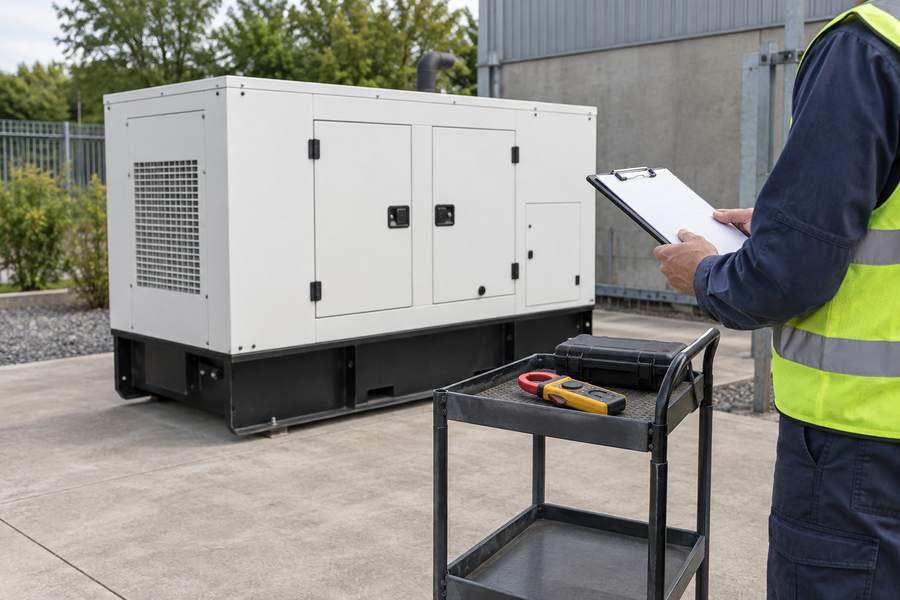
For open diesel generators, assess the visibility and protection of accessible components. For enclosed units, check panel access, locks and removable covers. Neither format is universally better for a fleet; compare the actual handling, customer environment and service process.
Select enclosure and noise performance for the hire market
Ask for noise data with the measurement distance, load and test conditions. A description such as silent or low noise does not establish suitability for every event, neighborhood or site. The rental company needs information that helps customers choose an appropriate machine and position it correctly. Where a customer has a formal noise requirement, assess that application specifically.
An enclosed option from the silent diesel generator range may fit some applications, but it still requires suitable exhaust discharge, cooling airflow and operating clearances. Portable generators must be operated in appropriate outdoor locations, following manufacturer guidance and keeping exhaust away from occupied spaces and openings. These instructions should be part of the hire handover.
Avoid creating an unsupported weather promise
Customers may assume that a robust-looking enclosure can operate in any weather. Ask for the actual environmental suitability and restrictions of the selected configuration. Provide the approved operating guidance and identify when use should stop. Any shelter or cover arrangement must be suitable for the generator and preserve cooling and exhaust requirements.
The fleet specification should also address how the machine is cleaned and stored between hires. Ask the generator maker to specify permitted cleaning procedures and surfaces or components requiring protection. A fast depot routine that forces water into electrical components or blocks ventilation can undermine an otherwise well-chosen machine.
Specify metering that supports fleet records
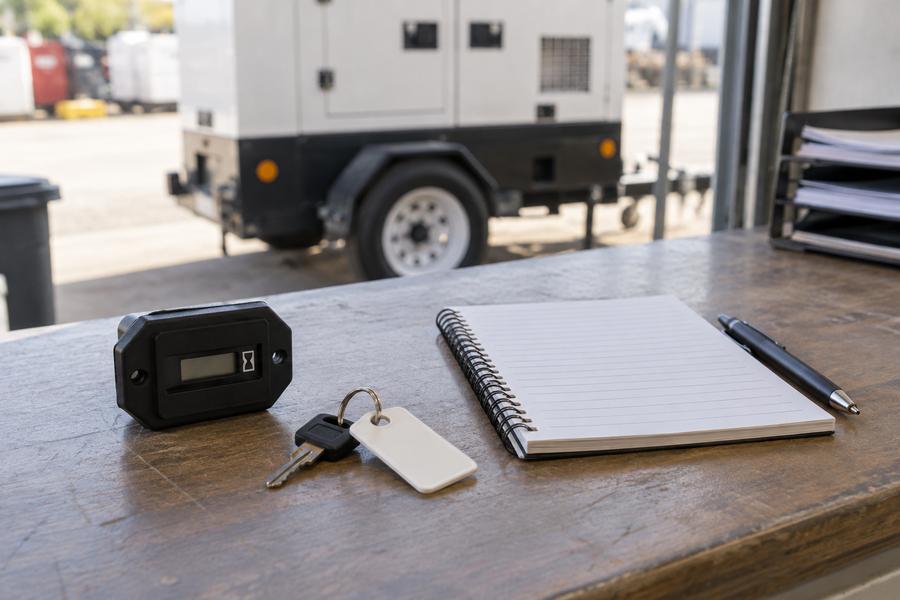
A dependable running-hours total helps organize maintenance and compare usage between hires. Confirm when the meter accumulates hours, whether the total survives battery disconnection and how replacement is recorded. If a resettable job counter is required, distinguish it from lifetime hours. The hire system should preserve the machine’s accumulated history even when a panel is replaced.
Voltage, frequency and current information can help with basic customer support and return checks. Ask which circuits or phases are measured and whether the readings are clearly labelled. Where alarm history is useful, confirm what events are retained and how technicians retrieve them. Do not assume that a digital display automatically includes a useful event log.
Link the machine to its service identity
Use a fleet identifier that maps to the manufacturer’s model, generator serial number, engine identification and approved configuration. Keep the mapping accessible to depot staff and the service team. This makes parts ordering and support more reliable when several similar machines have different engines or panels.
Include the supplied accessories in that record. Keys, remote controls, connectors and special cables should be identifiable at dispatch and return. A generator can be mechanically sound but unavailable for hire because an essential accessory is missing or cannot be matched to the correct unit.
Make maintenance fit the turnaround process
Ask the supplier to demonstrate access to the routine inspection and service points. Confirm the actual consumables and intervals for the selected engine, including any adjustments required by the operating conditions. A generic maintenance plan should not assume that every model has identical filters, lubrication arrangements or cooling systems.
Design the depot process around scheduled service as well as return inspection. A short hire may still bring a machine close to its next service point, while a long hire may require a planned service visit or exchange. Set a depot response for extended repairs and unavailable parts before committing units to future hire bookings.
| Hire-cycle stage | Product or document requirement | Operational purpose |
| Booking | Clear ratings and application limits | Match the customer load to the correct unit |
| Dispatch | Identified accessories and readable instructions | Deliver a complete usable package |
| Operation | Appropriate controls, metering and protection | Support correct use and fault reporting |
| Return | Accessible inspection points and hour record | Detect damage and identify service needs |
| Workshop | Parts references and model-specific procedures | Restore the machine correctly |
| Redeployment | Documented release check | Avoid sending out an unresolved fault |
Use this structure to identify where a product feature will actually save work. For example, a service panel that improves routine access may matter more to the depot than an extra display mode. Ask technicians and hire-desk staff to evaluate the sample together.
Request a realistic spare-parts package
Base the initial spares package on the number of units, expected operating hours, service intervals and replenishment lead time. Separate routine consumables from less predictable repair items. Ask for model-specific part numbers and applicability information rather than a box of visually similar components. Standardization is valuable only when the parts are genuinely interchangeable.
Identify parts that commonly affect turnaround because they are exposed, frequently handled or essential to operation. The appropriate list depends on the machine and the fleet’s experience. Ask the supplier for recommendations, then review them against your own hire records. Avoid purchasing large quantities of speculative parts without understanding compatibility or storage requirements.
Review support in practical terms
Ask how faults are reported, who performs diagnosis and what information is needed for warranty assessment. Confirm the available parts support and the responsibilities for transport or repair costs under the written terms. Assess repair arrangements and parts response separately from warranty length to understand how a failed rental unit will become available again.
Keep approved troubleshooting steps separate from repairs requiring qualified personnel. Hire-desk staff need a concise way to collect symptoms and arrange support without encouraging customers to open panels or bypass protective devices. The supplier’s documents should support that boundary.
Pilot the configuration before a fleet purchase
Evaluate a sample through the complete hire cycle, not only a short factory run. Assess loading, controls, handling, customer instructions, return checks and service access. Use representative loads and approved test methods. Use the pilot findings to correct the purchasing specification before authorizing production of the remaining fleet.
For the production order, freeze the approved engine, alternator, panel, accessories and document revisions. Require review of substitutions that affect compatibility or fleet operation. A small component change can matter when the depot stocks one spare part or trains staff on one control sequence. Configuration consistency supports the whole rental process.
Also plan the pilot’s decision criteria in advance. Ask whether staff can identify the correct outlet without assistance, whether the handover explains the operating limits and whether routine service can be completed with the approved tools and access. Keep written findings from the handling checks so approval rests on observed performance as well as the overall impression of build quality. That evidence helps distinguish a preference from a requirement worth including in the final order.
Include customer-return information in the pilot review. Ask staff to record which questions arise at booking, which instructions need repeating during handover and which issues are reported during use. A confusing panel label or an unclear outlet limit can create repeated support work even when the generator performs correctly. Revise the approved handover material where needed and keep it linked to the fleet configuration.
Also test how the depot decides a returned machine is ready for its next hire. The release check should account for unresolved faults, missing accessories and upcoming maintenance, rather than relying only on a successful engine start. Document who can release the unit and where the result is recorded. This gives the product evaluation a practical endpoint: a complete machine that the team can confidently send out again.
The strongest rental specification describes a generator that can be selected, moved, operated, checked and serviced repeatedly with clear responsibilities. Electrical output starts the shortlist; reliable fleet operation depends on the rest of the hire cycle. Build those requirements into the order and verify them on the sample before expanding the fleet.