
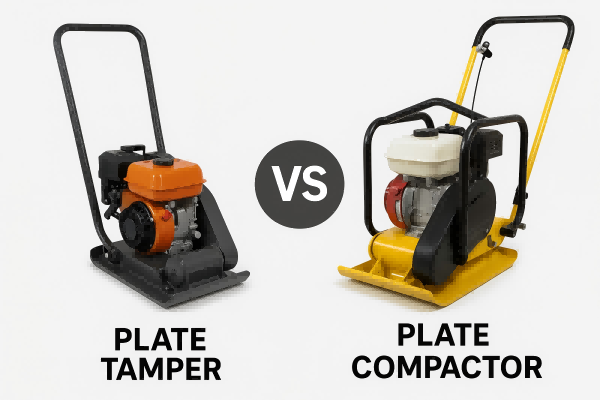
Plate Tamper vs Plate Compactor: Which One Do You Need for Your Project?
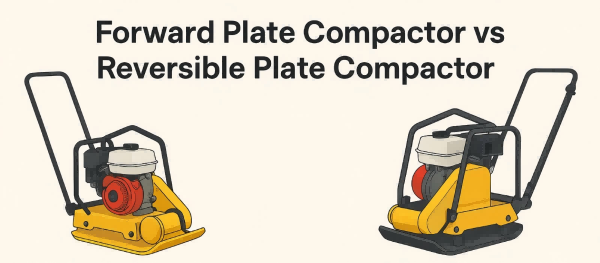
In the world of construction, landscaping, and roadwork, ground compaction is a crucial step in ensuring the stability and longevity of any structure built on soil or aggregate surfaces. Whether you’re laying pavers, constructing a foundation, or repairing asphalt, proper compaction is necessary to eliminate air gaps, increase soil density, and reduce the risk of settlement over time. Two essential machines often used for this purpose are the plate tamper and the plate compactor. While the names are sometimes used interchangeably in casual conversation, there are significant differences between these two machines that professionals must understand. What is a Plate Tamper? A plate tamper, often also referred to as a hand tamper in smaller-scale contexts, is designed for compacting granular soil or small paving areas. It typically consists of a heavy flat plate attached to a handle or, in motorized versions, to a vibrating motor that assists with compression. In the professional industry, when people refer to a “plate tamper,” they usually mean a vibratory plate compactor designed for lighter-duty work—essentially a sub-category of plate compactors optimized for residential or small commercial projects. Key Characteristics: Flat, solid steel base plate Operated by pushing or pulling manually Generates vibration to help settle soil Available in manual or engine-driven formats Ideal for small patches or limited access areas What is a Plate Compactor? A plate compactor is a broader term that includes a variety of motor-driven machines with heavy steel plates that vibrate rapidly to compact soil, gravel, or asphalt. These machines vary in size and power, and are commonly categorized into: Forward Plate Compactors Reversible Plate Compactors Heavy-Duty or High-Frequency Plate Compactors Plate compactors are more robust and versatile than tampers, and they are used in everything from driveway paving to large-scale roadworks. Key Characteristics: Powered by gas or diesel engines Uses a vibrator or eccentric weight system to create high-frequency force Capable of compacting deep layers Offers different compaction forces depending on machine size Often equipped with water tanks (for asphalt) or rubber mats (for pavers) Comparing Plate Tamper vs. Plate Compactor Functionality and Mechanism Feature Plate Tamper Plate Compactor Vibration Mechanism Manual or light vibration High-frequency mechanical vibration Compaction Depth Shallow (~2-4 inches per pass) Moderate to deep (~4-12 inches per pass) Directional Control Usually forward only Forward or reversible, depending on model Power Source Manual or small gas engine Medium to high-power gas/diesel engines Plate compactors offer deeper, more powerful compaction, ideal for heavy-duty or large-area jobs. Plate tampers are simpler and better suited for small, quick tasks. Applications Use Case Plate Tamper Plate Compactor Small paver patio or sidewalk ✓ Ideal ✓ Also suitable Driveway base compaction ✗ Not deep enough ✓ Recommended Asphalt repair or patchwork ✓ Acceptable for small patches ✓ Ideal with water tank Large commercial projects ✗ Not practical ✓ Necessary Narrow trenches or tight spots ✓ Easy to maneuver ✗ Some models too bulky If you’re working on a DIY or light-duty project, a plate tamper might be enough. For larger, professional applications, a plate compactor is necessary. Size and Portability Plate tampers are lightweight and compact, typically weighing 50–100 lbs, making them easier to transport, store, lift into a truck bed, or move up a ramp with minimal effort. Plate compactors, especially reversible or high-force models, can weigh from 150 lbs to over 700 lbs. These often require mechanical assistance or multiple workers for transport. Portability favors the plate tamper, but this advantage comes at the cost of reduced compaction force. Cost and Maintenance Factor Plate Tamper Plate Compactor Initial Cost Lower ($200–$800) Higher ($800–$3000+) Maintenance Simple; fewer moving parts Requires engine and vibrator upkeep Operating Costs Minimal (gasoline for light units) Gas/diesel, oil changes, parts replacement Plate tampers are budget-friendly, low-maintenance tools. Plate compactors demand a higher upfront investment but are necessary for high-quality results in demanding applications. Compaction Quality and Speed Plate compactors are engineered to provide faster and more uniform compaction over a larger area. Their high-frequency vibration improves density and reduces the number of passes needed. Plate tampers may require more passes and produce uneven compaction if used beyond their intended scope. This could result in surface settlement or structural issues over time. For time-sensitive and quality-critical jobs, the compactor wins. Tampers are slower and limited in depth. When to Use a Plate Tamper You should use a plate tamper when: Working in confined areas like tight corners or narrow walkways Compacting light materials like sand, fine gravel, or loose topsoil Repairing small pavement sections or doing patchwork Laying a few pavers in a garden or backyard You need a low-cost, entry-level compaction tool Best For: Homeowners, landscapers, small contractors. When to Use a Plate Compactor Use a plate compactor when: Building roads, driveways, or parking lots Compacting crushed rock or dense gravel Installing interlocking pavers over a large area Repairing or maintaining asphalt pavement Preparing foundations or footings You require high compaction performance and reliability Best For: Civil engineers, road builders, heavy equipment contractors, professional landscapers. Choosing the Right Tool: Key Considerations Project Size and Scope Small backyard? Go for a tamper. Large commercial foundation? Compact all the way. Soil Type Loose sand or silt: Plate tamper can suffice Dense gravel, clay, or mixed fill: Requires the power of a compactor Budget If cost is the main constraint, plate tampers are more affordable. However, renting a plate compactor is often a good middle ground for short-term needs. Operator Experience Tampers are easier to learn for beginners. Plate compactors require more care in operation, especially when navigating slopes or obstacles. Jobsite Accessibility Some areas are too tight for a large compactor. In such cases, a tamper is the only option. Do You Need Both? In many professional scenarios, contractors keep both plate tampers and compactors on hand. The tamper handles edge cases, tight corners, or delicate paver work. The compactor does the heavy lifting on broad surfaces, roadbeds, or large foundations. As a manufacturer, we recommend that buyers carefully assess their typical job types, soil conditions,